
A whole house ventilation system with heat recovery brings in fresh air while recovering some heat from outgoing air, but the right choice depends on climate, home size, and whether humidity transfer matters. My best overall pick is the Broan B160H65RS for its 150 CFM capacity and VIRTUO Air Technology; the Panasonic Intelli-Balance Elite Plus is a strong alternative for buyers prioritizing a 120 CFM ERV, while the VENTS-US BRIG HRV 200 offers higher airflow and electronic defrost protection. The main tradeoffs are HRV versus ERV, airflow capacity versus duct and space requirements, and simpler equipment versus more installation and control demands. I compare all 11 models by their stated features, likely fit, and practical compromises. Read on for the full breakdown and guidance on choosing a system for your home.

Get garden gear delivered free — and shop member deals
- Fast, free delivery on millions of items
- Access to Prime Big Deal Days deals on October 6–7
- Prime Video, Amazon Music and more included
Complete the kit



Key Takeaways
- The Broan B160H65RS leads this roundup with 150 CFM capacity and VIRTUO Air Technology, making it a balanced option for buyers who want a whole-house HRV with named airflow technology.
- ERV and HRV are not interchangeable choices. The lineup includes both, so climate and indoor humidity patterns should guide which type you shortlist before comparing model features.
- Higher airflow is not automatically a better fit. The VENTS-US BRIG HRV 200 and several Frigate models offer more capacity than the 120 CFM Aprilaire and Panasonic units, but actual needs depend on home size, occupancy, and duct design.
- Defrost protection is a meaningful cold-weather distinction. The BRIG HRV 200 specifically lists electronic defrost protection, a feature worth weighing for homes exposed to cold outdoor air.
- The Weiworld VT501 serves a different installation scale. Its 6-inch format and ceramic heat exchanger make it a more compact, room-focused option than the central whole-house units in this comparison.
| Energy Recovery Ventilation Fresh Air Recuperator Filtration System ERV with DC Motor (H-02DZ) |  | Best for Variable Airflow Needs | Model number: H-06DZ (title lists H-02DZ) | Fresh air volume: 110–5000 m³/h | External ESP: 100 Pa | VIEW ON AMAZON | See Our Full Breakdown |
| Aprilaire V22BEC Energy Recovery Ventilator (ERV) – 120 CFM Air Exchanger for Homes up to 6,000 Sq. Ft. |  | Best for Straightforward Whole-Home Sizing | Airflow: 120 CFM | Listed maximum home size: 6,000 sq. ft. | Ventilator type: Energy Recovery Ventilator (ERV/HRV) | VIEW ON AMAZON | See Our Full Breakdown |
| VENTS-US Frigate ERV 120s Energy Recovery Ventilator, 162 CFM |  | Best for Washable Filter Maintenance | Maximum airflow: 162 CFM | Voltage: 120 V | Power consumption: 94 W maximum; 19 W at low speed | VIEW ON AMAZON | See Our Full Breakdown |
| Broan B160H65RS AI 150 CFM Wall/Ceiling Mounted Heat Recovery Ventilator with VIRTUO Air Technology and Side Ports |  | Best for Automatic Airflow Balancing | Airflow range: 35–150 CFM | Duct size: 5-inch round | Voltage: 120 V | VIEW ON AMAZON | See Our Full Breakdown |
| Panasonic FV-12ESC1 Intelli-Balance Elite Plus Energy Recovery Ventilator, 120 CFM |  | Best for Higher Filtration and Pressure Control | Airflow capacity: 120 CFM | Adjustable airflow: 30–120 CFM | Motor type: Brushless ECM | VIEW ON AMAZON | See Our Full Breakdown |
| VENTS-US BRIG HRV 200 Heat Recovery Ventilator |  | Best for Higher Airflow | Maximum airflow: 213 CFM at 0.1 in. w.g. | Airflow at 0.2 in. w.g.: 200 CFM | Duct connection: 6 inches | VIEW ON AMAZON | See Our Full Breakdown |
| VENTS-US Frigate HRV 150 EC Ventilation System |  | Best for a Corrosion-Resistant Housing | Maximum airflow: 186 CFM | Ventilation type: Balanced supply and exhaust | Recovery core: Cross-flow polystyrene | VIEW ON AMAZON | See Our Full Breakdown |
| Weiworld VT501 6 Inch Heat Recovery Ventilator with Ceramic Heat Exchanger |  | Best for Single-Room Retrofits | Duct size: 6 inches (150 mm) | Heat exchanger: Ceramic | Heat recovery efficiency: Up to 90% | VIEW ON AMAZON | See Our Full Breakdown |
| Fantech VHR 150 Heat Recovery Ventilator | 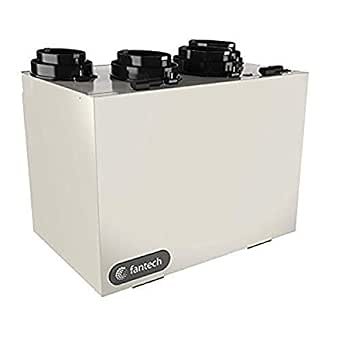 | Best for Specified Bedroom Coverage | Maximum airflow: 159 CFM at 0.4 inches of static pressure | Recommended home size: 2 to 5 bedrooms | Ventilation speeds: 3 | VIEW ON AMAZON | See Our Full Breakdown |
| VENTS-US Frigate ERV 150 Energy Recovery Ventilator |  | Best for Slim Ceiling-Mount ERV Installation | Airflow capacity: 180 CFM | Recovery core: Enthalpy; recovers heat and moisture | Noise level: 1.9 sones | VIEW ON AMAZON | See Our Full Breakdown |
| VENTS-US Frigate ERV 150 EC Energy Recovery Ventilator, 186 CFM |  | Best High-Capacity ERV with Electronic Defrost | Airflow: Up to 186 CFM | Motor type: Electronically commutated (EC) | Core type: Enthalpic | VIEW ON AMAZON | See Our Full Breakdown |
More Details on Our Top Picks
Energy Recovery Ventilation Fresh Air Recuperator Filtration System ERV with DC Motor (H-02DZ)
I’d look at this ERV first when the required airflow is unclear or may change, since its listed range runs from 110 to 5000 m³/h. It also transfers both heat and humidity, which can help temper incoming air while retaining indoor moisture. Compared with the Aprilaire V22BEC, which lists a defined 120 CFM capacity and home-size guidance, this model offers far broader stated capacity but less practical guidance for choosing and sizing it. Its listed 36 dB(A) noise level and DC motor are appealing for quieter operation, though the supplied data does not clarify airflow at that noise level. The 220V, 50Hz supply limits compatibility, and the listed 1.76-ounce weight seems inconsistent with a whole-house unit. I’d verify the model, dimensions, electrical requirements, and airflow ratings with the seller before planning an installation.
Pros:- Transfers both heat and humidity
- Lists a broad 110–5000 m³/h airflow range
- Lists 36 dB(A) operation and a DC motor
- Includes a one-year warranty and online technical support
Cons:- 220V, 50Hz supply is incompatible with standard North American 120V outlets
- The listed weight appears implausible for a whole-house ventilator
- Airflow range is unusually broad, with no sizing guidance in the supplied details
Best for: Buyers with a compatible 220V, 50Hz supply who need a wide range of stated airflow and can confirm sizing details before purchase
Not ideal for: North American homeowners with standard 120V power or anyone who needs clear, independently verifiable sizing and installation data
- Model number:H-06DZ (title lists H-02DZ)
- Fresh air volume:110–5000 m³/h
- External ESP:100 Pa
- Heat exchange ratio:58%
- Noise level:36 dB(A)
- Power supply:220V / 1-phase / 50Hz
- Energy transfer:Temperature and humidity
- Warranty:1 year
Our verdict“Consider it only if its 220V supply suits your home and the seller confirms the unit’s dimensions, model, and usable airflow range.”
Aprilaire V22BEC Energy Recovery Ventilator (ERV) – 120 CFM Air Exchanger for Homes up to 6,000 Sq. Ft.
The Aprilaire V22BEC is the clearest fit in this group for homeowners who want a defined-capacity ERV with stated coverage guidance. Its 120 CFM airflow and recommendation for homes up to 6,000 square feet give a starting point for discussing system sizing, while the energy recovery core transfers heat and moisture from exhaust air to temper incoming air. Compared with the Broan B160H65RS AI, Aprilaire offers simpler push-button controls rather than automatic balancing and live airflow diagnostics. That keeps operation straightforward, but provides less built-in help during setup. Wall, ceiling, or floor mounting adds flexibility for retrofits, and select Aprilaire thermostats can add control options. I’d choose it for a conventional whole-house installation where that capacity suits the duct plan; the thermostat compatibility is limited to listed models, and whole-house ductwork may call for professional installation.
Pros:- Defined 120 CFM capacity and stated home-size guidance
- Energy recovery core transfers heat and moisture
- Wall, ceiling, or floor mounting options
- Push-button controls keep basic operation simple
Cons:- Smart integration depends on a compatible Aprilaire thermostat
- Whole-house duct integration may require professional installation
Best for: Homeowners planning a whole-house ERV for a home near the stated 6,000-square-foot coverage who want simple controls and flexible mounting
Not ideal for: Buyers seeking automatic airflow balancing, detailed onboard diagnostics, or smart controls without owning a compatible Aprilaire thermostat
- Airflow:120 CFM
- Listed maximum home size:6,000 sq. ft.
- Ventilator type:Energy Recovery Ventilator (ERV/HRV)
- Mounting:Wall, ceiling, or floor
- Controls:Push-button fan speed controls
- Compatible thermostats:Aprilaire 8120X, S86NMUPR, S86WMUPR, 8920W, 8910W, 8910, 8840
- Energy recovery:Transfers heat and moisture
Our verdict“Choose the Aprilaire when its 120 CFM capacity suits your home and you value clear sizing guidance over automated balancing features.”
VENTS-US Frigate ERV 120s Energy Recovery Ventilator, 162 CFM
The Frigate ERV 120s stands out for buyers who want a practical, serviceable unit with a stated maximum airflow of 162 CFM. Its washable MERV 6 filters can be cleaned and reused, reducing the need to replace filters as part of routine upkeep. The enthalpy core transfers heat and moisture, while electronic freeze protection addresses cold-weather operation. Compared with the Panasonic FV-12ESC1, the Frigate has lower-grade filtration on paper, but its filters are washable and its three control states—low, medium, and standby—keep operation uncomplicated. It also lists 5-inch duct connections, which may constrain a retrofit if existing ducts use another size. The listed noise figure is 1.9 sones, and maximum power is 94 W, so I’d check both against the intended installation and operating schedule.
Pros:- Washable MERV 6 filters for supply and exhaust
- Transfers both heat and moisture
- Electronic freeze protection
- Three operating modes: low, medium, and standby
Cons:- MERV 6 filtration is less fine than the Panasonic’s included MERV 13 filters
- 5-inch duct connections may not match existing ductwork
- Maximum listed power consumption is 94 W
Best for: Homeowners who want a whole-house ERV with reusable filters, basic operating modes, and electronic freeze protection
Not ideal for: Buyers who need higher-grade included filtration, quieter stated operation, or duct connections larger than 5 inches
- Maximum airflow:162 CFM
- Voltage:120 V
- Power consumption:94 W maximum; 19 W at low speed
- Noise level:1.9 sones
- Control modes:LOW, MED, STANDBY
- Filters:Washable MERV 6
- Duct connection diameter:5 inches
- Core effectiveness:Up to 65% apparent sensible effectiveness
Our verdict“Pick the Frigate ERV 120s if washable filters and freeze protection matter more to you than higher-grade included filtration.”
Broan B160H65RS AI 150 CFM Wall/Ceiling Mounted Heat Recovery Ventilator with VIRTUO Air Technology and Side Ports
The Broan B160H65RS AI is the most setup-focused HRV here: VIRTUO Air Technology monitors conditions and its auto-balancing feature is designed to simplify airflow adjustment. The integrated LCD adds diagnostics and real-time airflow readings, which can help homeowners and installers see how the system is performing. Its 35–150 CFM range covers more than a single fixed operating point, while MERV 8 filters come installed and can be upgraded to MERV 13. Compared with the Aprilaire V22BEC, Broan offers more feedback and automation, but Aprilaire provides clearer stated guidance for maximum home size. This is a heat recovery ventilator, so the supplied details do not claim the moisture transfer associated with the ERV options. The 5-inch duct size and larger physical footprint also make installation planning important.
Pros:- 35–150 CFM selectable airflow range
- Auto-balancing and indoor/outdoor condition monitoring
- LCD provides diagnostics and real-time airflow measurements
- MERV 8 filters included, with MERV 13 upgrade option
Cons:- MERV 13 filtration requires an optional upgrade
- 5-inch duct connections and a sizable cabinet can complicate retrofits
- Supplied details describe heat recovery, not humidity transfer
Best for: Homeowners and installers who want adjustable HRV airflow with onboard balancing, diagnostics, and real-time airflow readings
Not ideal for: Buyers prioritizing moisture recovery, included MERV 13 filtration, or a compact unit for restricted installation spaces
- Airflow range:35–150 CFM
- Duct size:5-inch round
- Voltage:120 V
- Wattage:163 W
- Mounting:Wall or ceiling
- Dimensions:19.13 in H × 23.5 in W × 16.3 in D
- Included filtration:MERV 8; upgradeable to MERV 13
- Motors:PMSM ECM
Our verdict“Choose the Broan if automatic balancing and clear airflow diagnostics are priorities and heat recovery meets your ventilation needs.”
Panasonic FV-12ESC1 Intelli-Balance Elite Plus Energy Recovery Ventilator, 120 CFM
The Panasonic FV-12ESC1 makes the strongest case for buyers who want dual MERV 13 filters included and the ability to tune airflow for balanced, positive, or negative pressure ventilation. Its brushless ECM motors adjust across a 30–120 CFM range, giving a system designer more flexibility than the Aprilaire V22BEC’s stated 120 CFM capacity. The Panasonic also transfers heat and moisture through its treated recovery core, making it a closer fit for buyers seeking ERV performance than the heat-recovery-only Broan. Four speeds and wall, ceiling, or floor mounting add installation choices. The tradeoff is that listed Wi-Fi and wall controls may require separate purchases, and the supplied details offer little guidance on sound, dimensions, or coverage area. I’d favor it when filtration and pressure setup lead the decision, while confirming controls and sizing for the duct system.
Pros:- Dual MERV 13 filters included
- Adjustable 30–120 CFM airflow supports balanced, positive, or negative pressure
- Brushless ECM motors adjust under static pressure
- Wall, ceiling, or floor mounting options
Cons:- Wi-Fi module and wall controls may require separate purchases
- Supplied product details do not state home-size coverage or noise level
- Four-speed operation may need setup suited to the home’s duct design
Best for: Homeowners whose ventilation plan calls for included MERV 13 filtration and adjustable pressure modes across a 30–120 CFM range
Not ideal for: Buyers who want stated whole-home coverage, complete smart controls in the box, or detailed noise and dimension data before choosing
- Airflow capacity:120 CFM
- Adjustable airflow:30–120 CFM
- Motor type:Brushless ECM
- Number of speeds:4
- Included filters:Dual MERV 13
- Power source:AC/DC
- Mounting options:Wall, ceiling, or floor
- Control method:Touch
Our verdict“Choose the Panasonic if included MERV 13 filtration and configurable pressure modes matter more than bundled smart controls or published coverage guidance.”
VENTS-US BRIG HRV 200 Heat Recovery Ventilator
I’d put the BRIG HRV 200 near the top for buyers who need substantial balanced ventilation: it delivers up to 213 CFM, with 200 CFM listed at 0.2 in. w.g. That gives it more stated capacity than the Fantech VHR 150 at 159 CFM, though the right choice still depends on a home’s ventilation design and duct resistance. Its washable MERV 6 filters simplify routine upkeep, while electronic defrost protection is useful in cold-weather operation. The tradeoff is control flexibility: the panel offers Standby, Low, and Medium, and high-speed boost needs an external control. I’d skip it if stronger filtration or built-in access to every operating speed matters more than airflow capacity.
Pros:- Up to 213 CFM maximum airflow, with 200 CFM listed at 0.2 in. w.g.
- Electronic defrost protection uses warm extract air
- Washable MERV 6 filters serve both supply and exhaust streams
- German-made motors include thermal protection and ball bearings
Cons:- Built-in panel does not directly provide high-speed operation
- External control is needed for boost ventilation
- MERV 6 filtration is a modest level
Best for: Owners of larger or higher-occupancy homes whose ventilation plan calls for more airflow than the Fantech VHR 150 specifies.
Not ideal for: Buyers who want high-speed boost from the built-in panel or filtration above MERV 6.
- Maximum airflow:213 CFM at 0.1 in. w.g.
- Airflow at 0.2 in. w.g.:200 CFM
- Duct connection:6 inches
- Filters:Washable MERV 6, supply and exhaust
- Defrost protection:Electronic, using warm extract air
- Controls:3-step side panel: Standby, Low, Medium; external boost control supported
Our verdict“Choose the BRIG HRV 200 when your whole-house ventilation design needs its higher stated airflow and you can accommodate external boost controls.”
VENTS-US Frigate HRV 150 EC Ventilation System
The Frigate HRV 150 EC is a straightforward whole-house option for buyers who want balanced supply and exhaust with heat and moisture recovery. Its stated airflow reaches 186 CFM, placing it between the higher-capacity BRIG HRV 200 and the 159 CFM Fantech VHR 150 figure. The coated steel casing is a useful durability detail, and electronic frost protection addresses cold-weather operation. But the supplied product information leaves several practical questions open: it gives no noise or energy-use figures and no installation or maintenance details. I’d favor the BRIG if you need more documented airflow and filter specifics; this Frigate makes more sense when its capacity and coated casing fit your project and you can confirm the missing details with the supplier.
Pros:- Balanced fresh-air supply and stale-air exhaust
- Cross-flow core recovers heat and moisture
- Electronic frost protection
- Steel casing has an anti-corrosion coating
Cons:- No noise or energy-use figures are provided
- Installation and maintenance details are not provided
- Filter specifications are not stated in the supplied product data
Best for: Homeowners comparing mid-capacity whole-house HRVs who value a coated steel casing and can verify installation and operating details before purchase.
Not ideal for: Buyers who need published noise, energy-use, filter, or installation information to plan a system.
- Maximum airflow:186 CFM
- Ventilation type:Balanced supply and exhaust
- Recovery core:Cross-flow polystyrene
- Recovery:Heat and moisture
- Frost protection:Electronic defrost
- Motor:EC
- Casing:Steel with anti-corrosion coating
Our verdict“Consider the Frigate HRV 150 EC if its 186 CFM capacity and coated steel housing suit your design and you can confirm the missing system details.”
Weiworld VT501 6 Inch Heat Recovery Ventilator with Ceramic Heat Exchanger
The Weiworld VT501 differs from the central systems here: it serves a single room through a wall opening, so it cannot stand in for a ducted whole-house ventilation design. Its ceramic exchanger is rated for up to 90% heat recovery, and the quiet 8.5W motor is specified below 30 dB. App, remote, and push-button controls plus fresh-air, exhaust, and recirculation modes offer more local control than the Fantech VHR 150, whose supplied details describe a central unit and external control connections. That flexibility comes with a narrower role: airflow is 60 m³/h, and wall installation requires a suitable opening through a 250–500 mm wall. I’d choose it for a targeted room retrofit, not as a whole-house replacement.
Pros:- Ceramic exchanger rated for up to 90% heat recovery
- Specified noise level under 30 dB and motor power of 8.5W
- App, remote, and push-button controls with three airflow modes
- Retractable body fits stated wall thicknesses from 250 to 500 mm
Cons:- Single-room unit with 60 m³/h airflow, not a central whole-house system
- Wall installation requires drilling through a compatible exterior wall
- G4 washable filter needs periodic cleaning
Best for: Owners seeking heat-recovery ventilation for one room where a compatible wall opening can be made.
Not ideal for: Buyers who need a central system to ventilate multiple rooms through ductwork, or renters unable to alter exterior walls.
- Duct size:6 inches (150 mm)
- Heat exchanger:Ceramic
- Heat recovery efficiency:Up to 90%
- Airflow capacity:60 m³/h
- Motor and power:8.5W EC motor with PWM control
- Noise level:Under 30 dB
- Wall thickness compatibility:250–500 mm
- Controls and modes:Tuya App, remote, push button; Fresh Air, Exhaust, Recirculation
- Filter:G4 washable
Our verdict“Choose the VT501 for quiet, controllable ventilation in one room when a wall-mounted unit meets your needs better than a central HRV such as the Fantech VHR 150.”
Fantech VHR 150 Heat Recovery Ventilator
The Fantech VHR 150 gives buyers a clearly stated home-size range: it is recommended for 2- to 5-bedroom homes, with up to 159 CFM at 0.4 inches of static pressure. That published operating point helps distinguish it from the BRIG HRV 200, which lists higher airflow but at different static-pressure figures; those numbers should be compared in the context of a system design. Three ventilation speeds and washable electrostatic filters add practical adjustability and routine serviceability, while dry contacts allow connection to compatible external controls. Its supplied specifications say little about frost protection, sound, or energy use, so buyers should seek those details for their climate and installation. I’d pick it when the bedroom guidance and control connections match the project, rather than choosing solely by maximum CFM.
Pros:- Recommended for 2- to 5-bedroom homes
- Maximum airflow specified at 159 CFM at 0.4 inches static pressure
- Three ventilation speeds
- Washable electrostatic filters and dry contacts for external controls
Cons:- No frost-protection details are included in the supplied product data
- Noise and energy-use figures are not provided
- Maximum airflow is below the BRIG HRV 200’s stated peak capacity
Best for: Owners of 2- to 5-bedroom homes who want a central HRV with three speeds, washable filters, and external control connections.
Not ideal for: Buyers needing published frost-protection, noise, or energy-use details before selecting a unit for a cold or noise-sensitive installation.
- Maximum airflow:159 CFM at 0.4 inches of static pressure
- Recommended home size:2 to 5 bedrooms
- Ventilation speeds:3
- Filters:Washable electrostatic
- Remote control connection:External dry contacts
- Compatible controls:Fantech low-voltage controls
Our verdict“The VHR 150 suits buyers whose 2- to 5-bedroom layout fits its guidance and who value three speeds and external control connections.”
VENTS-US Frigate ERV 150 Energy Recovery Ventilator
The Frigate ERV 150 earns its place for projects where recovering indoor moisture as well as heat is a priority. Its enthalpy core needs no drain in the described configuration, and the 9.6-inch-deep steel housing is designed for ceiling mounting. At 180 CFM, its listed capacity sits below the BRIG HRV 200’s 213 CFM peak, while the ERV’s heat-and-moisture recovery serves a different climate and comfort goal from that HRV listing. The tradeoff is limited airflow control: the product data lists one power level, and a permanent ceiling installation may take more work to fit into a home. Washable MERV 6 filters and electronic defrost are useful practical features, but the stated 189W draw is worth factoring into system planning.
Pros:- Enthalpy core recovers heat and moisture without a drain in the described setup
- 9.6-inch casing depth supports installations with limited ceiling space
- Washable MERV 6 filters serve supply and exhaust
- Electronic defrost protection uses warm return air
Cons:- Only one listed power level limits built-in airflow adjustment
- Permanent ceiling mounting may require professional installation
- Listed wattage is 189W
Best for: Homeowners planning a ceiling-mounted whole-house ERV where moisture recovery, a shallow casing, and no-drain enthalpy operation fit the design.
Not ideal for: Buyers who need multiple built-in airflow settings, or who cannot accommodate permanent ceiling installation.
- Airflow capacity:180 CFM
- Recovery core:Enthalpy; recovers heat and moisture
- Noise level:1.9 sones
- Wattage:189 watts
- Mounting and casing depth:Permanent ceiling mount; 9.6 inches
- Filters:Washable MERV 6, supply and exhaust
- Frost protection:Electronic defrost using warm return air
- Controls:Push button; one power level
- Certification:ETL
Our verdict“Choose the Frigate ERV 150 when a shallow ceiling-mounted ERV with heat and moisture recovery suits your home better than the higher-airflow BRIG HRV 200.”
VENTS-US Frigate ERV 150 EC Energy Recovery Ventilator, 186 CFM
For larger homes needing balanced whole-house ventilation, I’d shortlist the Frigate ERV 150 EC for its stated airflow of up to 186 CFM and enthalpic core, which transfers heat and moisture between outgoing and incoming air. That moisture recovery can help limit overly dry winter air and reduce humid outdoor air entering in warmer seasons. Compared with the Frigate ERV 120s, this model offers higher stated airflow; compared with the Frigate HRV 150 EC, it also recovers moisture, a useful distinction where indoor humidity matters. Its automatic electronic defrost addresses freezing conditions, while the EC motor and coated steel casing suit buyers prioritizing performance and durability. The tradeoff is a more involved project: ductwork and professional installation are typically needed, and the EC motor may add upfront expense.
Pros:- Up to 186 CFM of balanced supply and exhaust airflow
- Enthalpic core recovers both heat and moisture
- Automatic electronic frost protection for cold-weather operation
- Steel casing with anti-corrosion coating
Cons:- Typically requires professional installation and ductwork
- EC motor features may increase upfront system cost
Best for: Owners of larger homes planning a ducted ventilation system who want heat and moisture recovery with automatic frost protection.
Not ideal for: Apartment dwellers, DIY buyers without existing ductwork, or households seeking a simple room-by-room ventilator.
- Airflow:Up to 186 CFM
- Motor type:Electronically commutated (EC)
- Core type:Enthalpic
- Recovery:Heat and moisture
- Defrost:Automatic electronic frost protection
- Casing:Steel with anti-corrosion coating
- Product type:Energy recovery ventilator
- ASIN:B0FMT2FJY3
Our verdict“Choose the Frigate ERV 150 EC if your ducted home needs higher stated airflow and moisture recovery, and you can accommodate professional installation.”

How We Picked
I compared the 11 systems on the factors that shape a whole-house ventilation purchase: stated airflow, HRV or ERV design, named controls or protection features, filtration details, installation format, and the amount of information available to judge fit. I gave more weight to clear capacity and purpose than to a long feature list; a system should match a home’s ventilation demand and climate before extra functions matter. I also separated central ducted equipment from the compact Weiworld unit, since they answer different installation needs.
The ranking favors options with a clear whole-house role and buyer-relevant distinctions. The Broan B160H65RS takes the lead for its 150 CFM capacity and stated air technology; the Panasonic and Aprilaire ERVs are useful lower-capacity comparisons, while the BRIG HRV 200 stands out for higher stated capacity and defrost protection. The Frigate variants offer several airflow and motor configurations, so they suit shoppers who want to compare within one product family. Product descriptions do not establish sound levels, certified efficiency, or compatibility with a particular duct layout, so those details should be confirmed before purchase.
Factors to Consider When Choosing Whole House Ventilation System With Heat Recovery
Start with the conditions in your home and the design of its ventilation system, then narrow the shortlist by product features. The following checks can prevent a mismatch that a model comparison alone may not reveal.
Choose HRV or ERV Around Your Climate and Moisture
An HRV transfers heat between outgoing and incoming air, while an ERV also transfers some moisture. That difference can affect winter dryness, summer humidity, and how the ventilation system interacts with existing heating or cooling. A dry winter home may benefit from an ERV’s moisture transfer, while a home where indoor humidity needs to be removed may call for a different balance. Climate alone does not settle the choice: cooking, bathing, occupancy, and air-conditioning use all influence indoor moisture. Ask an HVAC professional to assess those conditions before selecting a unit type. Choosing by the word “heat recovery” alone can lead to buying a technically capable unit that does not suit your indoor humidity goals.
Size Airflow for the House and the Ductwork
CFM is a useful comparison point, but it is not a stand-in for a ventilation calculation. Required airflow depends on factors such as floor area, bedroom count, occupancy, local code, and how the unit will be balanced. A larger-capacity unit may provide room for higher ventilation demand, yet an undersized or poorly laid-out duct network can limit what reaches each room. Ask for the design airflow at the system’s intended operating point, rather than relying on a headline maximum alone. Confirm that supply and exhaust ducts can be routed and balanced without excessive noise or pressure. This step can matter more to comfort than moving up to the highest CFM model.
Check Cold-Weather Operation and Defrost Needs
In freezing weather, moisture from indoor exhaust can collect in a heat exchanger and affect operation. Defrost strategies vary, so buyers in cold regions should ask how a candidate unit handles frost, how often defrost runs, and whether that cycle changes fresh-air delivery. A listed defrost feature, such as the electronic protection on the BRIG HRV 200, gives a specific point to investigate, but it does not answer every installation question. Consider where the unit will sit and how condensate will drain. A cold attic, unheated crawlspace, or long exposed duct run can create issues even when the core unit has frost protection. Include installation details in the decision, not just the product specification.
Plan for Filters, Cleaning, and Replacement Parts
Filter type affects both routine upkeep and the particles a system can capture. Check which filters are included, what replacement sizes are needed, and whether they are easy to reach after installation. A filter that is difficult to source or awkward to change can be neglected, reducing airflow and adding strain to the system. Ask how often the manufacturer recommends inspection under your home’s conditions; dusty surroundings and pets can change the schedule. Also find out how the heat or energy recovery core is cleaned and whether service parts are locally available. A modestly featured system with accessible maintenance can be a better long-term fit than one whose upkeep is unclear.
Match the Installation Format to Your Renovation
Central ventilation equipment works best when the home can accommodate suitable supply and exhaust duct runs, service access, and drainage where needed. In an existing house, routing ducts through finished ceilings or between floors may shape the project more than the unit dimensions. Compact units can simplify localized installation, but a single-room device does not automatically provide balanced ventilation throughout the house. Before ordering, map the unit location, duct path, electrical needs, condensate route, and access for future filter changes. Confirm whether the selected model is intended for wall, ceiling, or another mounting arrangement. This planning helps avoid choosing an appliance that fits on paper but cannot be installed well in the intended space.
Compare Controls, Noise, and System Compatibility
Control features determine how easily ventilation can respond to occupancy, humidity, or a home’s existing controls. Ask whether the unit supports the control method you expect and whether sensors or accessories are separate purchases. Sound depends on both the fan and installation: duct sizing, mounting, balancing, and distance from living areas all play a part. Request sound data at the airflow setting your design requires, since a rating at a lower setting may not describe daily operation. Check compatibility with existing thermostats or automation before assuming controls will integrate. Paying more for a control feature only helps when it suits how the household plans to run the system.
Frequently Asked Questions
Should I choose an HRV or an ERV for my climate?
Use indoor moisture conditions as well as outdoor climate to make this choice. An HRV transfers heat; an ERV transfers heat and some moisture, which can influence winter dryness or summer humidity. A very dry home may have different needs from one that struggles to shed indoor moisture. Consider cooking, showers, occupancy, and air-conditioning alongside local weather. Have a qualified designer assess the house before settling on a type, because neither label alone guarantees better comfort in every climate.
Can I choose a unit by matching its CFM to my home’s square footage?
Square footage is only one part of ventilation sizing. Occupancy, bedroom count, local requirements, duct resistance, and the airflow each room needs all affect the design. A listed maximum CFM may not be the delivered airflow after the unit is connected to real ductwork. Ask for a ventilation calculation and the expected airflow at the planned operating point. This can prevent both inadequate fresh air and a system that runs louder or harder than needed.
Will a heat recovery ventilator reduce my heating bill?
Heat recovery can reduce the heat lost through ventilation compared with exhausting indoor air without recovering heat. The actual effect depends on climate, operating hours, airflow, system efficiency, duct placement, and how the home is heated. It does not eliminate ventilation energy use or replace insulation and air sealing. Ask for certified performance data at the airflow your design needs, then compare the full system, including fans and installation. Avoid treating the heat recovery label as a guaranteed bill reduction.
Can I install a whole-house ventilation system without replacing my existing ducts?
Sometimes, but it depends on the duct layout, condition, and whether the existing system can deliver balanced supply and exhaust air. Heating and cooling ducts may not be suitable for a dedicated ventilation system without changes. A contractor should inspect access between floors, possible unit locations, electrical service, and condensate drainage. In some homes, new dedicated ducts or a compact alternative may be more practical. Get the installation design before choosing a model based on dimensions alone.
What should I confirm before buying a system for a cold region?
Ask how the unit handles frost, what happens to airflow during defrost, and how condensate is routed away from the equipment. Check whether the planned installation location and ducts remain within the manufacturer’s temperature limits. Filter access and core cleaning matter because winter operation can make maintenance less convenient. Confirm performance at your required airflow, not just the product’s maximum capacity. A contractor familiar with local winter conditions can verify whether the selected system and duct layout are a sound match.
Conclusion
For the best overall balance, I recommend the Broan B160H65RS for buyers seeking a 150 CFM whole-house HRV with VIRTUO Air Technology. For value-minded buyers, the Aprilaire V22BEC is a 120 CFM ERV option for homes whose ventilation needs fit that capacity; confirm installation details and performance data before deciding. For a premium feature set, consider the Panasonic Intelli-Balance Elite Plus if its ERV design and controls align with the project. For beginners, start by having a contractor size the system, then compare the straightforward 120 CFM Aprilaire and Panasonic options with the required HRV or ERV type in mind. For higher airflow or cold-weather needs, shortlist the VENTS-US BRIG HRV 200; for a compact, localized setup, examine the Weiworld VT501 while confirming that its coverage matches the rooms you need to ventilate.
Halloween Picks
halloween
As an affiliate, we earn on qualifying purchases.