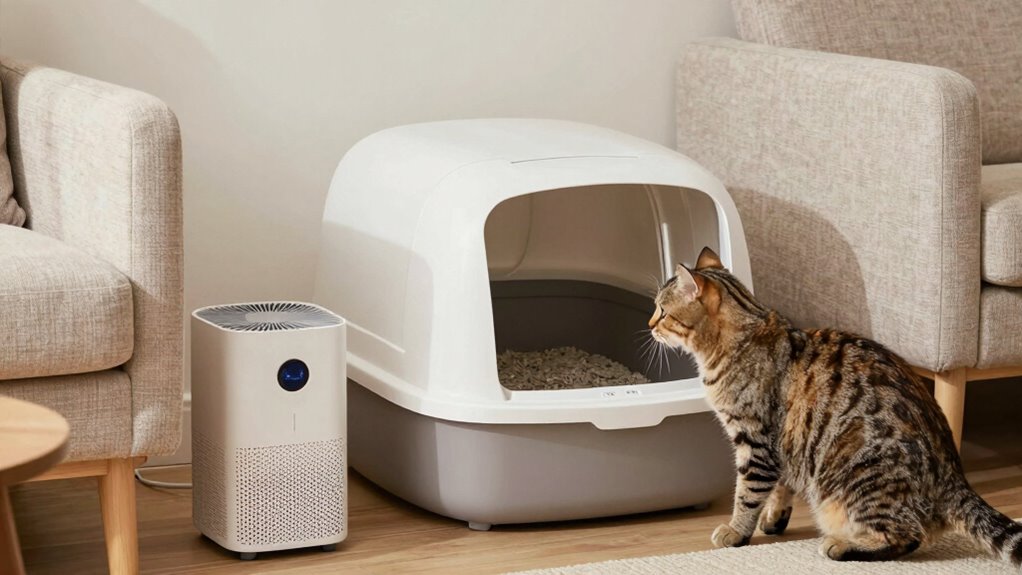

Before blaming your air purifier for lingering cat litter odors, try these three steps: first, place the litter box in a well-ventilated spot away from vents and high-traffic areas. second, use odor-absorbing materials like baking soda or activated charcoal beneath or around the box. third, clean the litter box regularly—scoop daily and wash it weekly. These simple fixes can make a big difference, and uncovering more tips will help you keep a fresh-smelling home.
Key Takeaways
- Ensure the litter box is well-ventilated and placed away from vents or enclosed areas.
- Regularly scoop waste daily and change the litter weekly to prevent odor buildup.
- Use odor-absorbing materials like baking soda or activated charcoal beneath or around the box.
- Clean and dry the litter box thoroughly at least once a month to eliminate lingering smells.
- Combine proper placement, regular cleaning, and odor absorbers for effective odor control before considering air purifiers.
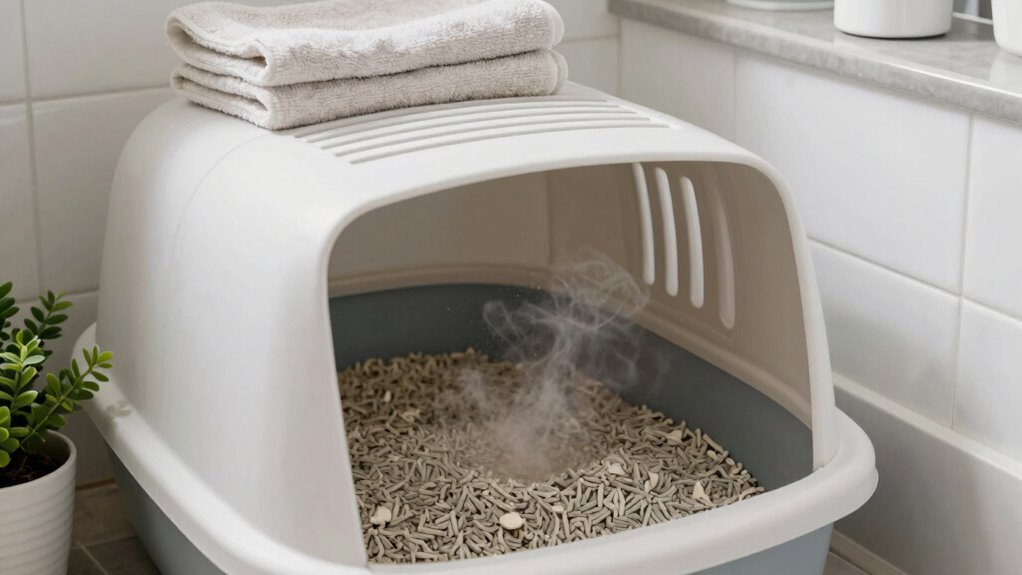
Dealing with cat litter odor can be challenging, especially when it seems to permeate your home despite regular cleaning. The first step to tackling this problem is to evaluate your litter box placement. If your litter box is tucked away in a corner or a low-traffic area, it might seem convenient, but these spots can trap odors and cause them to spread throughout your home. Instead, position the litter box in a well-ventilated spot with good airflow. Avoid placing it near vents, air return areas, or close to where you and your family spend a lot of time. Proper placement reduces the concentration of odor and prevents it from lingering in enclosed spaces.
Next, consider incorporating odor absorbing materials around the litter box. You can place a layer of baking soda or activated charcoal beneath or around the box to help neutralize smells. These materials work by trapping odor molecules, preventing them from escaping into the room. Some commercial odor neutralizers or mats infused with odor-absorbing agents can also be effective. Placing a mat beneath the litter box not only catches stray litter but also adds an extra layer of odor control. Using odor absorbing materials is a simple, cost-effective way to enhance your existing setup without needing to rely solely on cleaning or air purifiers.
Furthermore, maintaining a consistent cleaning routine plays a *vital* role in controlling litter box odor. Scoop waste daily and change the litter regularly, ideally every week or sooner if you notice strong odors. Wash the litter box with soap and water at least once a month to prevent odor buildup. When cleaning, make sure to dry the box thoroughly before refilling it with fresh litter. Additionally, understanding the energy-efficient aspects of modern, innovative cloud solutions can inspire you to choose sustainable options for your home. Combining this routine with strategic litter box placement and odor absorbing materials creates a *thorough* approach that minimizes smell and keeps your home smelling fresh.
Frequently Asked Questions
Can Switching Litter Brands Eliminate Odor Completely?
Switching litter brands can help reduce odor, but it might not eliminate it completely. Look for litter with strong scent control or odor prevention features to improve freshness. Choosing a litter with better absorption and odor-absorbing properties can make a noticeable difference in controlling litter scent. Keep the box clean and scoop regularly to further minimize odors, even if you switch brands for better odor prevention.
How Often Should I Clean the Litter Box for Odor Control?
You should clean the litter box at least once a day to effectively control odor. Regular litter box maintenance is essential for odor prevention strategies, preventing smells from building up. Scoop out waste daily, change the litter regularly, and wash the box weekly. This consistent routine keeps your space smelling fresh and your cat comfortable, reducing the need for harsher odor control measures.
Do Certain Types of Cat Litter Mask Odors Better?
Did you know that 80% of cat owners find scent masking effective? Certain types of cat litter, especially those with fragrance additives, can better mask odors. These litters often contain scent masking ingredients that neutralize smells and leave a fresher scent. If you’re seeking odor control, try litters with added fragrances, but remember regular cleaning is still key. Combining both strategies keeps your home smelling clean and fresh.
Does the Size of the Litter Box Affect Odor Retention?
Yes, the size of your litter box markedly impacts odor absorption. A larger litter box provides more space for your cat to move around, helping waste stay buried and reducing odor buildup. When the box is too small, urine and feces can accumulate quickly, increasing odors. So, choosing a bigger litter box encourages better waste management, keeps odors under control, and makes cleaning easier for you.
Are Air Purifiers Effective Against Litter Box Smells?
Air purifiers can help reduce litter box smells, but they have limitations. They absorb odors effectively, especially with high-quality filters like HEPA and activated carbon. However, they can’t completely eliminate strong or persistent odors on their own. To maximize odor control, combine regular cleaning and proper ventilation with your purifier. Relying solely on it might leave some smells behind, so use it as part of a thorough odor management plan.
Conclusion
Think of your home as a delicate garden. When litter box odors arise, don’t let them wilt your space. Instead, tend to the roots with this simple 3-step fix, restoring freshness like sunlight peeking through cloudy skies. By addressing the source, you’re nurturing a sanctuary where your cat feels safe and your home stays inviting. Remember, a clean litter box is the foundation—your secret to harmony, peace, and a burst of fresh air in your everyday life.