
Monitoring CO₂ levels is essential for effective ventilation and reducing airborne infection risks indoors. When CO₂ concentrations rise above 800-1000 ppm, it signals poor air circulation, which can impair health and increase virus transmission. Using sensors helps you get real-time data to adjust ventilation promptly, ensuring cleaner, safer air. Proper monitoring offers clarity and control, supporting healthier occupants. Keep exploring to discover how to optimize your indoor environment effectively.
Key Takeaways
- CO2 sensors track indoor air quality and identify inadequate ventilation by measuring rising CO2 levels in real time.
- Elevated CO2 levels (>800-1000 ppm) indicate poor ventilation, increasing infection risk and requiring ventilation adjustments.
- Monitoring CO2 helps prevent airborne transmission of viruses by ensuring sufficient fresh air circulation.
- Integrating CO2 sensors into smart systems enables automated ventilation control for safer indoor environments.
- Continuous CO2 monitoring supports proactive measures to maintain healthy, well-ventilated spaces, reducing infection risks.
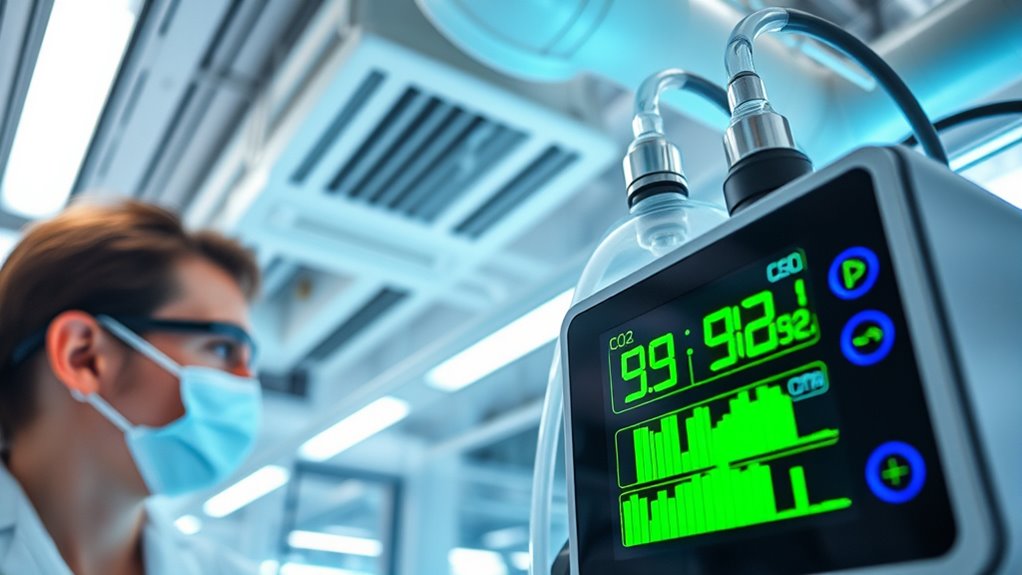
Have you ever wondered how we can track the amount of carbon dioxide in the air around us? It’s an essential question because understanding CO2 levels helps us gauge indoor air quality and guarantee that ventilation systems are working effectively. When CO2 concentrations rise, it typically signals that the air isn’t circulating well, and fresh air isn’t replacing the stale air inside a space. This is especially important in crowded or enclosed environments, where poor ventilation can lead to discomfort and health risks. By monitoring CO2 levels, you can get a real-time snapshot of how well a room is ventilated and whether improvements are needed to maintain a healthy indoor environment.
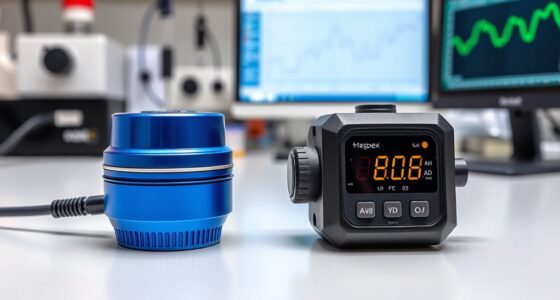
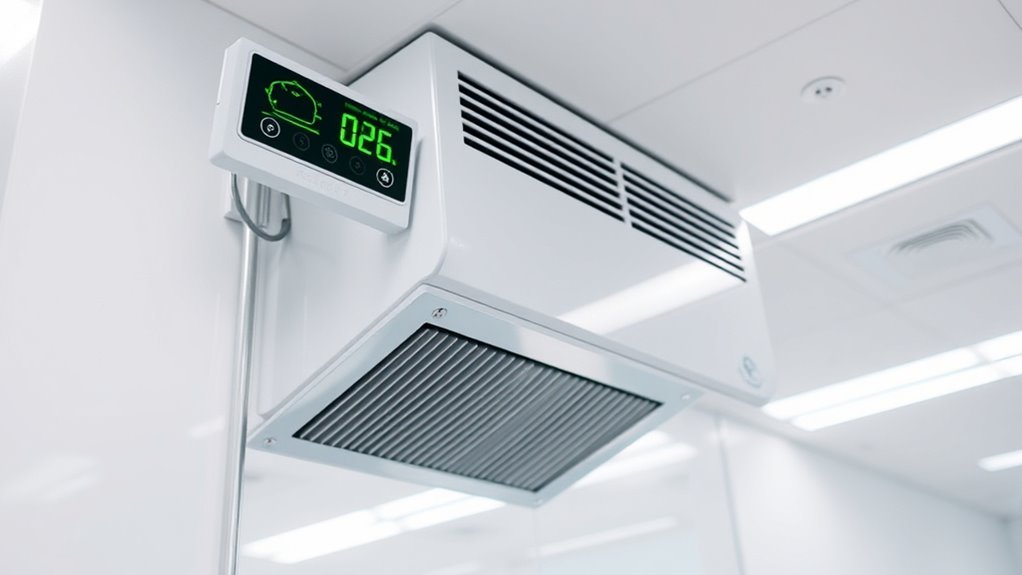
Effective ventilation is key to managing indoor air quality, and CO2 sensors play a critical role here. These devices measure the concentration of CO2 in parts per million (ppm), providing immediate feedback on ventilation effectiveness. If CO2 levels climb above recommended thresholds—often around 800 to 1000 ppm—it’s a clear sign that the room needs more fresh air. This allows you to take quick action, whether by opening windows, increasing mechanical ventilation, or adjusting HVAC systems. The goal is to keep CO2 levels as low as possible to guarantee fresh air supply and prevent the buildup of airborne contaminants, including potential pathogens.
CO2 sensors provide real-time feedback to maintain optimal indoor air quality and prevent airborne contaminants.
Monitoring CO2 isn’t just about comfort; it’s about safety too. In environments like schools, offices, or healthcare facilities, high CO2 levels can impair cognitive function and increase the risk of airborne infections. When CO2 sensors alert you to rising levels, it’s a prompt to improve ventilation, reducing the risk of airborne transmission of viruses and bacteria. This proactive approach helps you maintain a safer, healthier indoor environment. Besides health benefits, maintaining good indoor air quality through effective ventilation can enhance productivity and well-being for occupants, making spaces more comfortable and conducive to work or study.
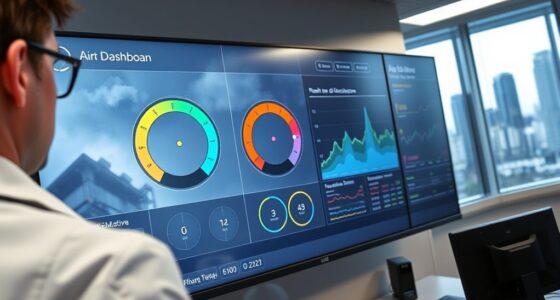
Incorporating CO2 monitoring into your building management provides clarity and control. It’s a straightforward way to guarantee ventilation effectiveness, which directly impacts indoor air quality. Modern CO2 sensors are user-friendly and can be integrated into smart building systems, giving you continuous feedback and automated adjustments. By paying attention to these readings, you’re actively managing indoor air quality, reducing health risks, and creating safer indoor environments. In essence, CO2 monitoring empowers you to optimize ventilation, safeguard health, and keep indoor spaces fresh and breathable for everyone. Proper ventilation plays a vital role in maintaining a healthy indoor environment, especially when combined with effective air quality monitoring.
Frequently Asked Questions
How Often Should CO2 Monitors Be Calibrated?
You should calibrate your CO2 monitors at least every six months to guarantee accurate readings. Regular calibration frequency is essential for reliable sensor maintenance, especially if the monitors are used frequently or in critical environments. Additionally, check the manufacturer’s guidelines, as some models may require more frequent calibration. Proper sensor maintenance helps prevent drift and ensures your ventilation and infection control measures stay effective.
Can CO2 Levels Be Affected by Outdoor Air Pollution?
Yes, outdoor pollutants can affect CO2 levels indoors, especially if ventilation allows outside air in. Poor outdoor air quality, indicated by higher air quality indices, can introduce pollutants that influence indoor air composition. When outdoor pollution is high, you might see elevated CO2 levels or other contaminants, so it’s crucial to monitor indoor air quality continuously to guarantee safe and healthy environments.
What Is the Ideal CO2 Concentration for Indoor Air?
You’re on the right track—aim for a CO2 level below 800 ppm to keep indoor air quality high. This level guarantees good ventilation efficiency, reducing indoor pollution and potential infection risks. When CO2 climbs higher, it’s a sign your space needs better airflow. Keeping indoor CO2 concentrations low helps you breathe easier and stay healthier, proving that sometimes, a little fresh air can work wonders for your environment.
Are Portable CO2 Monitors Accurate Enough for Infection Control?
Portable CO2 monitors can be accurate enough for infection control if you pay attention to sensor accuracy and device calibration. Regularly calibrate your device according to the manufacturer’s instructions, as this guarantees reliable readings. While these monitors provide quick, real-time data, keep in mind they may have some margin of error. For critical environments, consider using high-quality monitors and performing routine calibration to maintain accuracy and effectively manage ventilation.
How Does CO2 Monitoring Integrate With HVAC Systems?
You can integrate CO2 monitoring with HVAC systems by linking sensors to your ventilation controls, enabling real-time adjustments. This integration helps you optimize air exchange and improve ventilation efficiency, ensuring fresh air circulates effectively. When CO2 levels rise, the system increases ventilation to reduce indoor contaminants. This proactive approach enhances air quality, reduces infection risk, and maintains a healthier environment without manual intervention.
Conclusion
By monitoring CO2 levels, you hold the key to safer spaces—like a lighthouse guiding ships through fog. Each reading acts as a beacon, illuminating hidden risks and guiding you to act before problems arise. When you prioritize ventilation, you’re not just clearing the air; you’re shining a light on health and safety. Remember, your awareness is the lantern that transforms a simple number into a symbol of protection for all inside.