For a healthy indoor environment, keeping CO2 levels below 800 to 1,000 ppm is essential. Elevated CO2 indicates poor ventilation, which can lead to discomfort, fatigue, and decreased cognitive function. Proper airflow and adherence to ventilation standards help maintain these levels. If you want to understand how to effectively monitor and control CO2 in your space, there’s more to explore on maintaining safe indoor air quality and ensuring a comfortable environment.
Key Takeaways
- Typical indoor CO2 concentration thresholds for healthy environments are around 800 ppm to 1,000 ppm.
- The American Society of Heating, Refrigerating and Air-Conditioning Engineers (ASHRAE) recommends maintaining CO2 levels below 1,000 ppm.
- Elevated CO2 levels above 1,200 ppm can cause discomfort, fatigue, and impaired cognitive function.
- Monitoring CO2 levels helps ensure ventilation meets recommended standards to maintain indoor air quality.
- Maintaining CO2 concentrations within recommended thresholds reduces health risks and supports occupant well-being.
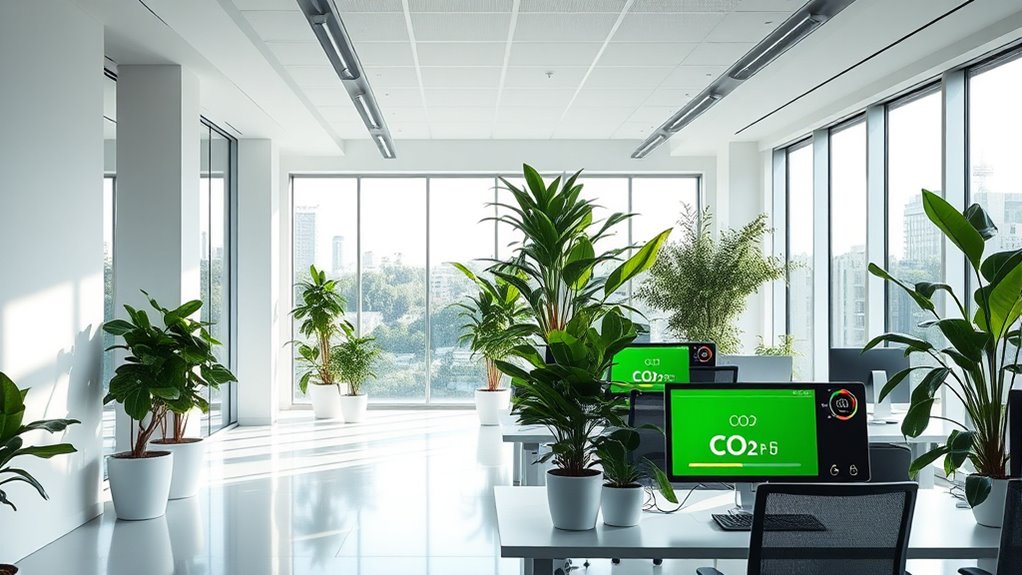
Maintaining proper indoor air quality is essential for health and comfort, and monitoring carbon dioxide (CO2) levels plays a critical role in achieving this. When it comes to creating a safe environment, understanding ventilation standards is key. These standards set the guidelines for how much fresh air needs to be introduced into a space to maintain healthy air quality. They are based on air quality indicators, which help determine if a space is well-ventilated or if adjustments are necessary. By adhering to these standards, you can guarantee that CO2 levels stay within safe thresholds, reducing risks associated with poor air quality.
You might wonder how CO2 levels relate to overall air quality. Elevated CO2 is an effective indicator of insufficient ventilation. When people breathe, they release CO2, so the more occupied a room is, the faster CO2 accumulates. If your indoor space isn’t ventilated properly, CO2 concentrations will rise above recommended thresholds, signaling that fresh air exchange isn’t enough. This can lead to discomfort, fatigue, and even impaired cognitive function. Consequently, tracking air quality indicators like CO2 helps you catch potential issues early before they impact health or productivity. Regular monitoring and understanding ventilation standards are essential for maintaining a healthy indoor environment.
Frequently Asked Questions
How Do CO2 Levels Vary With Different Building Types?
You’ll notice CO2 levels vary based on building design and ventilation strategies. Well-ventilated commercial or school buildings typically maintain lower CO2, while tightly sealed residential buildings can accumulate higher levels if ventilation isn’t sufficient. To keep indoor air healthy, you should consider effective ventilation strategies, like mechanical systems or natural airflow, tailored to each building type. Proper design guarantees CO2 stays within safe limits, promoting better air quality.
What Are the Long-Term Health Effects of Elevated Indoor CO2?
Elevated indoor CO2 levels can negatively impact your indoor air quality over time, leading to issues like headaches, fatigue, and impaired concentration. Prolonged exposure may cause cognitive impairment, making it harder to focus and think clearly. You might also experience reduced alertness and increased discomfort, which can affect productivity and overall well-being. Maintaining proper ventilation helps guarantee good indoor air quality and minimizes these long-term health risks.
How Can Occupants Monitor Indoor CO2 Levels Effectively?
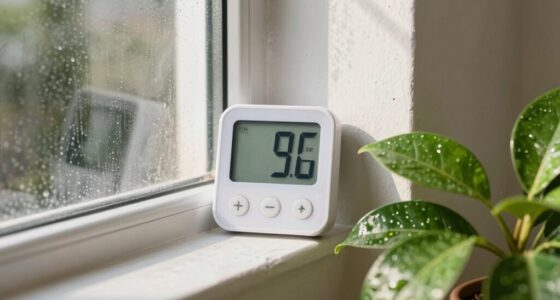
Monitoring indoor CO2 levels is like keeping your finger on the pulse of air quality. You should use a reliable CO2 sensor placed at breathing zone height, away from windows or vents, to get accurate readings. Regularly check these sensors, and consider integrating them with your HVAC system for alerts. This way, you stay aware of air quality and can improve ventilation whenever necessary, ensuring a healthier environment.
Are There Technologies to Automatically Control Indoor CO2?
Yes, you can use automated ventilation systems that rely on CO2 sensors to control indoor air quality. These systems automatically adjust airflow based on real-time CO2 levels, ensuring ideal ventilation without manual intervention. By integrating CO2 sensors with automated ventilation, you maintain healthy indoor environments efficiently, reduce energy consumption, and improve comfort. This technology offers a convenient way to keep indoor air fresh and safe effortlessly.
What Indoor Activities Contribute Most to CO2 Increases?
You contribute most to indoor CO2 increases through activities like talking, singing, and exercising, especially when combined with poor ventilation habits. Higher occupancy density amplifies this effect, as more people release CO2 into the air. To reduce buildup, you should improve ventilation, open windows regularly, and limit the number of people in enclosed spaces. Staying mindful of these factors helps maintain healthier indoor air quality.
Conclusion
So, now you know the importance of maintaining proper CO2 levels indoors. But what happens if those thresholds are crossed? Could your health be at risk without you even realizing it? The stakes are higher than you think. Stay vigilant, monitor your environment, and don’t ignore the signs. Because when it comes to indoor air quality, the difference between comfort and danger could be just a breath away. Are you ready to take control?