When you notice a moldy smell after rain, it’s often a sign of hidden moisture in your crawlspace, which many people overlook. Poor gutter maintenance can cause water to spill over or pool near your home’s foundation, seeping inside and creating damp, mold-prone environments. This moisture can then spread odors upstairs and impact your indoor air quality. Paying attention to these signs can help you catch problems early—if you keep exploring, you’ll find out what steps to take next.
Key Takeaways
- A persistent musty smell after rain often indicates moisture infiltration in the crawlspace, which can lead to mold growth.
- Gutter issues, such as clogs or improper extensions, cause water to spill or pool near the foundation, increasing crawlspace dampness.
- Moisture in crawlspaces elevates indoor humidity and fosters mold, contributing to the moldy smell people often overlook.
- Regular gutter maintenance and proper drainage are crucial to prevent water intrusion and reduce mold risk in the crawlspace.
- Early signs like musty odors and hidden mold patches should prompt inspection of gutters and crawlspaces to prevent costly damage.
After a heavy rain, you might notice a musty, moldy smell lingering in your home or around your property. That odor is often a sign of hidden moisture problems, and one common culprit is humidity issues stemming from poor gutter maintenance. When gutters aren’t functioning properly, water can spill over the sides or pool around your foundation, seeping into crawlspaces and creating the perfect environment for mold growth. It’s easy to overlook gutter health, but neglecting it can lead to persistent dampness and that unpleasant smell that seems to cling to every corner of your house.
You might think the problem is only inside, but the real trouble often starts beneath your home, in the crawlspace. When gutters fail to direct water away from your foundation, it accumulates nearby and infiltrates the lower levels of your house. This excess moisture raises humidity levels inside your crawlspace, which then migrates upward, affecting your entire home’s air quality. That dampness not only fosters mold but also attracts pests and damages structural components over time. Recognizing the connection between gutter maintenance and humidity issues can help you prevent this cascade of problems before they escalate.
Regular gutter maintenance becomes your first line of defense. Clearing debris, inspecting for leaks, and ensuring downspouts extend far enough away from your house can considerably reduce water intrusion. When gutters are clogged or damaged, water doesn’t flow freely, increasing the risk of overflow during heavy rains. This overflow can pool around your foundation, seeping into cracks or vents that lead to your crawlspace. By keeping gutters clean and aligned, you minimize excess water around your home, consequently decreasing the humidity that promotes mold growth. Additionally, understanding moisture management and how it impacts home health can help you make more informed maintenance decisions.
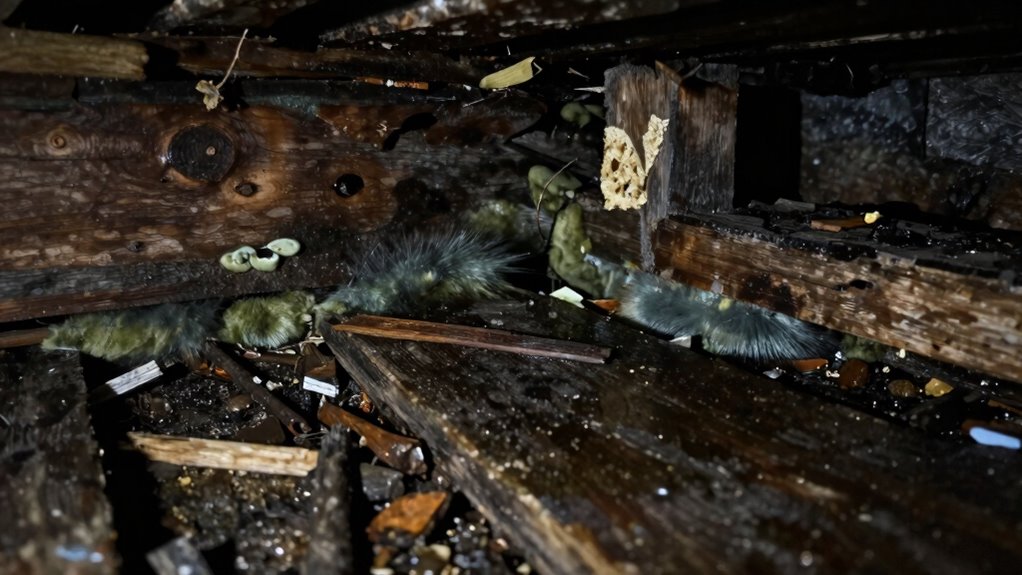
It’s essential to understand that moisture problems don’t always show up immediately. You might not notice water stains or leaks, but a persistent musty smell after rain is a clear warning sign. If you detect that odor, it’s time to check your gutters and inspect your crawlspace for signs of excess moisture, such as mold patches, damp insulation, or rotting wood. Taking proactive steps toward gutter maintenance and controlling humidity levels can save you a lot of trouble down the line, including costly repairs and health risks associated with mold exposure.
Frequently Asked Questions
Can Moldy Smells Occur Without Visible Mold?
Yes, moldy smells can occur without visible mold. You might have hidden mold behind walls, under flooring, or in your crawlspace, making mold detection tricky. The odor often indicates mold spores releasing musty smells, even if you can’t see them. To address this, focus on smell mitigation by improving ventilation and controlling moisture. Professional testing can confirm hidden mold, helping you eliminate the source effectively.
How Long Does It Take for Mold to Develop After Rain?
Like a ticking clock, mold growth timeline varies, but it can start within 24 to 48 hours after post rain moisture seeps in. If your crawlspace remains damp, mold can develop rapidly, often unnoticed until the smell becomes strong. To prevent this, dry out your space quickly and make certain good ventilation. Acting fast is key to stopping mold from establishing deep roots in your home.
Are Certain Materials More Prone to Mold Growth?
Certain materials are more prone to mold growth because they absorb moisture easily. Porous surfaces like wood, drywall, and fabric quickly soak up moisture from rain, creating ideal conditions for mold. You should pay special attention to these materials in your crawlspace or basement, especially after heavy rain. Keeping them dry and well-ventilated helps prevent mold from developing, reducing that musty smell and potential health risks.
Is It Safe to Stay in a Home With a Moldy Smell?
You shouldn’t stay in a home with a moldy smell, as it can harm indoor air quality and cause health issues. Mold remediation is essential to eliminate the source, ensuring a safe environment. Investigate whether the smell is from hidden mold, especially in damp areas like the crawlspace. Prioritize professional testing and remediation to protect your health and improve indoor air quality before considering long-term residence.
What Are the Hidden Signs of Mold in a Crawlspace?
You should look for hidden moisture in your crawlspace, which often indicates mold growth. Check for damp insulation, water stains, or warped wood, as these are signs of ongoing moisture problems. Also, inspect for structural damage like sagging floors or weakened beams, which can result from prolonged mold exposure and moisture. Addressing these signs promptly helps prevent health issues and costly repairs down the line.
Conclusion
So, next time you notice that moldy smell after rain, remember the crawlspace might be the culprit. Moisture seeps in, creating the perfect environment for mold to thrive, often hidden from view. While some think ventilation alone solves the issue, it’s more about addressing the source—like sealing leaks and reducing humidity. Don’t overlook the crawlspace; it’s often the key to stopping that persistent, musty odor and keeping your home fresh.