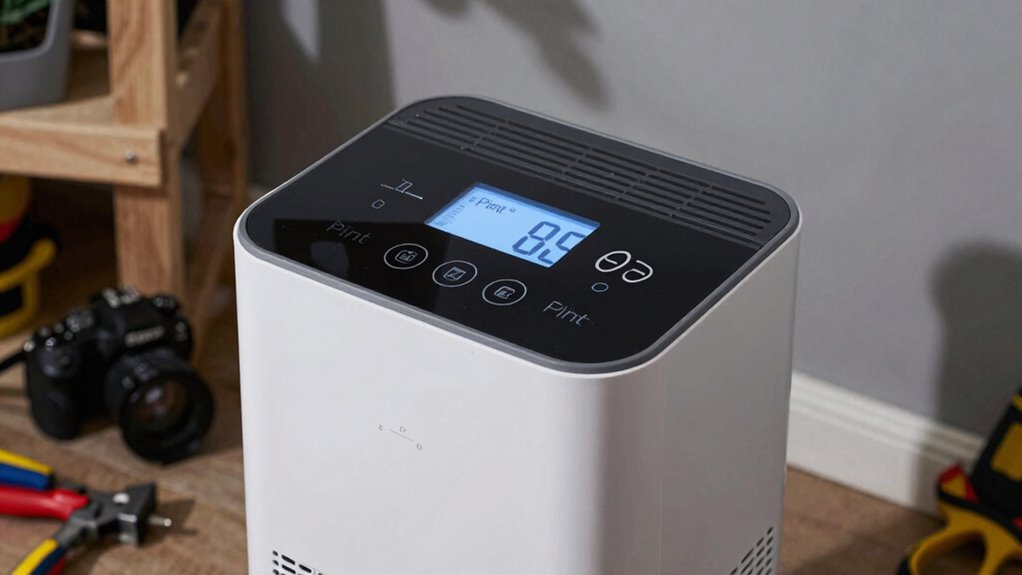
Dehumidifier pint ratings show how much moisture the unit can remove in 24 hours, but this number can be confusing because it doesn’t tell you if the unit suits your space. For small rooms, 20-30 pints may be enough, while larger or damper areas require 50 pints or more. To find the right fit and avoid energy waste or poor performance, it helps to understand how capacity relates to room size—explore more details to get it just right.
Key Takeaways
- Pint ratings indicate moisture removal capacity over 24 hours but don’t directly determine the ideal size for a space.
- Proper dehumidifier sizing depends on room size, humidity level, and moisture issues, not just pint ratings.
- Larger pint capacities aren’t always better; oversizing can waste energy, while undersizing may fail to control humidity.
- Energy efficiency features and proper capacity matching ensure better performance and lower operating costs.
- Understanding the distinction between capacity (pints) and overall effectiveness helps prevent sizing confusion.
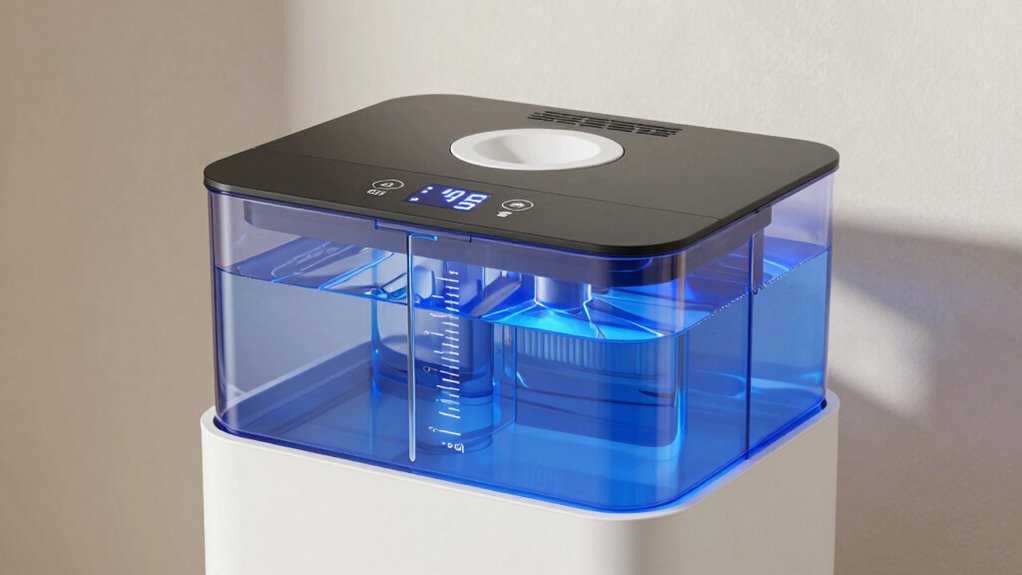
Are you unsure how to choose the right dehumidifier for your space? If so, you’re not alone. Many people find themselves overwhelmed by the various pint ratings and confusing specifications. The key is understanding how these ratings relate to humidity control and energy efficiency. A dehumidifier’s pint rating indicates how much moisture it can remove from the air in a 24-hour period. However, this number alone doesn’t tell you everything you need to know to select the perfect unit for your needs. Instead, you should consider the size of your space, the level of humidity, and how much energy the device consumes. Understanding dehumidifier capacity helps ensure you select a unit that balances performance and energy use effectively.
When it comes to humidity control, choosing a dehumidifier with the right pint rating ensures that you can maintain comfortable, healthy indoor air quality without overworking the device. If your room is small or only slightly humid, a lower pint capacity, such as 20-30 pints, should suffice. For larger rooms or spaces with persistent moisture issues—like basements or laundry rooms—you’ll want a higher capacity, perhaps 50 pints or more. Picking a dehumidifier with too high a pint rating for a small space can waste energy and drive up your electricity bill. Conversely, undersizing it can lead to inadequate humidity control, leaving you with dampness, mold, and discomfort.
Energy efficiency plays a significant role in the decision-making process. Modern dehumidifiers often come with Energy Star ratings, helping you identify models that consume less power while delivering effective humidity control. Opting for an energy-efficient unit not only reduces your environmental impact but also saves you money in the long run. Keep in mind that larger units with higher pint capacities tend to use more energy, so balancing capacity with efficiency is vital. Look for features like adjustable humidistats, auto shut-off, and programmable timers, which help optimize energy use and prevent unnecessary operation.
Frequently Asked Questions
How Do I Calculate My Room’s Exact Humidity Needs?
To calculate your room’s exact humidity needs, start with humidity measurement using a hygrometer to determine current air moisture levels. Note the ideal humidity range for comfort, typically between 30-50%. Then, assess your room’s size and moisture sources, like plants or leaks. This helps you choose a dehumidifier that effectively reduces excess air moisture, maintaining a comfortable environment without over- or under-drying the space.
Can I Use a Smaller Dehumidifier for Shorter Durations?
Yes, you can use a smaller dehumidifier for shorter durations, but keep in mind that sizing accuracy affects its efficiency and lifespan. A undersized unit may struggle to remove enough moisture quickly, causing it to run constantly and wear out faster. For short-term needs, a slightly smaller dehumidifier can work, but make sure it’s powerful enough to handle your room’s humidity levels. Proper sizing helps maximize lifespan and keeps humidity under control.
Do Dehumidifiers Lose Efficiency Over Time?
Yes, dehumidifiers can lose efficiency over time if you neglect proper dehumidifier maintenance, like cleaning filters and coils. Humidity sensors might also become less accurate, causing the unit to run longer or shorter than needed. Regularly maintaining your dehumidifier ensures it operates at peak performance, saving energy and extending its lifespan. Keep an eye on sensor accuracy and clean components to maintain consistent humidity control.
What Are the Energy Costs Associated With Different Pint Ratings?
Like a car’s fuel efficiency, dehumidifier pint ratings influence your energy costs. Smaller units with lower pint ratings typically consume less energy, reducing operational costs, but may need more frequent emptying or longer run times. Larger units with higher ratings use more energy but can dehumidify faster. To save money, choose a size that matches your space and humidity level, balancing energy consumption and effectiveness.
How Do Climate Differences Affect Dehumidifier Sizing?
Climate impact plays a big role in humidity control, so you need to size your dehumidifier accordingly. In humid environments, like coastal areas, you’ll want a larger unit to handle excess moisture. Conversely, in drier climates, a smaller dehumidifier adequately. Pay attention to your local climate differences to guarantee effective humidity control, prevent mold, and keep your space comfortable without wasting energy or money.
Conclusion
Understanding pint ratings helps you choose the right dehumidifier, prevents confusion, and guarantees comfort. Knowing what each rating means guides you to make smarter decisions, saves you money, and keeps your space dry. By comparing capacities, clarifying specifications, and asking the right questions, you empower yourself. So, don’t get overwhelmed by numbers—focus on what your space needs, trust your judgment, and enjoy a more comfortable, healthier environment.