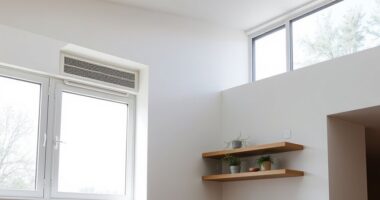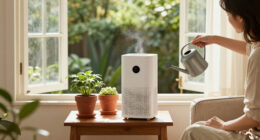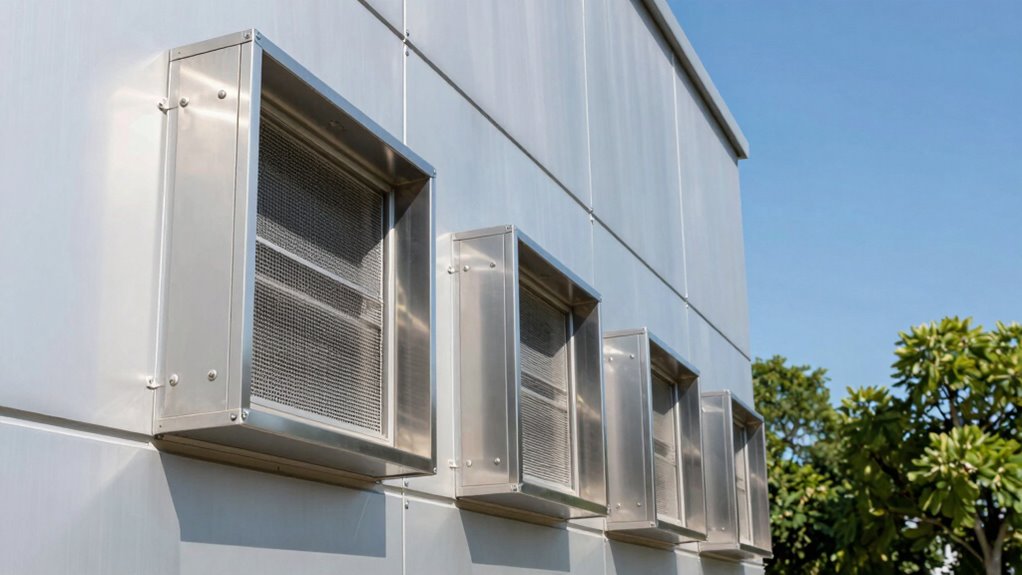
To add outdoor air without importing pollution, choose intake locations away from busy roads or industrial areas. Install filters or screens to block dirt, pollen, and particles, and consider using smart ventilation systems like HRVs or ERVs that filter and recover energy. Regular maintenance, such as cleaning or replacing filters, guarantees peak performance. By carefully planning and using advanced technology, you can improve indoor air quality while minimizing pollution risks—discover more tips to keep your air clean and fresh.

Get garden gear delivered free — and shop member deals
- Fast, free delivery on millions of items
- Access to Prime Big Deal Days deals on October 6–7
- Prime Video, Amazon Music and more included
Key Takeaways
- Select intake locations away from pollution sources like busy roads or industrial areas.
- Install high-quality filters or screens to block dirt, pollen, and particulate matter from outdoor air.
- Use smart ventilation systems with sensors that adjust fresh air intake based on air quality.
- Incorporate heat or energy recovery ventilators to filter incoming air and conserve energy.
- Regularly maintain and replace filters to ensure continuous protection against outdoor pollutants.
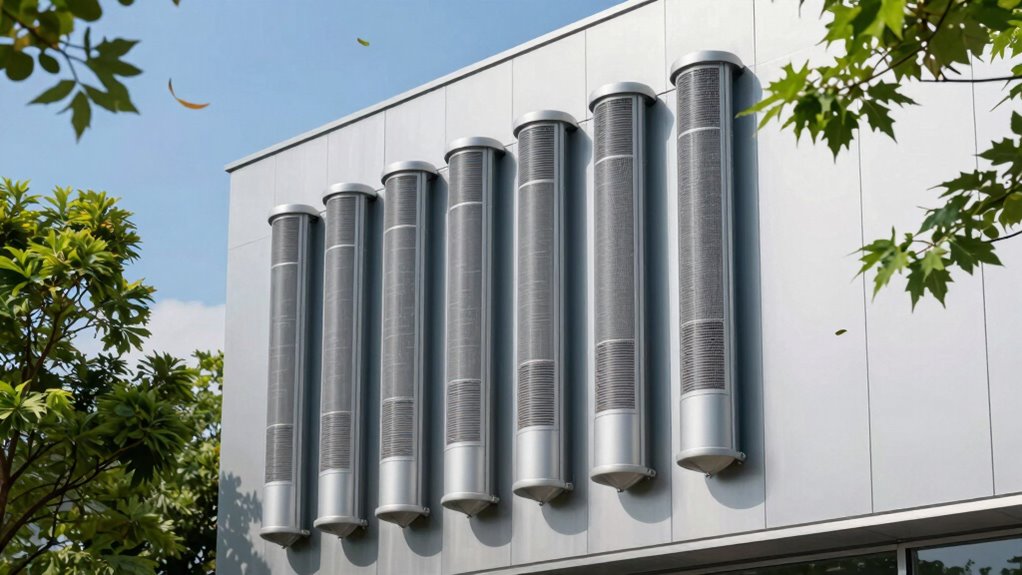
Have you ever wondered how to guarantee your indoor air stays fresh and healthy? If so, understanding fresh air intakes is essential. Properly adding outdoor air to your indoor environment can dramatically improve indoor air quality without sacrificing energy efficiency. Many people overlook how vital fresh air is for comfort and health, especially in tightly sealed homes where stale air can accumulate quickly. By integrating effective fresh air intake strategies, you ensure a continuous flow of clean air, reducing pollutants and allergens that can harm your well-being. Incorporating ventilation technology that filters outdoor air can further enhance air quality while maintaining energy efficiency. The key challenge lies in balancing the need for fresh air with the risk of importing outdoor pollution. You don’t want to compromise your indoor air quality by bringing in contaminated air from busy streets or industrial areas. That’s why designing a smart fresh air intake system is crucial. It involves selecting the right location and technology to minimize pollution ingress while maximizing fresh, oxygen-rich air. Ventilation systems with filters, heat recovery ventilators (HRVs), or energy recovery ventilators (ERVs) can help you achieve this balance. These systems bring in outdoor air, filter out pollutants, and recover energy from the outgoing stale air, making the process highly energy efficient.
Ensuring fresh, healthy indoor air with smart intake strategies boosts comfort and health.
When planning your fresh air intake, consider the outdoor environment. Choose intake points away from sources of pollution, such as busy roads, factories, or areas with strong odors. Installing filters or screens at these points can further prevent dirt, pollen, and particulate matter from entering your home. Additionally, integrating automated controls that respond to indoor air quality sensors ensures you only bring in outdoor air when necessary, conserving energy and maintaining a healthy atmosphere inside. This approach not only boosts indoor air quality but also enhances energy efficiency, as the system adjusts its operation based on real-time conditions, reducing unnecessary heating or cooling.
Another important aspect is regular maintenance. Clean or replace filters regularly to keep your system functioning effectively. Proper maintenance ensures that your fresh air intake system continues to operate efficiently, saving energy and maintaining a healthy indoor environment. When you prioritize these details, you create a space that’s comfortable, safe, and energy-smart. Fresh air intakes, when executed properly, allow you to enjoy the benefits of outdoor air without importing pollution, ensuring your indoor air quality remains high. This proactive approach supports your health, conserves energy, and creates a more sustainable living environment overall.
As an affiliate, we earn on qualifying purchases.
Frequently Asked Questions
How Do Fresh Air Intakes Affect Indoor Humidity Levels?
Fresh air intakes influence your indoor humidity levels by bringing in outdoor air that affects your home’s moisture balance. Proper humidification control helps you maintain ideal humidity, preventing it from becoming too dry or too humid. When you manage your fresh air intake effectively, you ensure a consistent moisture balance, improving comfort and air quality. This helps avoid issues like mold growth or dryness, keeping your indoor environment healthier and more comfortable.
What Maintenance Is Required for Outdoor Air Intake Systems?
You should regularly clean or replace filters to guarantee your outdoor air intake system stays efficient. Conduct routine system inspections to check for blockages, corrosion, or damage. Keep the intake area clear of debris and vegetation that could obstruct airflow. Additionally, verify that fans and ducts are functioning properly. Proper maintenance ensures your system provides fresh air without introducing pollutants, maintaining indoor air quality and system longevity.
Can Fresh Air Intakes Be Installed in Existing Buildings?
Yes, you can install fresh air intakes in existing buildings. You’ll need to check building codes to guarantee compliance with local regulations and plan for installation costs, which vary based on building size and system complexity. Proper placement and sealing are essential to prevent pollution ingress. Hiring a professional ensures the system integrates seamlessly, improves indoor air quality, and adheres to safety standards, making your building healthier and more comfortable.
How Do Air Intakes Impact Energy Efficiency?
Think of air intakes as the heart of your building’s energy efficiency. When properly installed, they optimize air filtration, keeping pollutants out and reducing the load on your HVAC system. This process leads to significant energy savings, as your system runs more efficiently and consumes less power. By balancing fresh air with filtration, you protect indoor air quality while minimizing energy costs—making your building smarter and more sustainable.
Are There Specific Locations Best Suited for Outdoor Air Intakes?
You should place air intakes away from busy roads, industrial sites, and potential pollution sources to prevent contaminants from entering your building. Choose low, well-ventilated locations that allow fresh air to circulate effectively. Proper air intake placement considers factors like wind direction and surrounding obstructions, ensuring efficient ventilation without importing pollution. Prioritize clear, open spaces for ideal air quality and energy efficiency.
Conclusion
Think of your home’s clean air intake like a trusted friend opening a window on a breezy day—inviting in crisp, invigorating air while keeping out the pollution. Just like you’d choose the right moment for fresh air, carefully selecting and maintaining your intake ensures your space stays healthy. When you do it right, you create a breath of fresh air that’s as reliable as that perfect spring breeze—renewing your home’s atmosphere every day.
Fall Picks
fall essentials
As an affiliate, we earn on qualifying purchases.