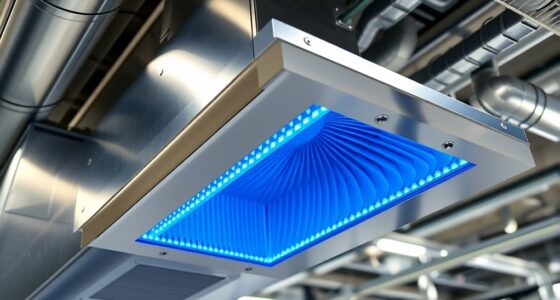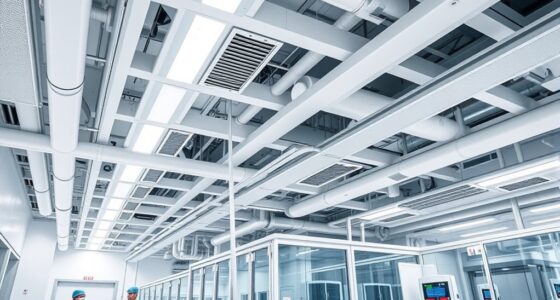
Whole-house HVAC filtration works continuously, integrated with your central system to improve air quality across the entire home. Portable units are standalone devices placed in specific rooms, targeting localized areas. While whole-house filters impact overall circulation, portable units are easy to set up but only affect the space they occupy. Proper maintenance is key for both, and each has its strengths depending on your needs. Want to discover which option suits your home best? Keep exploring.
Open a free Amazon Business account
Business pricing, bulk buying and tax-exempt orders.
As an affiliate, we earn on qualifying purchases.
Key Takeaways
- Whole-house HVAC filtration integrates with the central system to filter air throughout the entire home, while portable units serve specific rooms.
- Whole-house systems provide consistent air quality but require regular maintenance; portable units are easy to set up and maintain locally.
- Whole-house filters target airborne pollutants across all rooms, whereas portable units focus on localized air purification.
- Whole-house systems depend on filter quality and system upkeep, while portable units typically use HEPA filters for fine particle removal.
- Whole-house filtration impacts overall home air circulation, but portable units only improve air quality in their immediate vicinity.
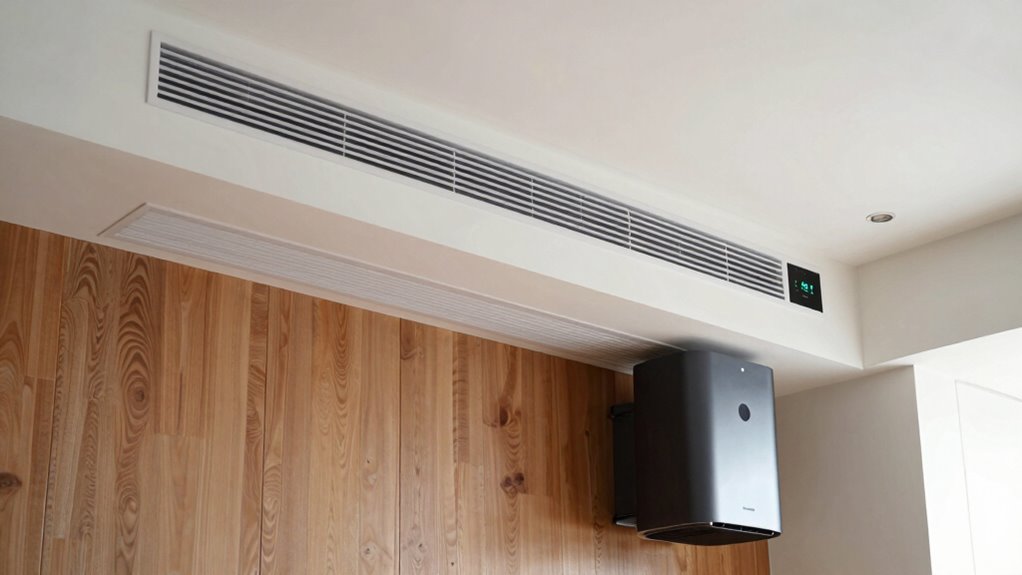
When it comes to improving indoor air quality, understanding the differences between whole-house HVAC filtration and portable filtration systems is essential. Both options aim to remove airborne pollutants, but they operate very differently and serve distinct needs. Whole-house systems are integrated with your central HVAC, meaning they filter the air as it circulates throughout your entire home. Once installed, these filters work continuously, capturing dust, pollen, pet dander, and other particles before the air reaches your living spaces. Because of this, they tend to provide a consistent level of air quality improvement across every room, making them ideal for maintaining healthier indoor environments. However, their effectiveness heavily depends on regular system maintenance. You need to change filters as recommended by the manufacturer and ensure the entire system is functioning properly to keep air quality high. Neglecting system maintenance can lead to reduced airflow, increased strain on your HVAC, and diminished filtration performance. Additionally, system maintenance is crucial for ensuring that the filtration system continues to operate efficiently and effectively. Proper filter replacement and prompt attention to any system issues will help sustain optimal air quality. Moreover, understanding the filtration efficiency of your system can help you select the right filters for your needs. It’s also beneficial to consider the air exchange rate in your home, as this impacts how quickly pollutants are replaced with filtered air.
On the other hand, portable filtration units are standalone devices that you can place in specific rooms or areas where you spend the most time. They’re easy to set up and don’t require any installation or integration with your existing HVAC system. Their portability allows you to target particular spaces that may have higher pollutant levels, such as bedrooms or offices, providing localized air quality improvements. These units often come with HEPA filters capable of capturing very fine particles, making them effective against allergens, smoke, and other airborne irritants. Since they are independent devices, maintaining their filters is straightforward—you simply replace or clean them as needed. This ease of system maintenance ensures you consistently get good air quality without much hassle. However, because they operate in a limited space, they don’t impact the air quality of your entire home, which could be a downside if pollutants are widespread.
As an affiliate, we earn on qualifying purchases.
Frequently Asked Questions
Can Portable Filters Replace Whole-House HVAC Systems Entirely?
Portable filters can’t fully replace whole-house HVAC systems because of their limitations. They struggle with coverage, especially for large spaces, and may not be compatible with your existing system. While portable filters improve air quality locally, they don’t filter every corner of your home or handle heating and cooling. For thorough air purification, a whole-house system is more effective and ensures consistent filtration throughout your living space.
How Often Should Each Type of Filter Be Replaced?
Did you know that a typical HVAC filter needs replacing every 3 to 6 months? You should follow the recommended replacement schedule for each filter type. Whole-house filters generally last longer—about 6 to 12 months—while portable filters often need changing every 1 to 3 months. Regularly checking filter lifespan and sticking to the suggested schedule guarantees maximum air quality and system efficiency.
Do Both Systems Improve Indoor Air Quality Equally?
Both systems improve indoor air quality, but they do so differently. Whole-house HVAC filtration provides extensive air filtration, capturing indoor allergens across your entire home through your HVAC system. Portable filters target specific rooms, helping reduce indoor allergens locally. While both enhance air quality, whole-house systems often offer more consistent and thorough air filtration, especially for allergens, dust, and pollutants, ensuring cleaner indoor air throughout your home.
Are There Energy Efficiency Differences Between the Systems?
You’ll find that whole-house HVAC filtration often has higher filtration effectiveness, capturing more airborne particles across your entire home. However, it usually consumes more energy due to constantly running your central system, leading to increased energy consumption. Portable filtration units, on the other hand, typically use less energy but may not provide the same thorough coverage or filtration effectiveness. Balancing these factors depends on your priorities for air quality and energy efficiency.
Which System Is More Cost-Effective Long-Term?
You’ll find that whole-house HVAC filtration is more cost-effective long-term because of its lower maintenance costs and broader coverage, reducing the need for multiple units. Its initial investment might be higher, but over time, you save on replacement filters and added portable units. A thorough cost comparison shows that, for overall efficiency and convenience, whole-house systems tend to be more economical, especially in larger homes or for those with allergy concerns.
Conclusion
Think of your home’s air filtration like a mighty fortress versus a trusty shield. Whole-house HVAC filters act as a fortress, protecting every room from airborne pollutants, much like walls keeping out invaders. Portable units, on the other hand, are like shields—great for targeted defense but less all-encompassing. For truly clean air, consider the fortress approach; it’s the deep, wide barrier that keeps your home safe and breathable, no matter where you are.
Flea & tick season Picks
flea and tick prevention
As an affiliate, we earn on qualifying purchases.