To quickly diagnose poor air circulation at home, start by feeling your vents and registers to check airflow strength. Open windows to compare indoor air movement with outside breezes, and note any areas where air feels stagnant or warm. Look for uneven temperatures or lingering odors, which may signal ventilation issues. If you want to identify specific problems and improve your system, there’s more to explore to guarantee better airflow throughout your home.
Listen free for 30 days with Audible
Thousands of audiobooks and originals — cancel anytime.
As an affiliate, we earn on qualifying purchases.
Key Takeaways
- Feel vents and registers to detect weak or inconsistent airflow in different rooms.
- Open windows to compare indoor breeze levels and identify stagnant areas.
- Inspect filters and ductwork for dust, obstructions, or damage affecting circulation.
- Observe temperature differences and odors to locate poorly ventilated zones.
- Check for furniture or curtains blocking vents or airflow pathways.
Have you ever noticed stuffy rooms, lingering odors, or uneven temperatures in your home? These are common signs of inadequate air circulation, which can impact your comfort and even your health. The fastest way to diagnose this issue is by performing a simple air flow analysis and a ventilation check. These steps help you identify where the airflow is insufficient or obstructed, giving you a clear picture of your home’s ventilation health.
Start by observing how air moves through your space. Stand in different rooms, open windows, and check whether you feel a gentle breeze or if the air feels stagnant. If certain areas remain warm, stuffy, or smell musty, it’s a sign that airflow isn’t reaching those spots effectively. To get a more precise idea, you can perform a quick air flow analysis. This involves turning on your HVAC system and noting the differences in airflow at vents, registers, and exhaust fans. Are some vents blowing air strongly while others barely produce a whisper? Are there rooms that don’t seem to get any air at all? These clues point directly to areas needing attention.
Check airflow by feeling vents and rooms to identify areas with poor circulation and airflow issues.
Next, conduct a ventilation check by inspecting your home’s vents, filters, and ductwork. Dirty filters or blocked vents inhibit air movement, causing poor circulation. Remove filters and check for dust or debris; replace or clean them as necessary. Make sure vents are open and unobstructed—furniture or curtains blocking vents can severely reduce airflow. Also, look for any visible damage or kinks in ductwork that might restrict airflow. If you notice uneven airflow or persistent odors despite these efforts, it indicates that your ventilation system isn’t functioning at its best. Additionally, understanding indoor air quality and how it’s affected by airflow can help you make more informed decisions about your ventilation needs. Recognizing the design of your home’s ventilation system can also provide insights into potential airflow issues and areas for improvement. Remember that home ventilation plays a critical role in maintaining a healthy indoor environment.
Sometimes, the problem isn’t just visible blockages but how your home’s design influences airflow. Poorly placed vents or a lack of proper intake and exhaust points can cause stagnation. Consider whether your home has enough ventilation points, especially in areas prone to humidity or odors like kitchens and bathrooms. An effective ventilation check helps you see if your current system is enough or if you might need to upgrade or tweak it. Knowing home ventilation design can assist in identifying systemic issues that may require professional assessment or modification. Furthermore, consulting a ventilation specialist can help you discover systemic airflow issues that are not immediately apparent.
As an affiliate, we earn on qualifying purchases.
Frequently Asked Questions
Can Poor Air Circulation Cause Health Issues?
Yes, poor air circulation can cause health issues. When ventilation efficiency drops, it hampers the exchange of stale air with fresh air, leading to poor air quality. This can result in headaches, allergies, respiratory problems, and fatigue. You might notice stuffy rooms or lingering odors. Improving ventilation efficiency boosts air quality, helping you breathe easier and reducing potential health risks caused by stagnant, poorly circulated air.
How Often Should I Check My Home’s Air Circulation?
Think of your home’s air as a river that needs constant flow. You should check your ventilation systems and airflow patterns monthly, especially during seasonal changes or when you notice stuffiness or odors. Regular inspections help catch blockages or malfunctions early. If you have allergies or asthma, consider more frequent checks. Staying vigilant guarantees your home’s air stays fresh, healthy, and moving smoothly like a well-flowing stream.
Are There Affordable Tools to Measure Air Flow Accurately?
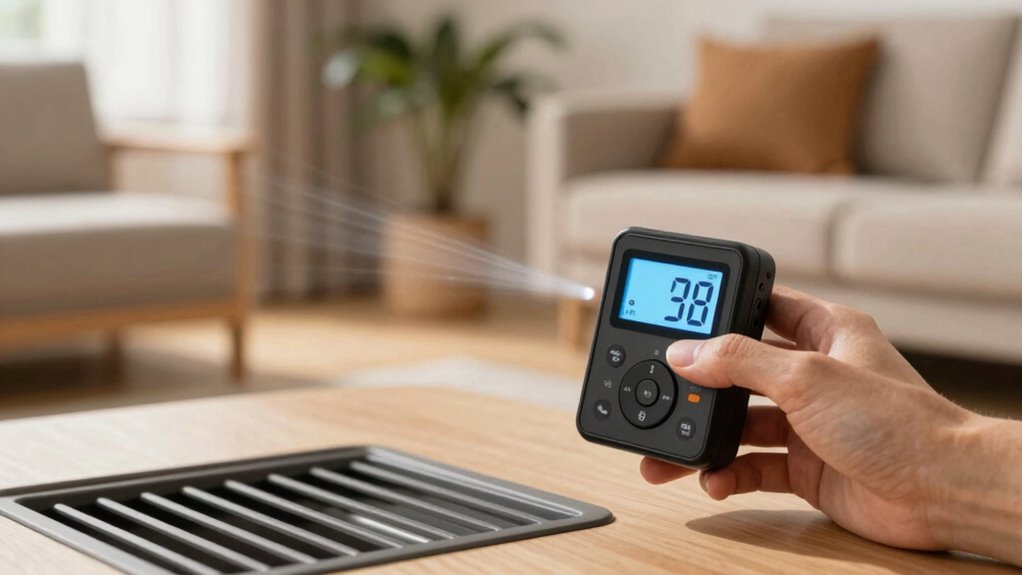
Yes, there are affordable tools like anemometers and DIY airflow testers that can help you measure air flow accurately without breaking the bank. Anemometers are compact devices that give quick readings of airspeed, while DIY testers, such as smoke sticks or tissue papers, visually show airflow patterns. These tools are easy to use and provide reliable results, making it simpler for you to identify and improve poor air circulation at home.
Does Air Circulation Vary With Seasons?
Yes, air circulation definitely varies with seasons. As temperatures change, so does seasonal airflow, impacting ventilation efficiency inside your home. During winter, cold air tends to stay stagnant without proper circulation, while summer breezes can boost airflow. These shifts can influence comfort and air quality. Staying aware of seasonal airflow patterns helps you adjust ventilation strategies, ensuring your home remains well-ventilated and comfortable year-round.
Can Indoor Plants Improve Air Circulation Naturally?
Indoor plants can improve air circulation naturally by enhancing plant placement and promoting natural airflow. When you position plants strategically near vents or windows, they help create movement in the air, reducing stagnation. The leaves and branches channel air through your space, encouraging circulation. Keep in mind, though, that while plants contribute to better airflow, they work best alongside other ventilation methods for ideal indoor air quality.
Conclusion
Remember, a chain is only as strong as its weakest link. If you suspect poor air circulation, don’t wait for problems to worsen. Perform a simple test—hold a tissue near vents or open windows to see how air flows. Fixing issues early keeps your home comfortable and healthy. Act now, and you’ll prevent small problems from becoming costly repairs later. After all, a well-ventilated home is the foundation of a happy, healthy life.
Fall Picks
fall essentials
As an affiliate, we earn on qualifying purchases.