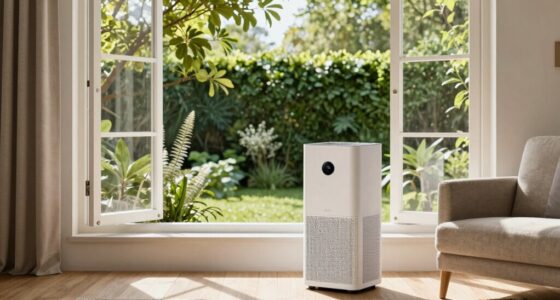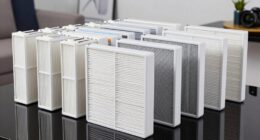
Air purifiers can’t remove CO2 because they’re designed to trap particles, allergens, and VOCs, not gases like carbon dioxide. They use HEPA or activated carbon filters that are ineffective against gases, so they won’t lower indoor CO2 levels. To control CO2, you need proper ventilation—like opening windows or using air exchange systems—that bring in fresh air. If you want more details, you’ll find useful tips on how to effectively manage indoor air quality.
Key Takeaways
- Air purifiers primarily remove particles, allergens, and VOCs, not gases like CO2.
- HEPA and activated carbon filters do not effectively reduce indoor CO2 levels.
- CO2 is a gas, so increasing ventilation is necessary to lower its indoor concentration.
- Opening windows or using mechanical ventilation systems helps dilute and remove CO2.
- Proper air exchange methods are essential for managing indoor CO2, beyond air purification.
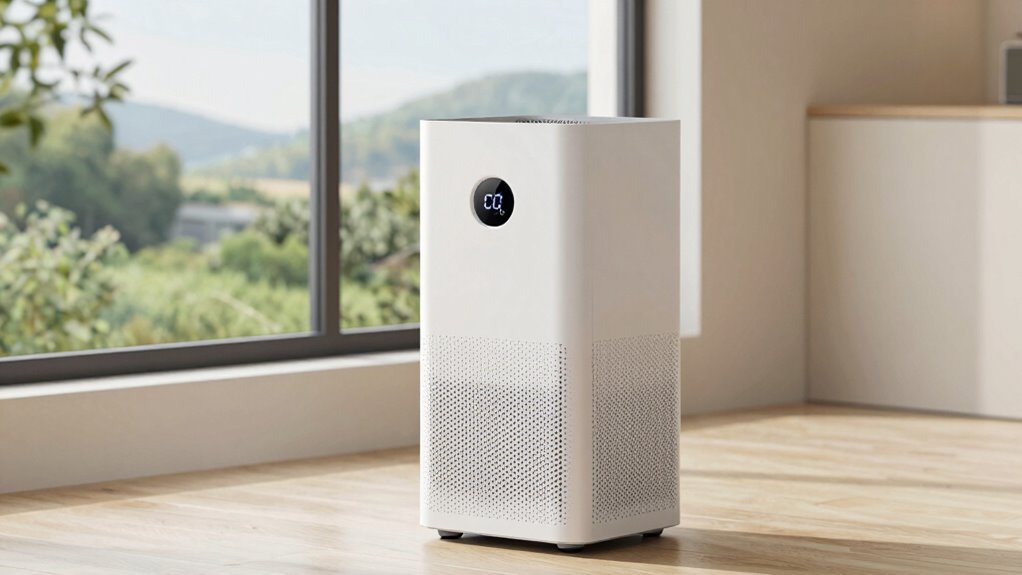
Have you ever wondered how air purifiers impact carbon dioxide (CO2) levels in indoor spaces? It’s a common question, especially as many people seek ways to improve indoor air quality. The truth is, air purifiers are designed to target particles, allergens, and some airborne pollutants, but they don’t substantially affect CO2 levels. CO2 is a gas, and most air purifiers use filters like HEPA or activated carbon, which aren’t built to remove gases. Instead, they excel at trapping dust, pollen, pet dander, and volatile organic compounds (VOCs). So, if you’re concerned about high CO2 levels indoors, an air purifier isn’t the solution you need.
Indoor air quality depends heavily on ventilation. When a room has poor ventilation, CO2 levels can quickly rise because we exhale CO2 with every breath. Without enough fresh air coming in, the concentration builds up, leading to stuffy environments and potential discomfort. In contrast, good ventilation introduces outside air, diluting indoor CO2 and improving overall air quality. This process is essential because elevated CO2 levels can cause headaches, fatigue, and decreased concentration. Simply put, while an air purifier can help you breathe cleaner air by removing certain particles, it won’t do much to lower the CO2 concentration in your space.
If you want to genuinely reduce CO2 levels, you need to focus on increasing ventilation. This could mean opening windows and doors regularly or using mechanical ventilation systems like exhaust fans or air exchange systems. These methods bring in fresh outdoor air and expel stale indoor air, effectively managing CO2 buildup. In crowded or poorly ventilated spaces, this becomes even more important, as more occupants exhale CO2, making ventilation the primary line of defense. Some advanced systems, like heat recovery ventilators, can also help balance energy efficiency with air exchange, ensuring you get fresh air without losing too much heat. Additionally, home ventilation solutions can be integrated into your space to maintain healthy CO2 levels efficiently.
Frequently Asked Questions
Can Air Purifiers Improve Indoor Air Quality Overall?
Yes, air purifiers can improve indoor air quality overall, but they work best when combined with proper ventilation strategies. They help reduce airborne pollutants and allergens, but they don’t substantially lower CO2 levels. To really improve air quality, you should focus on increasing air exchange through ventilation, opening windows, or using exhaust fans. Combining air purifiers with good ventilation creates a healthier indoor environment for you.
What Other Methods Effectively Reduce CO2 Levels Indoors?
To effectively reduce indoor CO2 levels, you should focus on ventilation strategies and air exchange. Open windows regularly to let fresh air in, and use exhaust fans or air exchangers to improve airflow. Consider installing mechanical ventilation systems that bring in outdoor air and remove stale indoor air, ensuring consistent air exchange. These methods help dilute CO2 concentrations, keeping indoor air healthier and more comfortable for everyone.
Do Plants Help Lower CO2 Concentrations in Homes?
They say a picture is worth a thousand words, and plants paint a green canvas in your home. While plant efficacy in reducing CO2 is real, it’s modest at best. Plants can help lower CO2 concentrations, but they won’t replace proper ventilation or air exchange systems. To truly improve indoor air quality, combine plants with good airflow practices, as they support CO2 reduction but aren’t a standalone solution.
How Often Should I Replace Filters in My Air Purifier?
You should replace your air purifier filters every 6 to 12 months, depending on the filter lifespan and how often you use the device. Check your manufacturer’s recommendations and monitor filter performance; if it looks dirty or the airflow decreases, it’s time for a replacement. Regular replacement guarantees ideal air quality and keeps your purifier working efficiently, especially in areas with high pollution or allergens.
Are There Air Purifiers Specifically Designed to Target CO2?
Did you know that indoor CO2 levels can rise by 400-1000 ppm? Most air purifiers aren’t designed for carbon dioxide removal, but some specialized purifiers do target CO2. These models use activated carbon or other advanced filters to absorb or reduce CO2 levels. If managing CO2 is your goal, look for purifiers explicitly labeled for carbon dioxide removal, since standard air purifiers mainly focus on particulates and odors.
Conclusion
Think of air purifiers like bouncers at a club—they can block some unwanted guests, but they can’t clear out the room’s CO2. I once tried one in my stuffy apartment, but it didn’t lower my carbon dioxide levels. Instead, I opened a window and let fresh air flow in. Just like inviting fresh guests to a party, ventilation is your best bet. Remember, purifiers can help with pollutants, but for CO2, the real fix is fresh air exchange.