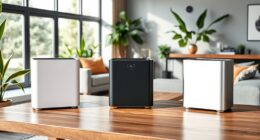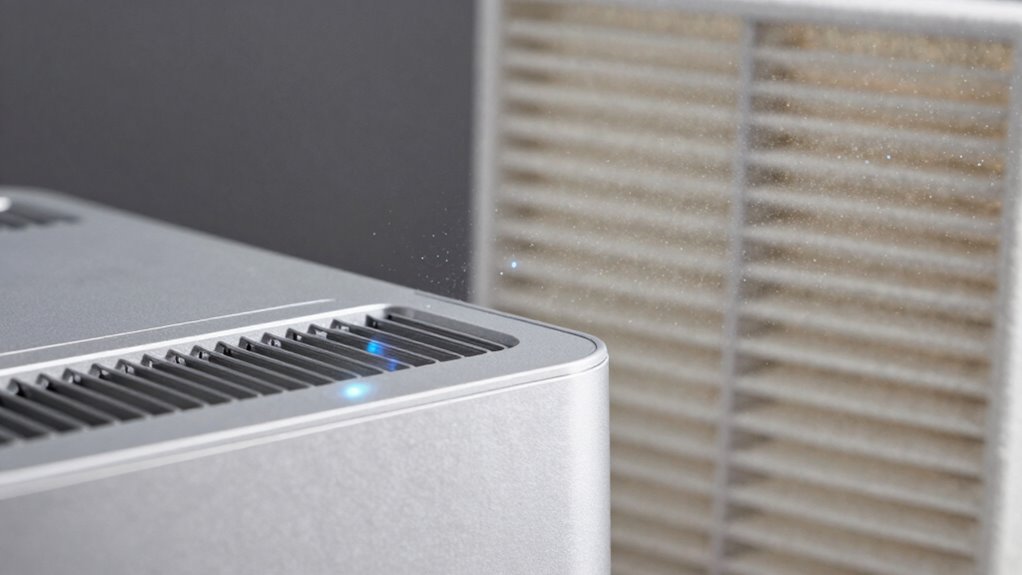

Electronic air cleaners actively remove airborne particles by using ionization, which charges dust, pollen, and allergens so they stick together and are removed from the air. In contrast, passive filters trap contaminants on physical barriers as air flows through them. Electronic cleaners are often better at capturing ultrafine particles but may produce ozone, while passive filters depend on regular replacements. To find out how each system impacts your indoor air quality, keep exploring the details.
Key Takeaways
- Electronic air cleaners use ionization to actively attract and neutralize airborne particles, unlike passive filters that rely on physical barriers.
- They are more effective at capturing ultrafine particles due to their ionization process.
- Electronic cleaners require regular maintenance to sustain ionization efficiency, whereas passive filters need periodic cleaning or replacement.
- They can produce ozone byproducts, which passive filters do not generate.
- Electronic cleaners maintain high performance over time with proper upkeep, while passive filters’ effectiveness depends on saturation and replacement frequency.

When choosing an air filtration system for your home or office, understanding the key differences between electronic air cleaners and passive filters is essential. Electronic air cleaners actively remove airborne pollutants using electrical charges, while passive filters rely on physical barriers to trap particles. This fundamental difference impacts how each system performs and what benefits they offer.
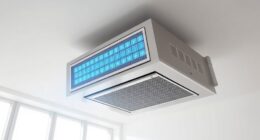
Electronic air cleaners utilize ionization to attract and neutralize particles in the air. They generate ions that attach to dust, pollen, and other allergens, causing these particles to become charged. This process enhances ionization efficiency, meaning the cleaner is often more effective at capturing smaller particles that passive filters might miss. Because of this, electronic cleaners tend to maintain high filtration performance over time, especially with proper maintenance. However, their efficiency can decline if the ionization process becomes less effective due to dust buildup or component wear. This highlights the importance of regular upkeep to sustain ionization effectiveness and guarantee the system continues to perform at its best. Additionally, electronic cleaners can sometimes produce ozone byproducts, which may require consideration in enclosed spaces. Proper ventilation can help mitigate potential ozone concerns.
Electronic air cleaners use ionization to effectively capture tiny airborne particles and maintain high performance with proper upkeep.
In contrast, passive filters operate by physically trapping particles as air passes through them. These filters, often made of fibrous materials, capture contaminants based on size. The filter lifespan depends heavily on the amount of pollutants in your environment and how often you replace or clean the filter. When filters become clogged, airflow decreases, reducing their effectiveness and requiring more frequent changes to maintain good air quality. Unlike electronic cleaners, passive filters don’t rely on electrical processes, so their performance remains relatively consistent until they become saturated with debris. Regularly inspecting and replacing filters can prevent airflow restrictions and maintain filtration efficiency. Furthermore, some passive filters incorporate advanced filtering media to improve their ability to trap ultrafine particles. Understanding the filter media used can help you choose the most suitable option for your needs. Regular replacement or cleaning of passive filters is crucial to prevent airflow restrictions and sustain optimal filtration.
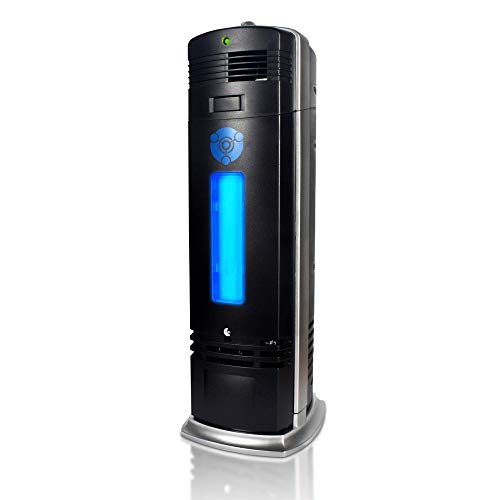
OION Technologies B-1000 Permanent Filter Ionic Air Purifier Pro Ionizer with UV-C, New
- Energy Efficient Design: 7.5W low power consumption
- Cost-Effective Operation: No filter replacements needed
- Compact Size: 17"H x 6"W x 7"D
As an affiliate, we earn on qualifying purchases.
As an affiliate, we earn on qualifying purchases.
Frequently Asked Questions
How Long Do Electronic Air Cleaners Typically Last?
Electronic air cleaners typically last between 3 to 5 years, depending on usage and maintenance. You should monitor the filter lifespan and replace it as recommended by the manufacturer, usually every 1 to 2 years. Regular cleaning and inspections help guarantee peak performance. Keep in mind that neglecting replacement frequency can reduce efficiency and air quality, so stay proactive with your filter maintenance to maximize your cleaner’s lifespan.
Are Electronic Air Cleaners Energy-Efficient Compared to Passive Filters?
Electronic air cleaners are generally more energy-efficient than passive filters because they use less energy to operate while providing thorough air purification. They actively ionize particles, reducing the need for frequent filter replacements, which saves you money over time. Their lower energy consumption means less strain on your electrical system, making them a smart choice for those seeking an effective and eco-friendly air cleaning solution.
Do Electronic Air Cleaners Produce Any Ozone or Air Pollutants?
Electronic air cleaners can produce ozone emission and chemical byproducts during operation. Ozone is generated as a byproduct of the ionization process, which may cause respiratory irritation or other health issues if levels become too high. While modern models limit ozone emission, it’s important for you to choose units with low or zero ozone output and guarantee proper ventilation to minimize exposure to potential chemical byproducts.
Can Electronic Air Cleaners Remove Odors Effectively?
You might be surprised, but electronic air cleaners can be quite effective at odor elimination and air purification. They target airborne particles and gases, breaking down odors from cooking, pets, or smoke. By ionizing pollutants, they enhance the air quality in your space. Just remember, regular maintenance is key. When working properly, electronic air cleaners can considerably improve your home’s freshness, making your environment healthier and more comfortable.
What Maintenance Is Required for Electronic Air Cleaners?
You need to regularly clean or replace the filters to maintain your electronic air cleaner’s effectiveness, typically every 1-3 years depending on usage. Keep an eye on the filter lifespan to avoid reduced performance. Also, monitor ozone production, as some units generate ozone, which can require additional ventilation or maintenance to guarantee safe indoor air quality. Proper upkeep keeps your cleaner working efficiently and safely.
Conclusion
In conclusion, electronic air cleaners actively remove pollutants with charged particles, often capturing up to 99% of airborne contaminants, compared to passive filters that rely on trapping particles on their surface. Did you know that indoor air can be up to five times more polluted than outdoor air? Choosing the right system can greatly improve your indoor air quality and health. Don’t settle for less—invest in an electronic cleaner for cleaner, safer air in your home.