
To eliminate lingering cooking odors and gases, start by ventilating your space with opened windows and exhaust fans to promote airflow. Use a high-quality air purifier with activated carbon filters to neutralize gases and absorb odors at the molecular level. Natural options like baking soda, citrus peels, or simmering vinegar can help mask smells, while regular cleaning and prompt trash disposal prevent buildup. Employing combined mechanical and natural solutions can keep your home smelling fresh—discover more tips to banish stubborn odors effectively.
Key Takeaways
- Use activated carbon air purifiers to effectively trap and neutralize cooking odors and gases.
- Ventilate continuously by opening windows or using exhaust fans during and after cooking.
- Incorporate natural deodorizers like simmering citrus peels or baking soda near cooking areas.
- Clean surfaces promptly and dispose of trash regularly to prevent odor buildup.
- Upgrade kitchen ventilation systems with exhaust hoods for improved airflow and odor removal.

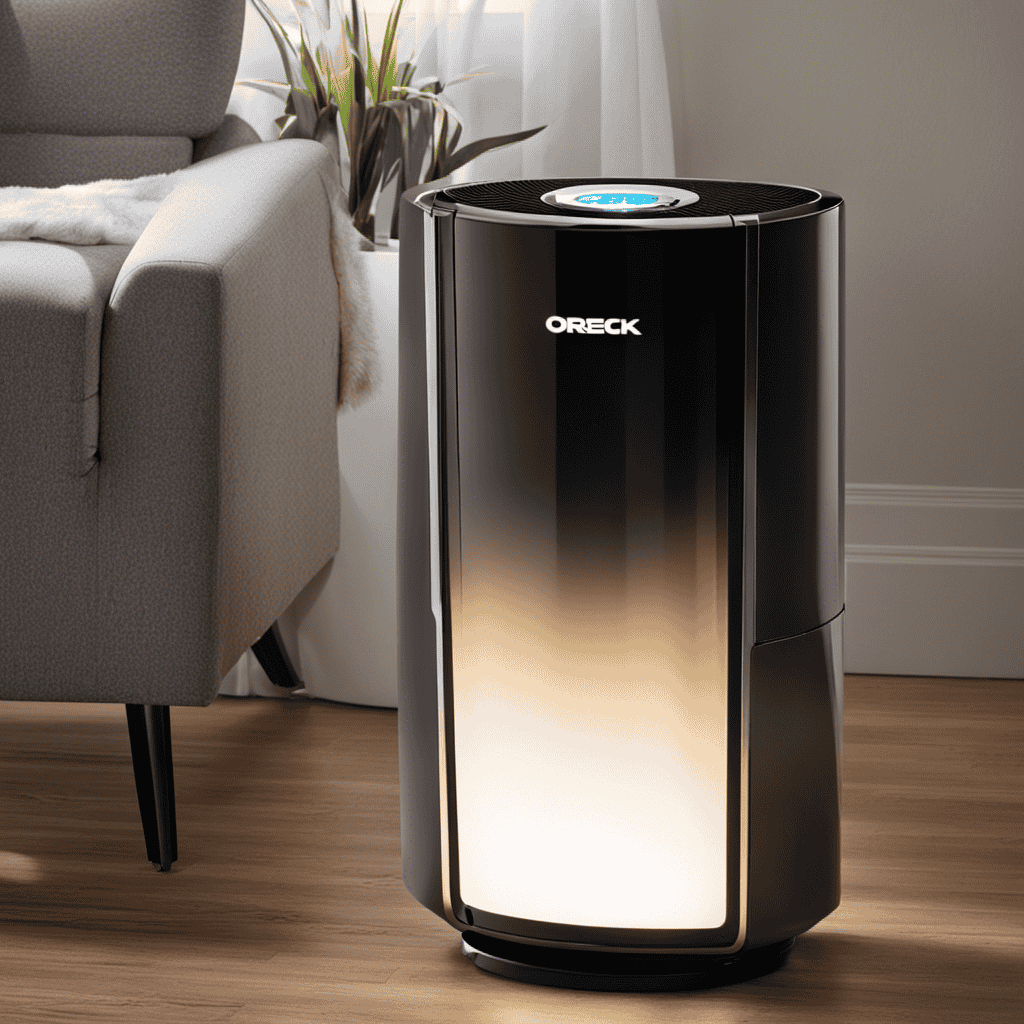
Have you ever been annoyed by lingering cooking odors and airborne gases that just won’t dissipate? It’s frustrating when every time you cook, the smell clings to your walls and furniture, making your entire space feel stuffy and uninviting. Luckily, there are effective ways to combat these persistent odors, starting with proper air filtration. Installing a good-quality air purifier can make a significant difference. Look for models equipped with activated carbon filters, which are designed to trap and neutralize airborne gases and odors. These filters work on a molecular level, absorbing smoke particles, cooking fumes, and other pollutants, leaving your indoor air cleaner and fresher. When combined with consistent ventilation, air filtration systems can quickly help disperse lingering smells and improve overall indoor air quality.
In addition to mechanical solutions, natural deodorizers are a simple, eco-friendly way to keep your kitchen smelling fresh. Items like baking soda, white vinegar, and citrus peels are powerful natural deodorizers that can absorb or neutralize odors without introducing harsh chemicals into your home. For instance, placing bowls of baking soda near your cooking area can help absorb odors as they occur. Similarly, simmering a mixture of water and citrus peels or cinnamon sticks on the stove can fill your space with a pleasant scent while masking lingering smells. These natural deodorizers are not only affordable but also safe for households with children or pets, making them ideal for everyday use.
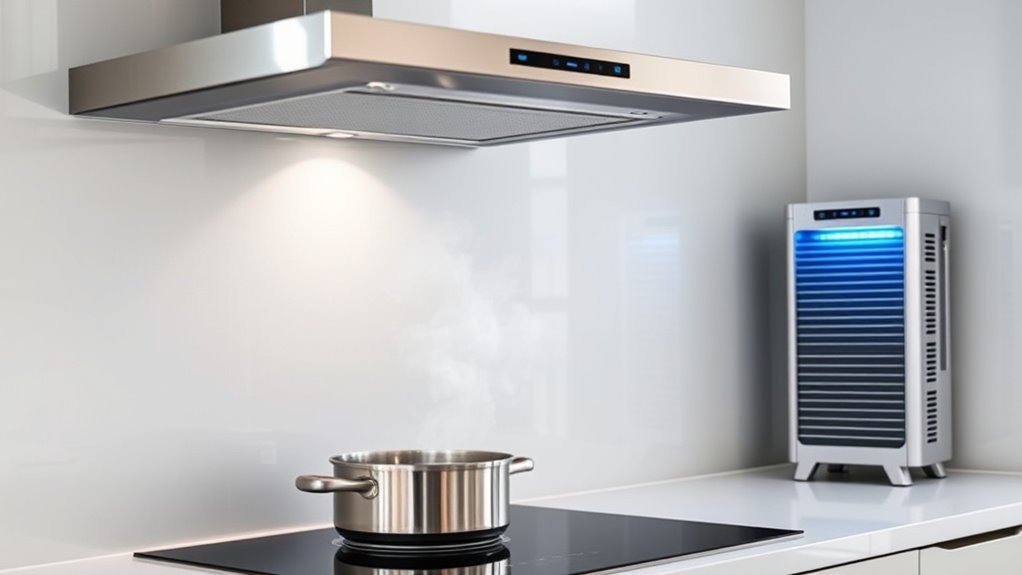
To maximize their effectiveness, combine natural deodorizers with regular cleaning routines. Wipe down surfaces after cooking, wash dishes promptly, and empty trash regularly to prevent odors from settling. Proper kitchen ventilation is equally important—use exhaust fans or open windows to allow fresh air to circulate during and after cooking. This helps to carry away airborne gases before they have a chance to linger and cause discomfort. If your kitchen lacks good airflow, consider installing an exhaust hood or upgrading existing ventilation systems to make certain of continuous air exchange.
Frequently Asked Questions
Can Natural Remedies Completely Remove All Cooking Odors?
Natural remedies like herbal remedies can markedly reduce cooking odors, but they might not eliminate all scents completely. You should also focus on kitchen ventilation, such as using exhaust fans or opening windows, to improve air circulation. Combining herbal remedies with good ventilation creates a more effective approach. While these methods help, some stubborn odors may require additional measures for total removal, so stay proactive and consistent.
How Long Do Odor-Eliminating Devices Typically Last?
Oh, your trusty odor-eliminating device is probably going to last between 6 months to 2 years, depending on how much you cook and how well you maintain it. To keep it running smoothly, follow maintenance tips like replacing filters, cleaning vents, and avoiding overuse. Think of it as your kitchen’s silent hero—if you treat it right, its device lifespan will reward you with fresher air longer.
Are There Specific Foods That Cause More Persistent Odors?
Certain foods, like strong spices and fatty foods, cause more persistent odors in your home. When you cook these, the smell can linger longer and be harder to eliminate. You should use effective ventilation, like exhaust fans or air purifiers, to reduce the odors quickly. Covering the pots or simmering vinegar or lemon can also help neutralize stubborn smells, making your space fresher faster.
Does Venting Outdoors Reduce Indoor Gas Buildup Effectively?
Venting outdoors substantially improves indoor air quality and enhances ventilation effectiveness by removing cooking gases and odors directly from your space. When you vent outside, harmful gases don’t linger, reducing potential health risks and unpleasant smells. Proper outdoor venting ensures fresh air circulates efficiently, preventing indoor buildup. This process is especially vital during long cooking sessions or when using appliances that generate strong fumes, keeping your indoor environment safer and more comfortable.
Can Air Purifiers Help With Cooking Gases?
Yes, air purifiers can help with cooking gases. Modern air purifier technology, especially those with activated carbon filters, effectively absorb and neutralize gases like cooking fumes. However, their ventilation effectiveness varies; for best results, combine an air purifier with good ventilation practices, such as using exhaust fans or venting outdoors. This dual approach guarantees a cleaner indoor air quality, reducing lingering odors and harmful gases from cooking.
Conclusion
Now that you know how to tackle cooking odors and gases, you’re well on your way to creating a fresher, more comfortable kitchen. Remember, it’s better to nip the problem in the bud rather than let it fester. With proper ventilation, natural remedies, and simple habits, you can keep your space smelling fresh and inviting. Don’t let lingering smells spoil the mood—take action now, and breathe easy every time you cook.