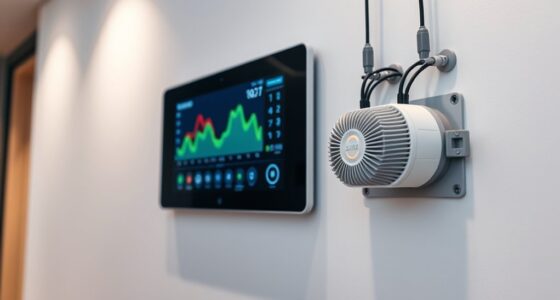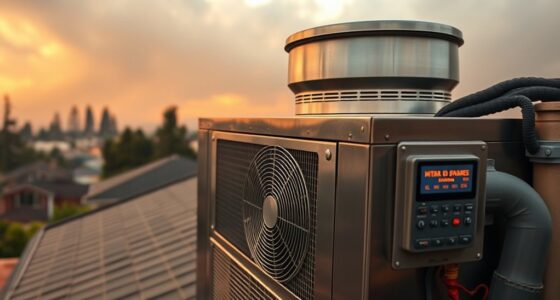
Energy Recovery Ventilators (ERVs) improve your indoor air supply by bringing in fresh outdoor air and filtering it for pollutants and allergens. They exchange heat and humidity with exhausted air, which helps save energy and maintain comfortable humidity levels. This process reduces your heating and cooling costs while ensuring healthier, cleaner air inside. With features like noise reduction and advanced filtration, ERVs support a more comfortable environment. Discover how ERVs can enhance your space as you explore further.
Key Takeaways
- ERVs bring in fresh outdoor air while filtering pollutants, enhancing indoor air quality.
- They exchange heat and humidity to maintain a comfortable, healthy indoor environment.
- Continuous operation ensures a steady supply of fresh air and prevents pollutant buildup.
- Advanced filtration removes allergens and pollutants, promoting healthier indoor air.
- ERVs integrate seamlessly with HVAC systems, improving ventilation efficiency and reducing energy costs.
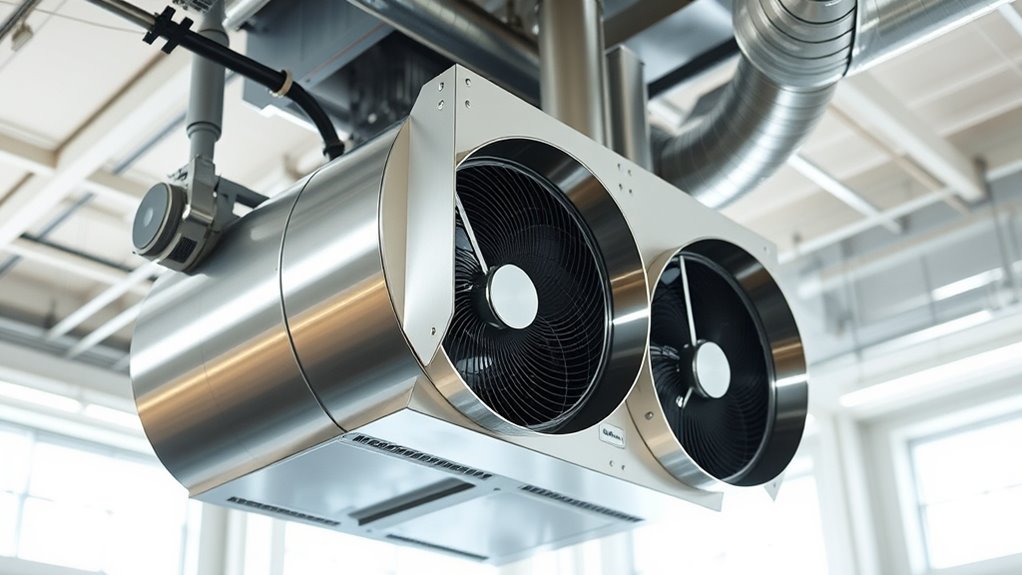
Have you ever wondered how to improve indoor air quality while reducing energy costs? Energy recovery ventilators (ERVs) are an excellent solution that can help you achieve both. These systems bring in fresh outdoor air, filter it, and exchange heat and humidity with the indoor air, making your space healthier and more comfortable. One of the key advantages of ERVs is their ability to provide humidification benefits, especially during dry seasons. By capturing moisture from the incoming air and transferring it indoors, ERVs help maintain ideal humidity levels, which can prevent issues like dry skin, respiratory irritation, and static electricity. This not only enhances comfort but also reduces the need for additional humidification devices, saving you energy and costs over time. Incorporating noise reduction techniques into your ERV setup is equally important. Noisy equipment can be disruptive, particularly in living spaces or offices where concentration and relaxation are essential. Modern ERVs are designed with sound insulation materials and quiet fans that minimize operational noise. Installing these units with vibration isolators or in soundproof enclosures further reduces noise levels, ensuring that your indoor environment remains peaceful. By choosing models with noise reduction features, you can enjoy the benefits of fresh air without the unwanted background hum or rattling that can disturb your daily activities. Additionally, selecting units with advanced filtration capabilities can further improve indoor air quality by removing pollutants and allergens from incoming air. Beyond comfort, ERVs greatly contribute to energy efficiency. They recover heat from exhausted indoor air and transfer it to incoming fresh air, reducing the load on your heating and cooling systems. This means lower energy bills and a smaller carbon footprint. The humidity transfer aspect also cuts down on energy used for humidification or dehumidification, depending on seasonal needs. When you combine these benefits with noise reduction techniques and humidification benefits, you create an environment that’s not only healthier but also more economical to maintain. Furthermore, ERVs can be integrated seamlessly into your existing HVAC system, making them a flexible upgrade that enhances indoor air quality without extensive remodeling. They operate continuously, ensuring a steady supply of fresh air while maintaining indoor climate stability. This constant exchange prevents pollutants, allergens, and odors from building up, creating a more comfortable and healthier space for you. By investing in an ERV with noise reduction features and humidification benefits, you’re taking a proactive step toward a more energy-efficient and pleasant indoor environment.
Frequently Asked Questions
How Do ERVS Compare to HRVS in Different Climates?
You’ll find ERVs and HRVs differ in climate adaptability and efficiency variations. In colder, drier climates, HRVs excel at moisture removal, while ERVs better regulate humidity in humid environments. ERVs tend to be more energy-efficient overall, especially where humidity control is needed. Your choice depends on your local climate, as ERVs adapt better to varying conditions, providing ideal fresh air and energy savings in diverse environments.
Are ERVS Suitable for Small Residential Homes?
This is a game-changer for small homes! ERVs are often suitable because they efficiently improve fresh air supply and save energy. However, you should consider cost considerations and installation challenges—they might be more complex or costly than you expect for small spaces. Nonetheless, with proper planning, ERVs can provide excellent ventilation, making your home healthier and more comfortable without overwhelming your budget or space.
What Are the Maintenance Requirements for Energy Recovery Ventilators?
You need to regularly maintain your energy recovery ventilator by replacing filters every 3 to 6 months to guarantee peak performance. Additionally, schedule system inspections annually to check for dust buildup, proper operation, and any wear or damage. Keeping filters clean and inspecting the system helps extend its lifespan, maintain energy efficiency, and ensure you continue to enjoy fresh, healthy air in your home.
Can ERVS Help Reduce Allergy Symptoms?
An ERV can substantially reduce allergy symptoms, almost like having a personal air purification system in your home. By continuously exchanging stale indoor air with fresh outdoor air, ERVs help remove pollen, dust, and other allergens. This process improves allergy relief by maintaining cleaner indoor air quality. With consistent use, you’ll notice fewer allergy flare-ups, making your environment healthier and more comfortable to breathe.
What Is the Typical Lifespan of an Energy Recovery Ventilator?
You can expect an energy recovery ventilator (ERV) to last around 15 to 20 years, depending on usage and maintenance. Manufacturers typically offer warranties covering parts for 5 to 10 years, which can give you peace of mind. Proper upkeep guarantees peak energy efficiency and prolongs its lifespan. Regular filter changes and professional inspections help maintain performance and extend the unit’s durability over time.
Conclusion
By choosing energy recovery ventilators, you boost breathable freshness while balancing building efficiency. These innovative inlets improve air quality, minimize energy waste, and maximize comfort effortlessly. With wise, well-placed ventilation, you’ll witness a wonderful wave of well-being within your space. Make the smart switch today—strengthen your shelter, save energy, and savor the seamless, sustainable benefits of superior fresh air supply. Stay savvy, stay sustainable, and let your environment excel.