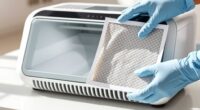
To understand HEPA labels, it’s important to know that strict manufacturing standards ensure these filters meet high performance and safety benchmarks. Certified HEPA filters remove at least 99.97% of particles as small as 0.3 microns, but only through rigorous quality control and certification processes. These standards guarantee the filters’ reliability and effectiveness. Recognizing what’s behind the label helps you trust your air quality, and exploring further discloses how true standards safeguard your health.
Key Takeaways
- HEPA labels indicate filters meet strict industry standards, typically capturing at least 99.97% of 0.3-micron particles.
- Manufacturing standards ensure filters perform reliably through rigorous testing and quality control processes.
- Certification from reputable organizations verifies that filters adhere to established performance benchmarks.
- Quality control involves efficiency testing, pressure drop measurement, and durability assessments before product release.
- Strict adherence to manufacturing standards guarantees the safety and effectiveness of HEPA and other high-performance filters.
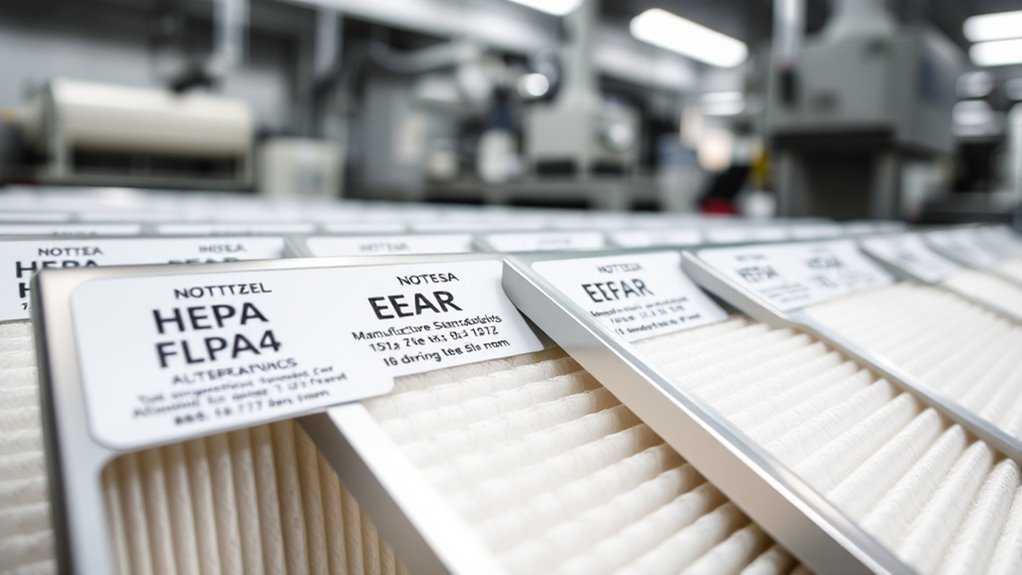
Have you ever wondered how filters meet consistent quality and safety benchmarks? When it comes to air filtration, ensuring that filters perform reliably and safely is essential. This is where strict manufacturing standards come into play. Manufacturers must adhere to detailed protocols to produce filters that consistently meet or exceed industry expectations. The importance of manufacturing quality cannot be overstated, especially when it involves products like HEPA filters, which are designed to trap tiny particles and improve indoor air quality. High manufacturing standards help guarantee that each filter performs as intended, providing peace of mind for consumers and professionals alike.
In the domain of air filtration, standards are established to define minimum performance levels. These standards ensure that filters are capable of removing a specified percentage of airborne contaminants, such as dust, pollen, bacteria, and viruses. When a filter bears a HEPA label, it signifies that it meets these rigorous benchmarks, typically capturing at least 99.97% of particles as small as 0.3 microns. But achieving this level of performance isn’t accidental. It requires meticulous manufacturing quality, with strict controls in place throughout the production process. Every step—from selecting high-quality raw materials to precision assembly—must adhere to precise specifications to ensure the final product delivers consistent results.
Manufacturing quality in filter production involves rigorous testing and validation procedures. These tests verify that each batch of filters performs according to the required standards before they reach consumers. For example, filters are subjected to efficiency testing, pressure drop measurements, and durability assessments. Only those that pass these stringent tests are labeled as HEPA or other high-performance filters. This commitment to quality ensures that filters not only meet regulatory requirements but also perform reliably over their expected lifespan. It’s this focus on quality control that maintains the integrity of air filtration systems and protects users from subpar products that could compromise indoor air quality.
In addition, manufacturers are often certified by reputable organizations, which audit their processes and verify adherence to industry standards. These certifications serve as a guarantee that the filters produced are of consistent quality, safe to use, and effective in their role. When you see a HEPA label backed by such certifications, you can trust that the filter has undergone thorough manufacturing quality checks. Ultimately, the journey from raw materials to finished product is carefully managed to uphold the integrity of air filtration systems. This commitment to manufacturing standards ensures that you receive filters that are reliable, safe, and capable of maintaining healthy indoor environments.
Frequently Asked Questions
How Often Should HEPA Filters Be Replaced?
You should replace HEPA filters every 6 to 12 months, depending on usage and environment. Regularly check the filter’s lifespan and follow your specific replacement schedule to guarantee peak performance. If you notice reduced airflow or increased dust, it’s time for a replacement. Keeping to this schedule helps maintain air quality and system efficiency, so don’t delay replacing filters when they’ve reached their recommended lifespan.
Are HEPA Filters Suitable for Allergy Sufferers?
Think of HEPA filters like a loyal guard dog, faithfully protecting your home from allergens. Yes, they’re suitable for allergy sufferers because they improve air quality by trapping tiny particles. With proper filter durability, these filters can effectively reduce dust, pollen, and pet dander. Regular replacement guarantees they stay at peak performance, giving you cleaner, healthier air and peace of mind in your living space.
Can HEPA Filters Remove Viruses and Bacteria?
Yes, HEPA filters can remove viruses and bacteria through virus removal and bacteria filtration. They trap tiny particles, including airborne pathogens, by capturing at least 99.97% of particles as small as 0.3 microns. This makes them effective for reducing the spread of viruses and bacteria indoors. Keep in mind, however, that proper filter maintenance and replacement are essential to maintain their effectiveness.
What Is the Difference Between HEPA and ULPA Filters?
You might wonder which filter offers better air filtration—HEPA or ULPA. HEPA filters trap 99.97% of particles down to 0.3 microns, while ULPA filters excel, capturing 99.999% of particles as small as 0.12 microns. If your goal is maximum filter efficiency against tiny pollutants, ULPA provides superior performance. The choice depends on your air quality needs—know the differences to make the right decision.
Do HEPA Filters Require Special Maintenance or Handling?
You should handle HEPA filters carefully to guarantee their filter lifespan is maximized. Avoid excessive handling or dropping, which can damage the filter media. Regularly inspect the filter for signs of wear or clogging, and replace it promptly when needed. When it’s time for proper disposal, follow local regulations to prevent environmental contamination. Proper maintenance and disposal help keep your air clean and ensure the filter’s effectiveness.
Conclusion
Understanding HEPA labels helps you choose the best filter for your needs, ensuring cleaner air and healthier living spaces. Did you know that HEPA filters can remove up to 99.97% of airborne particles as small as 0.3 microns? This impressive efficiency makes them a top choice for allergy sufferers and cleanroom environments alike. By paying attention to manufacturing standards, you’re making a smart investment in air quality, giving you peace of mind every time you breathe.