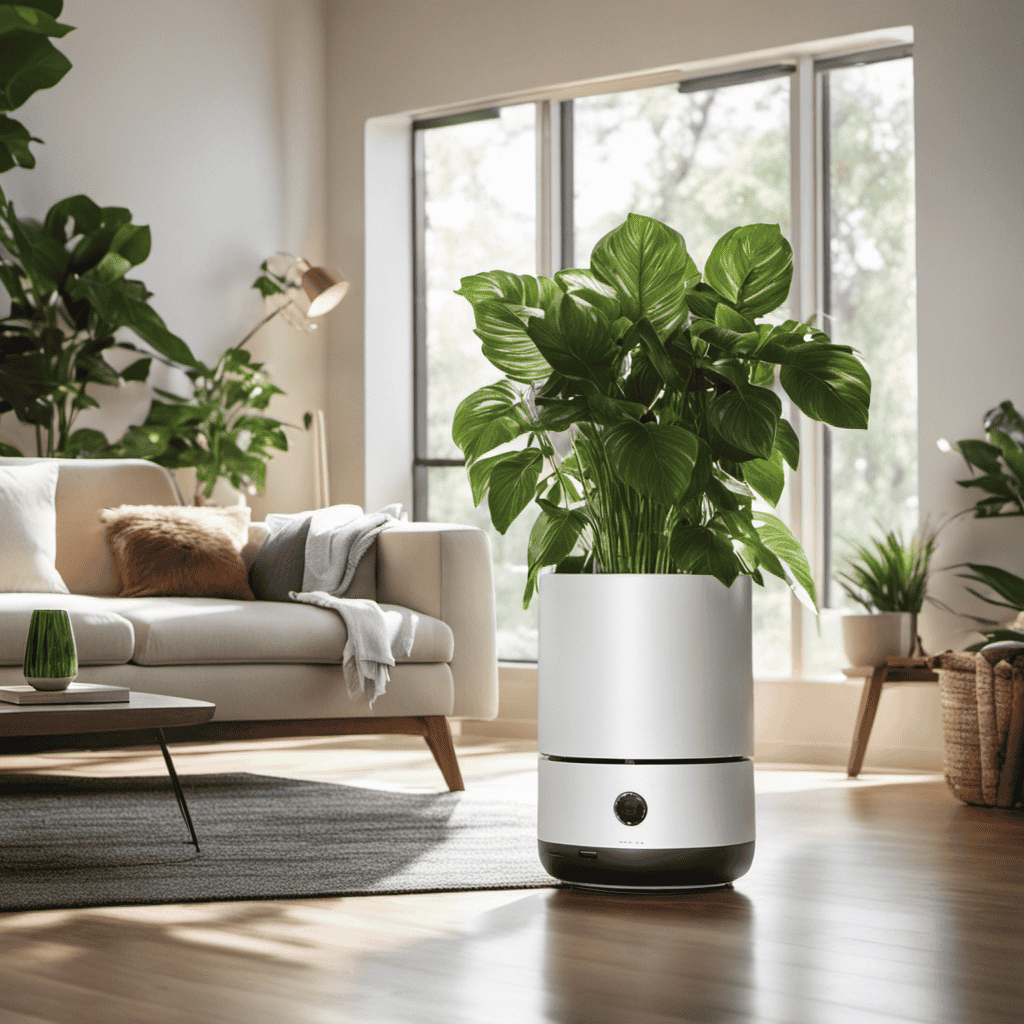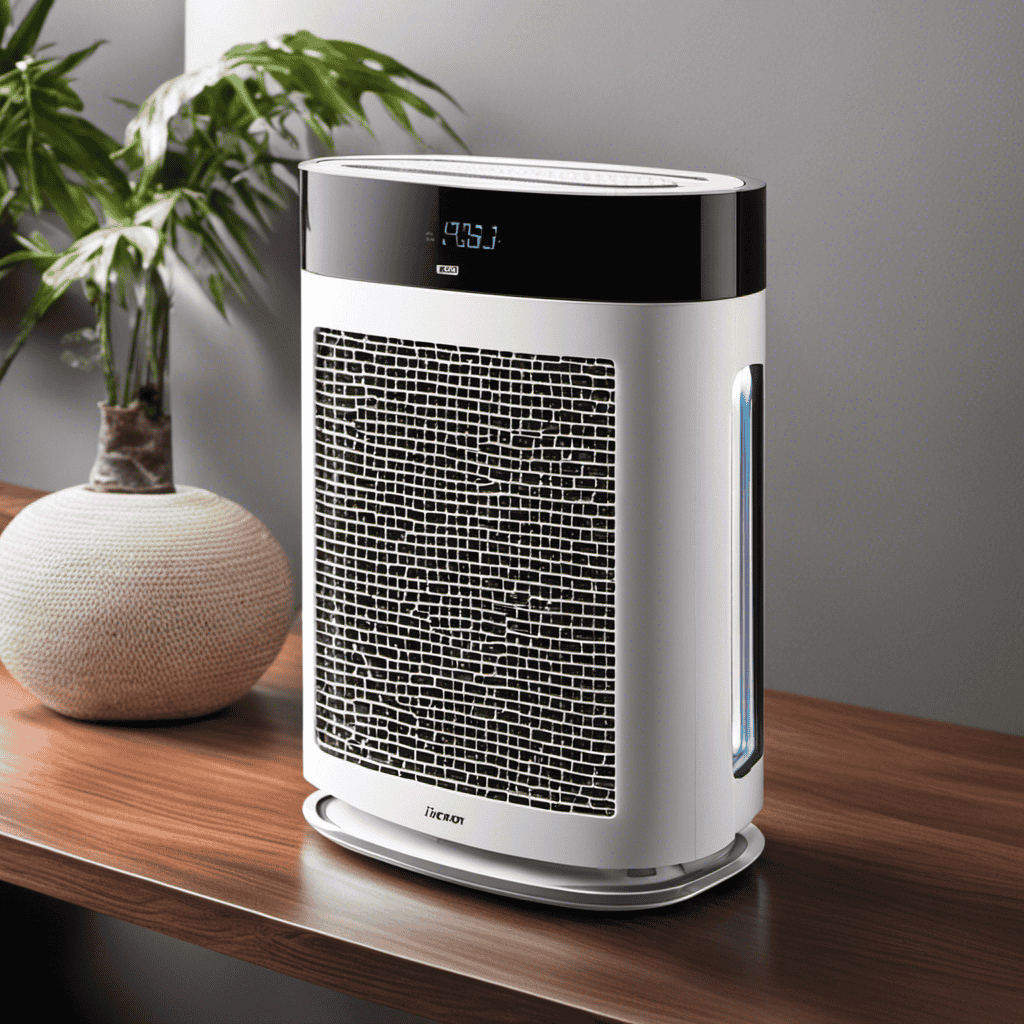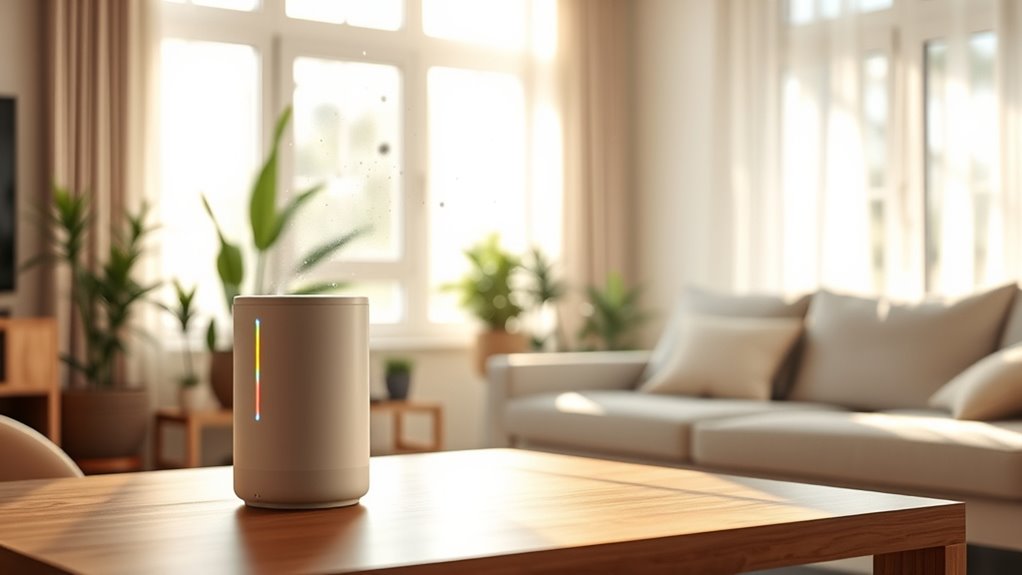
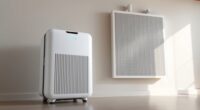
Filterless air purifiers use advanced ionization and electrostatic technology to remove airborne particles without the need for filter replacements. They charge particles so they cling to internal plates or surfaces, which you can easily clean. Ideal for spaces with fluctuating air quality or sensitive individuals, they offer a hassle-free way to improve indoor air. If you want to understand how these devices work and where they excel, you’ll find more details ahead.
Key Takeaways
- Filterless air purifiers use ionization or electrostatic technology to charge and remove airborne particles without physical filters.
- They rely on internal plates or surfaces that trap charged particles, which are easily cleaned and require no filter replacements.
- Equipped with sensors, they automatically adjust operation based on real-time air quality, ensuring continuous purification.
- Ideal for spaces with fluctuating air quality, sensitive occupants, or allergy sufferers, especially in bedrooms, living rooms, and offices.
- They offer a low-maintenance, energy-efficient alternative to traditional purifiers, effectively reducing dust, pet dander, and airborne irritants.
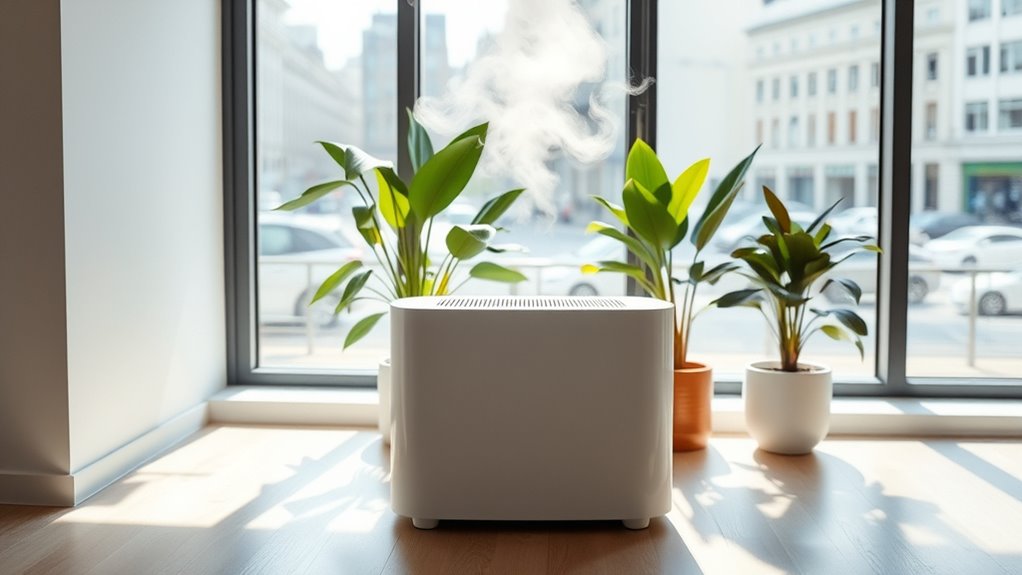
Filterless air purifiers are gaining popularity because they offer a maintenance-free alternative to traditional models, making it easier for you to keep your indoor air clean. Unlike conventional purifiers that rely on replaceable filters, these devices use advanced technology to continuously clean the air without the hassle of frequent filter changes. Many of these purifiers incorporate HEPA filtration within their systems, which effectively captures airborne particles such as dust, pollen, pet dander, and even some bacteria. HEPA filters are renowned for their high efficiency, trapping 99.97% of particles as small as 0.3 microns, ensuring that the air circulating in your space is genuinely cleaner.
Filterless air purifiers offer maintenance-free, efficient air cleaning with advanced technology and high-efficiency particle capture.
What sets filterless models apart is their integration of air quality sensors. These sensors constantly monitor the air in your environment, providing real-time data on pollutant levels, humidity, and other airborne contaminants. When the sensors detect a spike in pollutants, the purifier automatically adjusts its operation to target the problem areas. This automation means you don’t have to manually turn the device on or off — it responds intelligently to your surroundings, maintaining ideal air quality at all times. The sensors also help conserve energy by reducing operation when air quality is good, which is a notable advantage over traditional purifiers that run continuously regardless of need.
In addition to HEPA filtration and air quality sensors, many filterless purifiers utilize ionization or electrostatic technology. These approaches work by charging airborne particles so they cling to plates or surfaces within the device, effectively removing them from the air. Because there’s no physical filter that needs replacing, you save money and avoid the inconvenience of regular maintenance. Instead, cleaning these internal plates or surfaces periodically is simple and quick, often requiring just a wipe-down.
Filterless air purifiers are especially effective in spaces where air quality fluctuates or in environments with sensitive occupants like allergy sufferers or asthmatics. They excel in bedrooms, living rooms, or offices where maintaining clean air without the hassle of filter replacements is a priority. While they might not replace HEPA filters entirely in very polluted environments, they still notably improve air quality by reducing common airborne irritants and pollutants. Their smart operation, minimal maintenance, and advanced filtration technologies make them an excellent choice for those seeking a hassle-free way to breathe cleaner air every day.
Frequently Asked Questions
Do Filterless Air Purifiers Emit Any Ozone or Other Chemicals?
Filterless air purifiers generally don’t emit ozone or other chemicals, making them a safer choice for your home. Unlike some electronic air cleaners, most use ionization or UV light without producing harmful ozone emissions. However, it’s wise to verify specific models for ozone emission levels, as some might cause chemical concerns if they generate excess ozone. Always review product details to ensure your air purifier is safe and effective for your needs.
How Do Filterless Purifiers Handle Large Particles or Dust?
Filterless air purifiers handle large particles or dust mainly through air ionization, which charges particles so they clump together and settle out of the air. Some models also use HEPA filtration for additional particle removal. While ionization is effective for dust and large particles, it’s important to make sure your purifier is designed properly, as excessive ionization can produce ozone. Always check product specifications for safe, efficient operation.
Are Filterless Air Purifiers Suitable for Allergy Sufferers?
Imagine it’s 2023, and you’re seeking allergy relief, so filterless air purifiers are worth considering. They effectively improve air quality, removing airborne pollutants and allergens without filters. While they excel at handling smaller particles, like dust and pollen, they might not be as effective for severe allergies or large particles. Still, for general air quality improvement, filterless purifiers can provide noticeable relief, especially in well-ventilated spaces.
What Maintenance Is Required for Filterless Purification Systems?
You don’t need to worry about filter replacement with filterless air purifiers. Instead, focus on regular system cleaning to keep it running efficiently. Wipe down the exterior and guarantee vents are clear of dust and debris. Occasionally, check for any buildup inside the unit and clean it according to the manufacturer’s instructions. Doing this helps maintain peak air purification without the hassle of replacing filters.
Can Filterless Air Purifiers Effectively Neutralize Odors?
Think of filterless air purifiers as your home’s breath of fresh air warriors. They can effectively neutralize odors by producing ozone, which reacts with odor-causing molecules. However, be cautious—ozone production may lead to harmful chemical emissions if used excessively. To guarantee safety and odor removal, use these purifiers in well-ventilated spaces and follow manufacturer guidelines. They can markedly improve air quality when used responsibly.
Conclusion
Now that you know how filterless air purifiers work and where they excel, you can make an informed choice for cleaner air. Did you know that over 90% of the world’s population breathes polluted air, risking health issues? Filterless purifiers offer a low-maintenance, eco-friendly alternative to traditional units, making them a smart option for many spaces. Consider your needs and breathing environment—these innovative devices could be just what you need for fresher, healthier air every day.