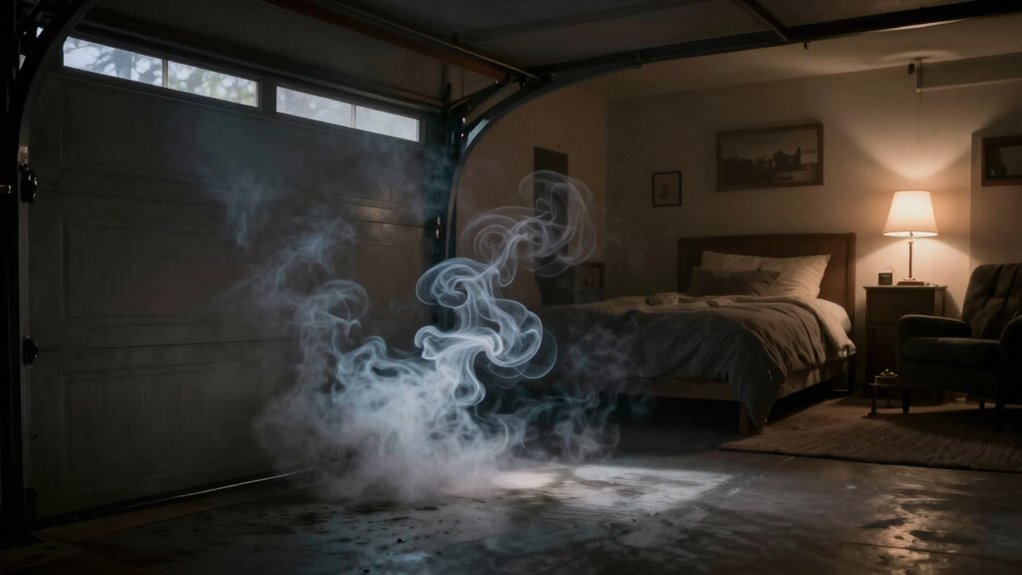

Garage fumes can enter your bedrooms through shared walls, gaps, and cracks, especially if your ventilation isn’t adequate. When fumes from vehicles or tools build up, they seep through openings around electrical outlets, vents, and doorways. Cold weather can trap these gases inside, and poor airflow can cause fumes to move from the garage into living spaces. Understanding how fumes spread helps you identify risks — keep going to learn more about keeping your home safe.

Get garden gear delivered free — and shop member deals
- Fast, free delivery on millions of items
- Access to Prime Big Deal Days deals on October 6–7
- Prime Video, Amazon Music and more included
Key Takeaways
- Fumes migrate through shared walls, gaps, and cracks in the structure, entering adjacent rooms like bedrooms.
- Poor ventilation systems fail to exhaust fumes, allowing them to accumulate and spread into living areas.
- Air pressure differences between the garage and house can draw toxic gases into bedrooms.
- Opening doors from the garage to the house can facilitate the movement of fumes into living spaces.
- Fumes can seep into bedrooms via ventilation pathways, structural openings, or through shared spaces.
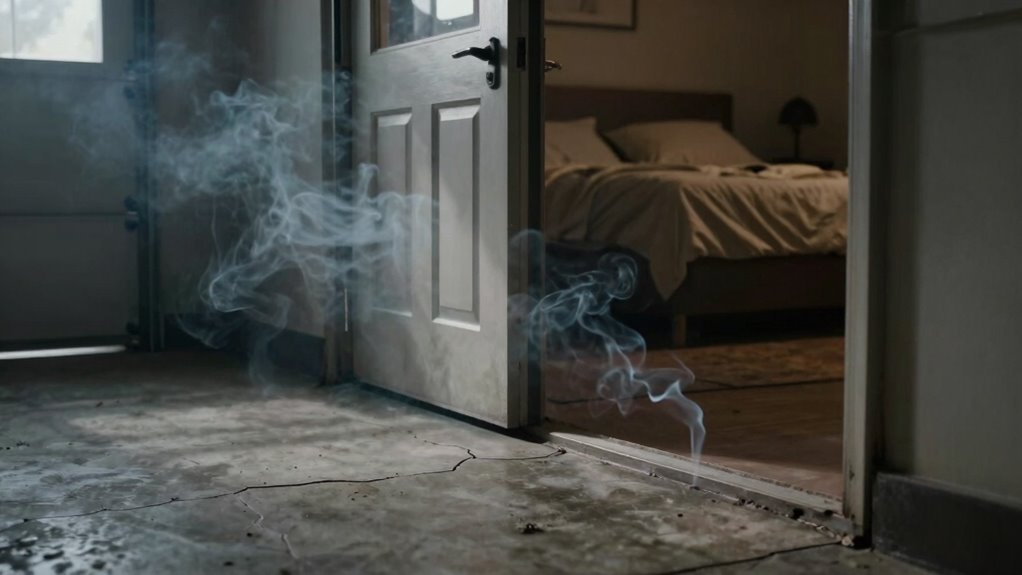
Many homeowners are unaware that fumes from their garage can seep into adjacent bedrooms, posing serious health risks. The garage, often considered just a storage space, can become a source of dangerous fumes like carbon monoxide, nitrogen oxides, and other toxic gases, especially if you frequently run your car or use certain tools there. These fumes don’t stay confined; instead, they can migrate through shared walls, gaps, and ventilation pathways, making it vital to understand how they travel and how to prevent their infiltration.
Garage fumes can infiltrate bedrooms through shared walls and gaps, risking serious health hazards.
One of the main ways garage fumes reach bedrooms is through poorly designed or inadequate ventilation systems. Many homes lack proper airflow controls between the garage and living spaces. When you open a door from the garage to the house, or if there are gaps or cracks in the wall, fumes can easily move into the house’s interior. Without a dedicated ventilation system to direct or filter these gases, they can accumulate and migrate into bedrooms, especially during colder months when doors and windows stay shut. This movement isn’t just passive; pressure differences between rooms can cause fumes to be pulled into bedrooms, especially if the house’s ventilation favors airflow from the garage. Properly ventilating your garage with appropriate exhaust and intake systems is crucial for safety. Ensuring that your home has proper airflow control can significantly reduce the risk of toxic fumes infiltrating your living spaces. Regular inspection of ventilation systems can help identify potential vulnerabilities before they become hazardous. Additionally, installing carbon monoxide detectors in bedrooms and hallways can alert you to dangerous gas buildup early on. Properly sealing gaps and cracks around shared walls and electrical outlets can act as an effective barrier against toxic gases.
carbon monoxide detector for bedrooms
As an affiliate, we earn on qualifying purchases.
As an affiliate, we earn on qualifying purchases.
Frequently Asked Questions
Can Garage Fumes Cause Long-Term Health Issues?
Yes, garage fumes can cause long-term health issues. Constant exposure to chemical fumes from gasoline, paints, or other chemicals increases health risks like respiratory problems, allergies, and even more serious conditions over time. You should take precautions, such as ensuring proper ventilation and sealing garage-to-bedroom gaps, to reduce chemical exposure. Ignoring these risks can lead to chronic health issues, so staying aware and proactive is essential for your well-being.
How Quickly Do Fumes Travel Into Bedrooms?
Fume diffusion and air transfer can cause garage fumes to reach your bedroom within minutes, especially if doors or windows are open or if there’s poor ventilation. Air moves quickly through cracks, vents, and shared walls, carrying fumes along. To minimize this, seal gaps, improve ventilation, and install air purifiers. Regularly check for leaks and guarantee your home’s ventilation system effectively prevents fumes from lingering or traveling into sleeping areas.
Are Certain House Layouts More Vulnerable to Fumes?
Certain house layouts are more vulnerable to garage fumes, especially those with poor garage design or inadequate ventilation strategies. If your garage directly connects to bedrooms or shares walls, fumes can seep through gaps or vents. Homes lacking proper ventilation or with limited airflow increase this risk. To protect yourself, consider improving ventilation systems, sealing gaps, and designing garages with separate access, which helps prevent fumes from traveling into living areas.
What Are the Best Ventilation Methods to Prevent Fumes?
Ventilation methods are like a revitalizing gust for your home. You should install effective air exchange systems and exhaust fans to keep garage fumes out of bedrooms. Keep doors and windows open when possible, especially during or after garage activities. Consider upgrading to advanced ventilation systems that continuously circulate and filter air, preventing fumes from lingering and ensuring your living spaces stay clean and safe.
Do Garage Fumes Affect Indoor Air Quality Over Time?
Garage fumes can considerably affect your indoor air quality over time, especially through persistent garage odors. These fumes contain harmful chemicals that can seep into your living space, impacting your health. Regular air exchange helps reduce this risk by removing contaminated air and bringing in fresh air. Ensuring proper ventilation and sealing gaps between your garage and bedrooms minimizes fume transfer, keeping your indoor environment safer and healthier.
Conclusion
Now, think about what’s lurking just beyond your garage door. The fumes don’t stay put—they find their way into your home, sneaking into bedrooms when you least expect it. One small crack, a vent left open, and suddenly, those invisible dangers are right where you sleep. Are you truly safe? The secret is in the details, and ignoring them could leave you vulnerable. The real question is—are you ready to uncover what’s hiding in your own home?
Fall Picks
fall essentials
As an affiliate, we earn on qualifying purchases.