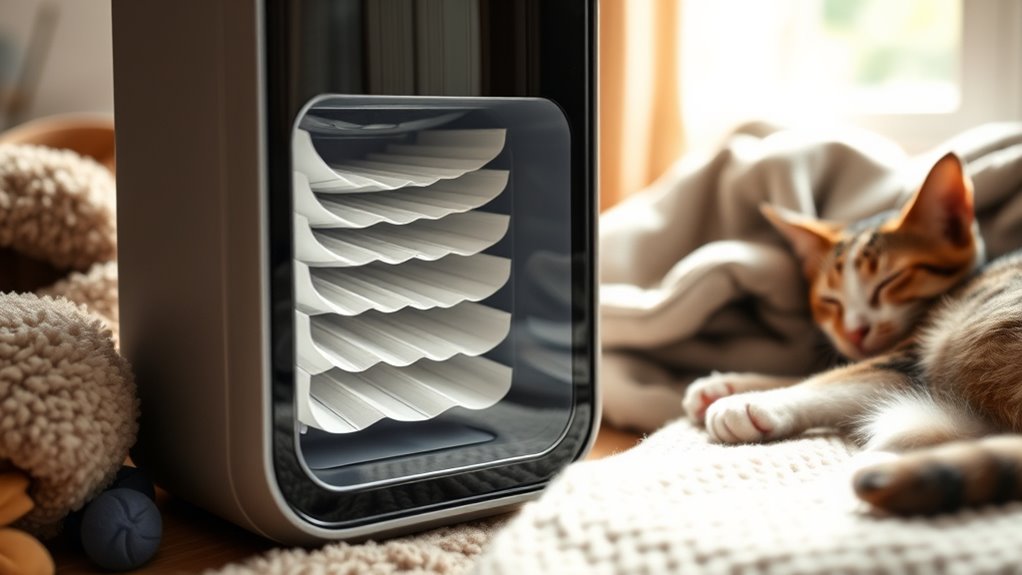

To handle pet odors and dander effectively, use an air purifier that combines HEPA and activated carbon filters. HEPA traps tiny pet dander and allergens, reducing allergic reactions. Meanwhile, the carbon layer neutralizes persistent odors from urine, saliva, and litter, leaving your home smelling fresher. Regularly maintaining and replacing these filters guarantees peak performance. Keep going to discover more tips on creating a healthier, pet-friendly environment that’s comfortable for everyone.
Key Takeaways
- Use air purifiers with both HEPA filters and activated carbon to effectively remove pet dander and odors simultaneously.
- Regularly replace filters to maintain optimal allergen trapping and odor neutralizing performance.
- HEPA filters capture microscopic pet dander, reducing allergic reactions and improving indoor air quality.
- Carbon filters adsorb persistent pet odors from urine, saliva, and litter, creating a fresher environment.
- Combining HEPA and carbon technology provides comprehensive air purification for healthier, pet-friendly homes.
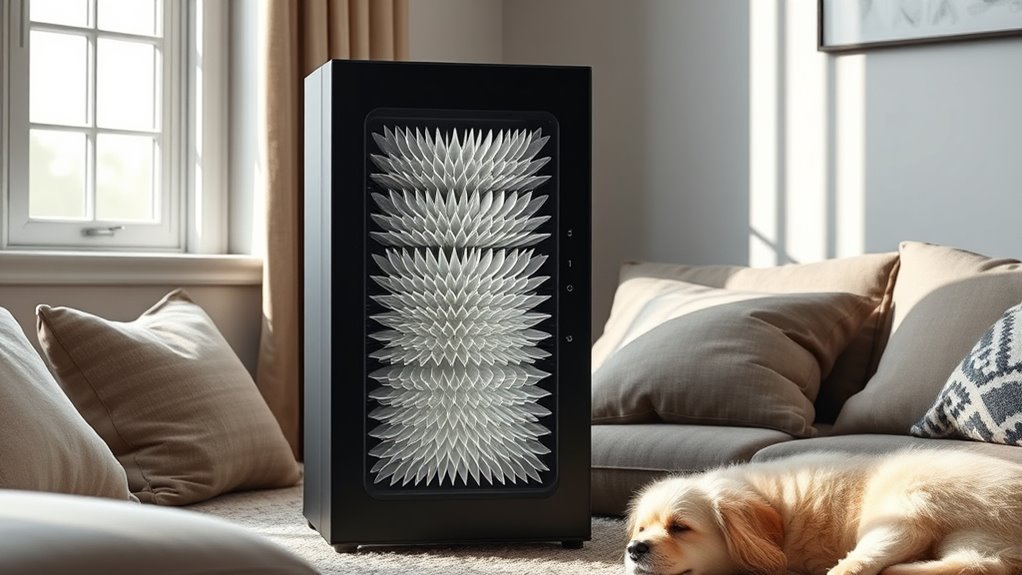
If you’re struggling with pet odors and dander in your home, understanding how HEPA filters and carbon technology work together can make a significant difference. These two air filtration methods complement each other to improve indoor air quality, tackling both airborne particles and odors effectively. HEPA filters are designed to trap tiny particles like pet dander, pollen, and dust mites. When you run an air purifier with a HEPA filter, you actively remove these allergens from the air, reducing the likelihood of allergic reactions and making your space more comfortable. This process is vital because pet dander is often microscopic and can linger in the air long after shedding has occurred.
HEPA filters trap tiny allergens like pet dander, improving air quality and reducing allergic reactions.
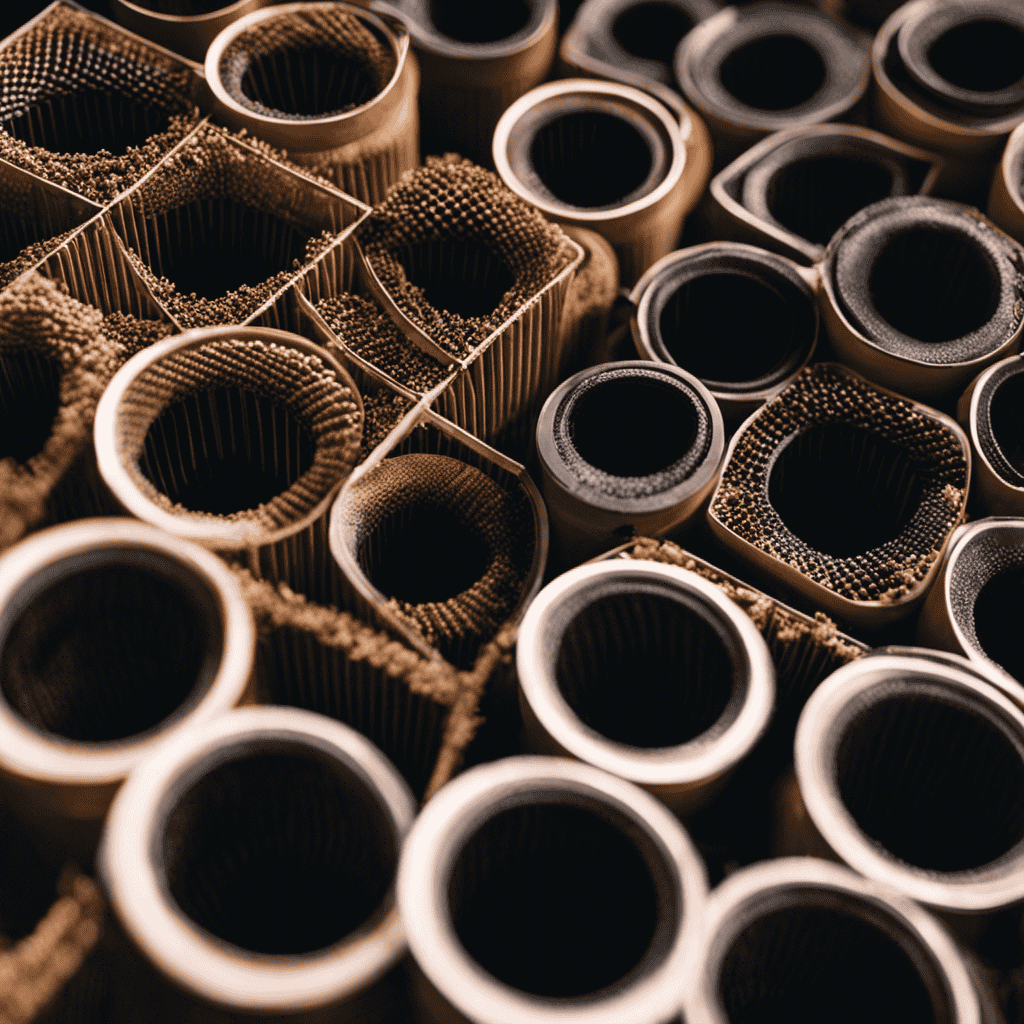
However, while HEPA filters excel at capturing airborne particles, they don’t do much to eliminate odors. That’s where activated carbon technology comes into play. Carbon filters are highly porous and contain a large surface area that adsorbs odors, gases, and volatile organic compounds (VOCs). When you combine a HEPA filter with a carbon filter in your air purifier, you get a powerful system that not only captures pet dander and other allergens but also neutralizes unpleasant smells. This dual approach ensures that your indoor environment feels fresher and healthier, especially in homes with multiple pets or strong odor sources.
Air filtration using both HEPA and carbon filters is particularly effective because it addresses multiple issues simultaneously. As pet dander circulates in the air, the HEPA filter traps it, preventing it from settling on furniture or carpets and reducing the amount of allergen exposure. Meanwhile, the activated carbon component absorbs odors that are often caused by pet urine, saliva, or litter boxes, which can otherwise linger and become difficult to eliminate. The synergy between these technologies means fewer airborne allergens and less smell, creating a more inviting space for everyone.
To maximize the benefits, choose an air purifier with a dedicated combination filter that includes both HEPA and activated carbon layers. Regular maintenance, like replacing filters as recommended, is essential to keep the system functioning at its best. Remember, air filtration isn’t a one-time fix. Consistently running your purifier and maintaining it ensures ongoing odor removal and allergen control. Understanding how these components work together can also help you select the right dog quotes for reflection and humor to create a more positive atmosphere in your home. By understanding how these components work together, you can better manage pet odors and dander, making your home not just pet-friendly but also healthier and more comfortable for you and your family.

Air Purifiers for Home with High Efficiency Filter Up to 1076 Ft² for Pet Hair, Odors, Pollen, Smoke, Compact Air Cleaner with 3 Speeds, Timer, Aroma Quiet 360°Intake Filter, White
- Easy-to-Use Control Panel: Intuitive design for effortless operation
- Compact Yet Powerful: Covers up to 1076 sq ft in small size
- 360° Air Intake: Ensures comprehensive air purification
As an affiliate, we earn on qualifying purchases.
As an affiliate, we earn on qualifying purchases.
Frequently Asked Questions
Can HEPA Filters Remove Viral Particles From Pet Dander?
HEPA filters can remove viral particles from pet dander, thanks to their high efficacy in viral filtration. They trap tiny airborne particles, including viruses attached to pet dander, reducing your exposure. While HEPA filters aren’t guaranteed to eliminate all viruses, they substantially lower the risk of airborne transmission. To maximize protection, combine HEPA filtration with good ventilation and regular cleaning. You’re taking important steps to create a healthier environment for you and your pet.
How Often Should I Replace Carbon Filters for Optimal Odor Control?
You should replace your carbon filter every 3 to 6 months for maximum odor elimination. Regular filter replacement ensures your air purifier maintains its effectiveness in controlling pet odors and dander. Keep an eye on the filter’s appearance and any lingering smells, and don’t delay replacing it when needed. Consistent filter updates help keep your indoor air fresh, clean, and free of pet-related odors and dander.
Do Air Purifiers With HEPA and Carbon Work for Multiple Pets?
A chain is only as strong as its weakest link, and the same applies to air purifiers with HEPA and carbon. They do work well for multiple pets, substantially improving air quality by capturing dander and odors. However, for homes with several pets, you might need a more powerful unit or additional filters. Regular maintenance and filter replacements guarantee peak performance, keeping your air clean and comfortable.
Are There Specific HEPA Filters Better Suited for Allergy Sufferers?
Yes, some HEPA filter types are better suited for allergy sufferers. Look for filters with allergy-friendly features, such as true HEPA filters that capture 99.97% of tiny particles, including pet dander and pollen. HEPA filters with enhanced filtration layers or specialized coatings can improve allergy relief. Choosing an air purifier with these features helps reduce allergens in your home, making it more comfortable for allergy sufferers.
Can Air Purifiers Eliminate All Pet-Related Allergens Completely?
You’ll be glad to know that air purifiers can remove about 90% of pet allergens, but they can’t eliminate all of them. Regular air purifier maintenance is essential for effective pet allergy management. While they considerably reduce pet dander and odors, some allergens may still linger, so combining an air purifier with cleaning and grooming routines boosts your chances of creating a healthier environment for allergy sufferers.
Conclusion
By using HEPA filters to capture hair and dander, and carbon filters to absorb odors, you create a cleaner, fresher environment. By maintaining your filters regularly, by choosing the right filtration system, and by staying consistent in your efforts, you’ll notice a noticeable difference. You’ll breathe easier, relax more fully, and enjoy your home more fully. Because with the right tools, the right habits, and the right mindset, you can effectively manage pet odors and dander every day.