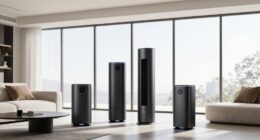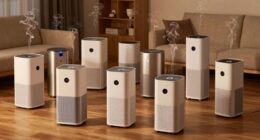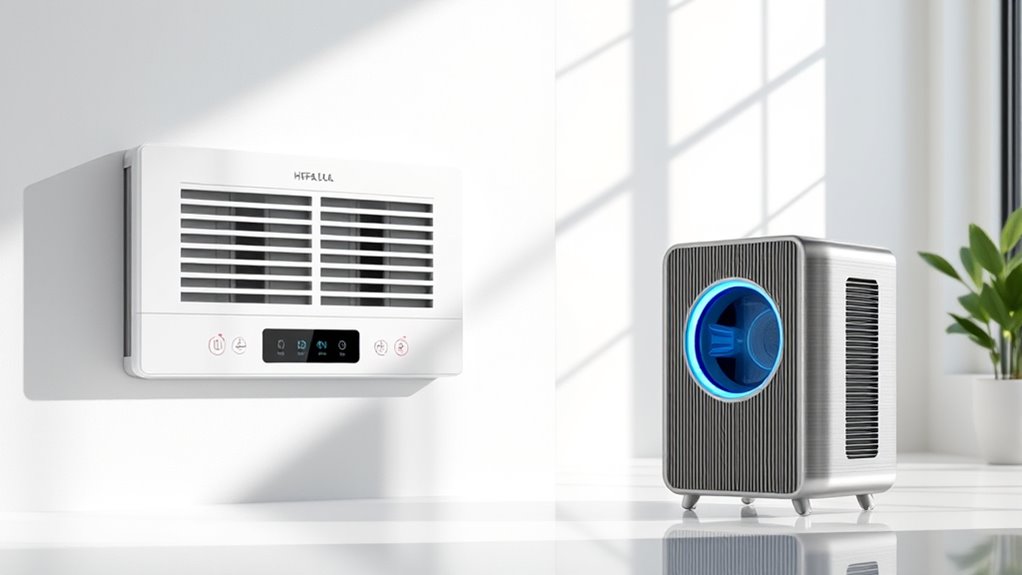

Hepa-integrated HVAC units offer a centralized, full-building solution that continually filters air, making them ideal for larger spaces and long-term use, but they require professional installation and have higher upfront costs. Portable purifiers are easy to set up, move around, and target specific rooms, perfect for quick improvements or smaller areas. To decide which fits your needs best, consider your space size, budget, and whether you want a permanent or flexible solution. Keep exploring to find out more.
Key Takeaways
- HEPA-integrated HVAC units provide comprehensive, centralized air filtration for entire spaces, while portable purifiers target specific rooms or areas.
- Installing HVAC systems is complex and costly, whereas portable purifiers are easy to set up and move as needed.
- Central HVAC systems operate continuously with minimal maintenance, offering consistent air quality; portable units require periodic filter changes.
- HVAC units are ideal for large spaces needing uniform air purification; portable purifiers suit smaller, targeted areas requiring quick solutions.
- The choice depends on space size, budget, and whether a long-term, whole-space system or flexible, room-specific air cleaning is preferred.
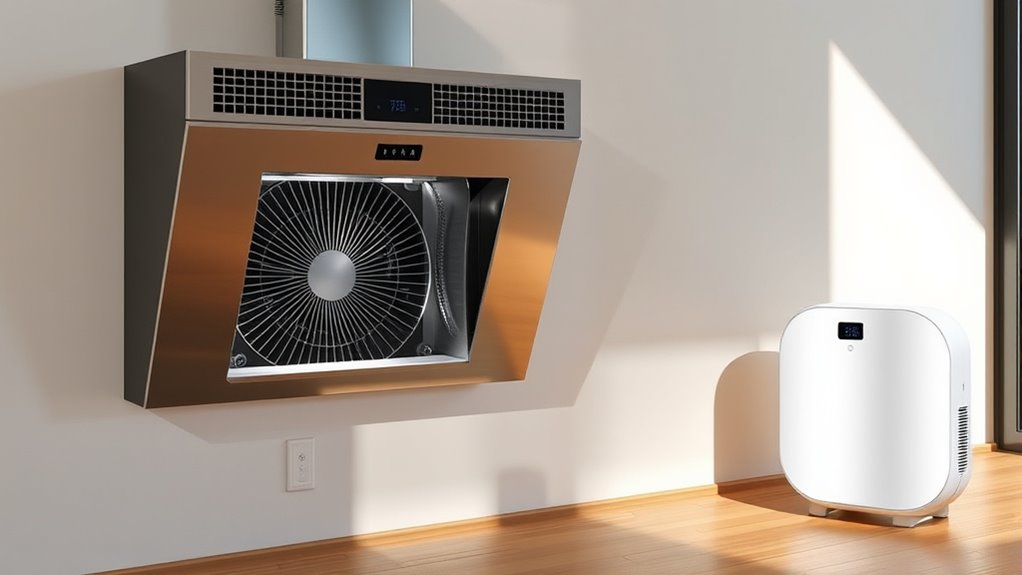
Are HEPA-integrated HVAC units better than portable purifiers for improving indoor air quality? It depends on your specific needs and space. HEPA-integrated HVAC systems are built into your existing heating and cooling infrastructure, offering a centralized approach to air filtration. Because they are designed to handle the entire air volume within a building, these units generally provide high air filtration efficiency across large spaces. You’ll benefit from cleaner air throughout your home or office without having to move or operate multiple devices. However, one aspect to consider is installation complexity. Upgrading or installing a HEPA-integrated HVAC system can be involved, often requiring professional assistance, modifications to ductwork, and higher upfront costs. Once installed, though, they operate seamlessly in the background, maintaining consistent air quality. Additionally, many HVAC units can be customized with performance upgrades to further enhance filtration and efficiency.
On the other hand, portable HEPA purifiers are standalone units that you can place in specific rooms or areas. They’re typically easier to set up and require less technical knowledge, making them ideal if you want quick, targeted air purification. While their air filtration efficiency can be quite high—especially models equipped with true HEPA filters—they are limited to the space they occupy. This means if you have a large home or multiple rooms, you might need several units to achieve the same level of air quality that a centralized system can provide. Additionally, portable purifiers are often more flexible; you can move them to where you spend the most time or where air quality is poorest, offering tailored solutions for different rooms.
In terms of maintenance, portable purifiers are generally straightforward. You replace filters periodically, and most come with clear instructions. Installing a HEPA-integrated HVAC system, however, involves a more complex process that may include duct modifications and professional servicing, which adds cost and effort. But once in place, it often requires less daily attention, working continuously to improve air quality across your entire space.
Ultimately, your choice hinges on your priorities. If you want a convenient, quick solution for specific areas and are comfortable with plugging in devices, portable purifiers might suit you best. If you prefer a detailed, long-term approach and don’t mind the installation process, a HEPA-integrated HVAC system could be more effective. Both options offer high air filtration efficiency, but understanding the installation complexity and how it matches your living or working environment is key to making the right decision.
Frequently Asked Questions
Can Both Units Effectively Remove All Types of Airborne Viruses?
Both units can considerably reduce airborne pathogens, but neither guarantees complete virus removal. Hepa-integrated HVAC units filter a wide range of airborne viruses, improving overall air quality, while portable purifiers target specific areas effectively. You should understand that virus removal depends on proper maintenance, filter quality, and airflow. Combining both options can offer better protection, but always remember that no system can eliminate all airborne viruses entirely.
Which Option Is More Energy-Efficient Over Long-Term Use?
You’ll find that portable purifiers tend to have lower initial energy consumption, making them more cost-effective for short-term use. However, over the long term, integrated HVAC units often become more energy-efficient because they cover larger areas with less operational cost per square foot. Their continuous operation can lower overall energy consumption, reducing long-term operational costs. So, for sustained use, integrated HVAC units usually offer better energy efficiency.
Are There Any Maintenance Differences Between the Two Systems?
Maintenance for these systems isn’t just simple; it’s like a walk in the park—easy and quick! HEPA-integrated HVAC units often require less frequent filter replacements, reducing ongoing effort. Portable purifiers, on the other hand, demand more frequent filter changes, making maintenance feel like a never-ending chore. Overall, HVAC units are less complex to maintain, saving you time and hassle in the long run.
How Do Installation Costs Compare for Each Unit Type?
You’ll find that installation expenses for portable purifiers are generally lower because they require minimal setup and can be moved easily. On the other hand, Hepa-integrated HVAC units tend to have higher setup complexity, often needing professional installation, ductwork adjustments, and system integration. This makes the initial installation costs for HVAC units more expensive, but they offer continuous, whole-home air purification compared to portable units.
Which Is Better for Allergy Sufferers With Multiple Sensitivities?
Improving your air quality is essential if you’re sensitive to allergies. For multiple sensitivities, a Hepa-integrated HVAC unit often provides broader coverage, filtering the entire home consistently. Portable purifiers are more flexible but may miss some areas. When considering cost comparison, portable units usually cost less upfront, but HVAC systems offer continuous filtration. You’re better off evaluating your specific needs and budget to choose the most effective solution for your allergy concerns.
Conclusion
So, whether you choose a fancy HEPA-integrated HVAC unit or a humble portable purifier, just remember—you’re basically playing air traffic controller for your own lungs. Sure, the built-in systems might boast high-tech filters, but hey, who doesn’t love the thrill of constantly moving your portable purifier from room to room? Keep your air clean, or at least pretend to, because in the end, breathing fresh air is the real luxury—until you get tired of the fight.