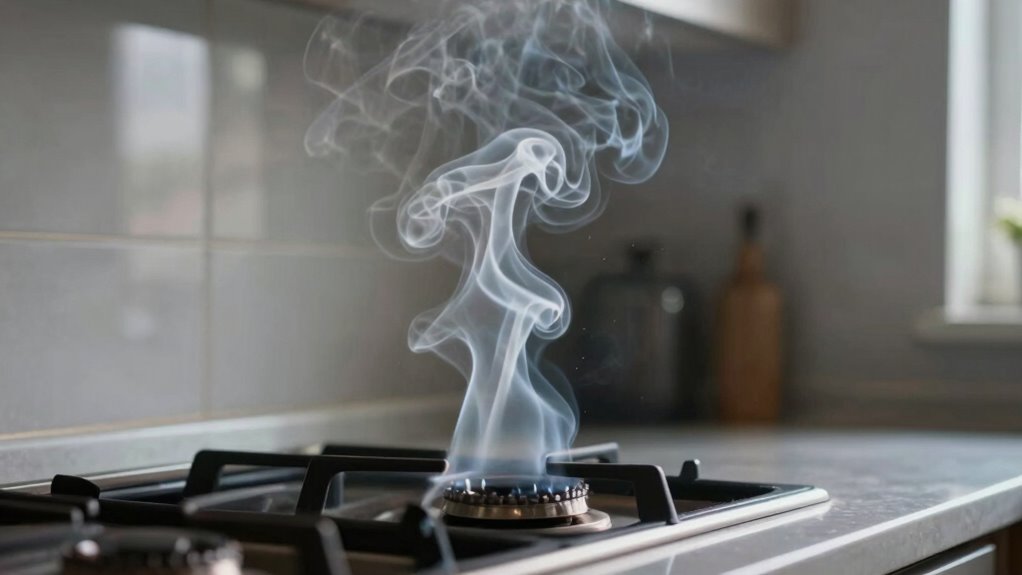

Kitchen smoke spreads beyond the stove area due to airflow patterns created by vents, windows, and exhaust fans. Warm air convection pushes smoke upward and outward, while drafts from open doors or windows redirect it into other parts of your home. Poorly placed or obstructed exhaust systems can let smoke linger or disperse unpredictably. Small adjustments to airflow and ventilation can considerably change how far smoke travels, and you’ll discover more about controlling this as you explore further.

Get garden gear delivered free — and shop member deals
- Fast, free delivery on millions of items
- Access to Prime Big Deal Days deals on October 6–7
- Prime Video, Amazon Music and more included
Key Takeaways
- Smoke follows natural convection currents driven by heat and temperature differences in the kitchen.
- Drafts from doors and windows redirect smoke away from the immediate stove area.
- Improperly positioned or obstructed vents cause smoke to disperse into other parts of the kitchen or adjacent rooms.
- Air circulation devices like ceiling fans can push smoke beyond the stove zone.
- Small airflow changes, such as opening a door, create paths of least resistance for smoke to spread farther.
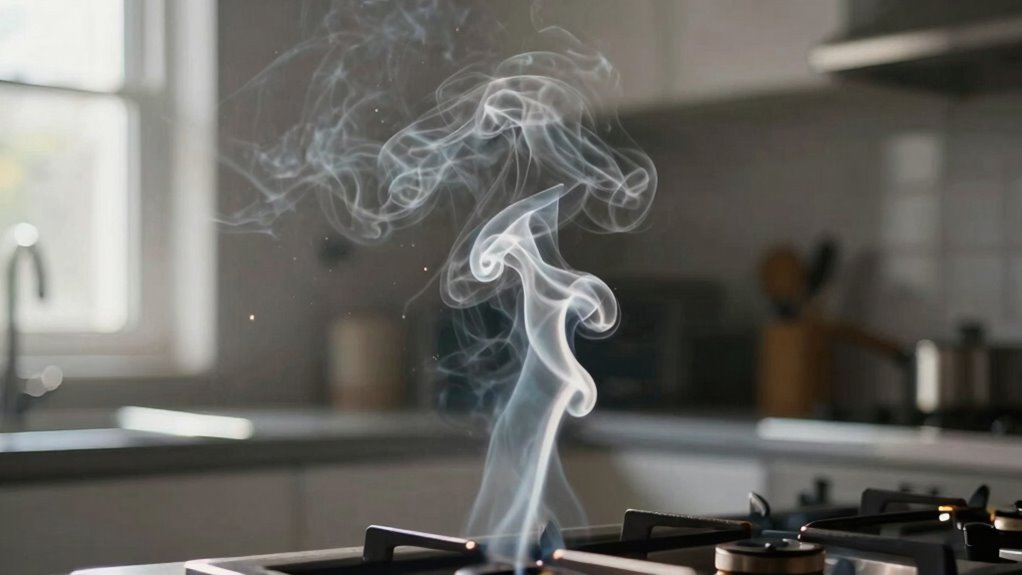
When you cook, smoke doesn’t stay confined to the area right above the stove; instead, it often travels much farther than you might expect. This movement is largely influenced by ventilation patterns and airflow dynamics within your kitchen. Understanding how these forces work can help you better manage smoke and improve air quality.
Ventilation patterns are the routes through which air moves in your kitchen. They’re shaped by the placement of vents, windows, and exhaust hoods, as well as the design of your space. If your stove is near a window or an exhaust vent, smoke tends to be drawn upward and out more efficiently. But if ventilation is poorly designed or obstructed, the smoke can linger and spread in unpredictable ways. For instance, a poorly positioned exhaust fan might not effectively capture smoke, allowing it to escape into other parts of the kitchen or even adjacent rooms. Properly installed and maintained ventilation systems are crucial to prevent this. Additionally, the airflow patterns created by the layout of your kitchen can significantly influence how smoke disperses, making it essential to understand and optimize these dynamics.
Proper vent placement ensures efficient smoke removal and prevents it from spreading unpredictably across your kitchen.
Airflow dynamics, on the other hand, describe how air moves naturally within your space due to temperature differences and pressure variations. When you turn on your stove, the heat creates a convection current that pushes smoke upward and outward. If there’s a draft from an open door or window, or if ceiling fans are running, these forces can direct the smoke along specific paths. Sometimes, this causes the smoke to bypass the exhaust system entirely, dispersing into areas you wouldn’t anticipate. Even subtle changes in airflow—like a person walking into the room or a door opening—can alter how smoke travels, pushing it further than the immediate cooking zone. Additionally, air circulation patterns within your kitchen can significantly influence smoke movement, making it essential to optimize your ventilation setup. Properly managing airflow can prevent smoke from spreading into unintended areas and help maintain a healthier environment. Small adjustments in the placement of vents or the use of fans can dramatically change how smoke disperses, so understanding these factors is key to effective smoke control. The movement of smoke is rarely static; it follows the path of least resistance shaped by your kitchen’s ventilation patterns and airflow dynamics. That’s why smoke can appear in other rooms or settle on surfaces far from the stove. To control this, you need to optimize ventilation—use an exhaust hood that’s appropriately rated and positioned, keep vents unobstructed, and ensure good air circulation. Additionally, managing airflow by minimizing drafts and using fans strategically can help direct smoke out of your kitchen efficiently.
As an affiliate, we earn on qualifying purchases.
Frequently Asked Questions
How Does Ceiling Height Affect Smoke Dispersion?
Ceiling height greatly impacts smoke dispersion by altering airflow patterns and smoke density. Higher ceilings allow smoke to rise and spread out more, reducing its concentration near the cooking area. This creates better airflow, helping smoke dissipate faster and preventing buildup. Conversely, lower ceilings trap smoke, increasing density and making it harder for fumes to escape. You’ll notice a clearer, less smoky kitchen with higher ceilings, thanks to improved airflow and reduced smoke density.
Can Indoor Plants Influence Smoke Movement?
Indoor plants can influence smoke movement by acting as natural plant barriers. They help slow down and redirect smoke, preventing it from spreading quickly throughout your space. Additionally, many plants offer air purification benefits, absorbing toxins and improving air quality. By strategically placing these plants near smoke sources, you can create a healthier environment and reduce the overall spread of smoke in your kitchen or living areas.
Does Kitchen Size Impact Smoke Travel Distance?
Yes, your kitchen size impacts smoke travel distance. Larger kitchens often have more complex airflow patterns, which can carry smoke farther, especially if ventilation is weak. Dense smoke tends to stay concentrated near the stove, but in bigger spaces, it disperses more due to increased airflow. To minimize smoke spread, make certain of proper ventilation and consider airflow patterns that direct smoke away from openings and vents.
How Do Ventilation Systems Alter Smoke Flow?
Ironically, your ventilation system might seem to clear smoke, but it actually influences airflow patterns and smoke density. When functioning properly, it directs smoke out efficiently, preventing it from lingering and spreading. However, poor ventilation can cause unpredictable flow, making smoke travel farther and settle in unexpected spots. So, a well-designed system actively manages smoke flow, keeping your kitchen safer and less smoky, even if it feels counterintuitive.
What Role Do Window Placements Play in Smoke Movement?
Window placements considerably influence smoke movement by directing natural airflow. If your windows are oriented to catch prevailing winds, they create a draft that pulls smoke away from the stove area. Proper window positioning encourages smoke to exit efficiently, reducing buildup. To optimize this, place windows opposite or adjacent to the stove, allowing natural airflow to carry smoke outdoors and keep your kitchen air clean and safe.
Conclusion
Now that you understand how kitchen smoke travels beyond the stove area, you’ll be better equipped to manage ventilation. Think of smoke like a curious breeze, exploring every nook and cranny of your kitchen. By using exhaust fans, keeping windows open, and avoiding clutter, you can help direct smoke outside instead of letting it linger. With these simple steps, your kitchen stays fresher and safer—making cooking a more enjoyable experience, just like a gust of fresh air.
Fall Picks
fall essentials
As an affiliate, we earn on qualifying purchases.