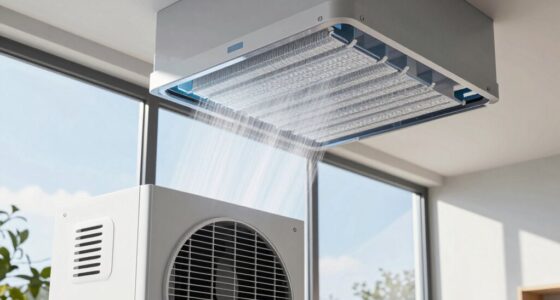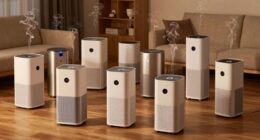
Hybrid HVAC systems combine ventilation and advanced filtration to keep your indoor air cleaner and healthier. They automatically adjust to changing conditions, switching between energy-efficient modes and high-performance filtration when needed. This helps improve air quality, reduce allergy symptoms, and lower energy bills. Plus, they protect your equipment by reducing wear and tear. If you’re interested, you’ll discover how these smart systems enhance comfort and sustainability in your space.
Key Takeaways
- Hybrid HVAC systems seamlessly integrate ventilation and filtration to improve indoor air quality efficiently.
- They automatically adapt to indoor conditions, switching between energy-efficient and high-filtration modes.
- These systems reduce allergens, dust, and bacteria, creating healthier indoor environments.
- They optimize energy use, lowering utility costs while maintaining air quality.
- Designed for versatility, hybrid HVAC systems extend equipment lifespan and support sustainable indoor climate management.

Have you ever wondered how modern heating and cooling systems maximize efficiency? Hybrid HVAC systems do this by intelligently combining ventilation and filtration, creating a balanced approach that benefits both your comfort and the environment. These systems are designed to adapt to changing conditions, ensuring ideal air quality while conserving energy. By integrating different technologies, hybrid HVAC units can switch between energy-efficient modes and more intensive filtration when necessary, making them a smart choice for both homes and commercial spaces.
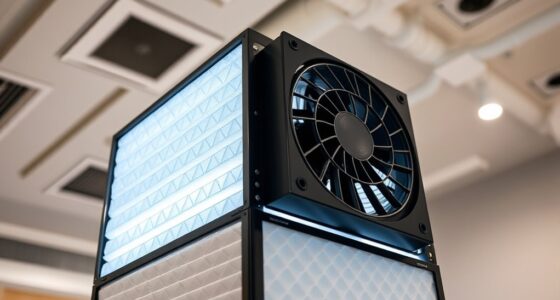
One key advantage of hybrid systems is their ability to improve air quality. They incorporate advanced filtration systems that remove dust, allergens, bacteria, and other airborne pollutants, creating a healthier indoor environment. This is especially important if you suffer from allergies or respiratory issues, as cleaner air can notably reduce symptoms. Additionally, by continuously monitoring indoor air conditions, these systems can automatically activate higher-grade filters or increase ventilation rates when pollutant levels rise, ensuring consistently high air quality. This proactive approach not only benefits your health but also contributes to the overall well-being of everyone in the space.
Hybrid HVAC systems enhance air quality with advanced filtration and smart monitoring for healthier indoor environments.
Energy efficiency is another critical aspect of hybrid HVAC systems. They are designed to optimize energy consumption by intelligently managing when to use different components. For example, during mild weather, the system can rely on energy-efficient ventilation modes that circulate fresh air without overtaxing your heating or cooling units. When temperatures or air quality demand more intensive conditioning or filtration, the system can switch seamlessly to higher-capacity modes. This adaptability reduces unnecessary energy use, lowering utility bills and decreasing your carbon footprint. Plus, because these systems often incorporate smart controls and sensors, they learn your habits and adjust operations accordingly, further enhancing efficiency.
Moreover, hybrid HVAC systems can extend the lifespan of your equipment. By reducing the workload on your primary heating and cooling units, they prevent overuse and unnecessary wear. This means fewer repairs and replacements over time, saving you money in the long run. Their ability to balance energy efficiency with high air quality makes them a versatile and sustainable solution. Whether you’re aiming to create a healthier indoor space or reduce energy costs, these systems adjust to your needs without sacrificing performance.
Frequently Asked Questions
How Do Hybrid HVAC Systems Impact Energy Consumption?
You’ll see that hybrid HVAC systems boost energy savings and improve system efficiency. By switching between ventilation and filtration modes based on real-time needs, you reduce unnecessary energy use. This adaptive approach minimizes power consumption while maintaining indoor air quality. As a result, you benefit from lower energy bills and a more sustainable system that intelligently balances air purification with energy conservation, making your environment both comfortable and eco-friendly.
Can Hybrid Systems Be Integrated With Smart Home Technology?
Yes, you can integrate hybrid HVAC systems with smart home technology. Imagine controlling your system effortlessly through smart integration, where automation control adapts to your schedule and preferences. This seamless connection lets you optimize ventilation and filtration, saving energy and improving air quality. With just a tap or voice command, you gain smarter comfort and efficiency, making your home both safer and more convenient than ever before.
What Is the Maintenance Requirement for Hybrid HVAC Systems?
You’ll need to regularly replace filters to guarantee your hybrid HVAC system runs efficiently. Check and change filters every 3 to 6 months, or more often if you have pets or allergies. Additionally, schedule system calibration annually to maintain peak performance. Keep an eye on system alerts and perform routine inspections, so your hybrid system continues to provide clean air and energy savings without unexpected breakdowns.
Are Hybrid Systems Suitable for Small Residential Buildings?
Think of hybrid HVAC systems as a tailored suit for your home’s indoor air quality—they fit small residential buildings perfectly. You can easily install these systems, and they effectively balance ventilation and filtration. I once helped a homeowner improve indoor air quality with a hybrid setup, and they noticed cleaner air immediately. For small homes, hybrid systems are energy-efficient, versatile, and a smart choice for maintaining a healthy indoor environment.
How Do Hybrid Systems Compare Cost-Wise to Traditional HVAC Systems?
You’ll find that hybrid HVAC systems are generally more cost-effective over time compared to traditional systems. Their initial investment analysis shows higher upfront costs, but they save money through lower energy bills and maintenance. The cost effectiveness comparison favors hybrid systems because they optimize ventilation and filtration, reducing energy waste. Overall, while the initial investment is higher, the long-term savings make hybrid systems a smart financial choice for many homes.
Conclusion
By combining ventilation and filtration, hybrid HVAC systems act like a shield, quietly guarding your indoor air quality. They work together seamlessly, much like a well-choreographed dance, to remove pollutants and bring fresh air in. Embracing this approach means you’re not just breathing easier; you’re creating a healthier environment for everyone inside. Think of it as installing a reliable filter in a fountain—constant, effective, and essential for your well-being.