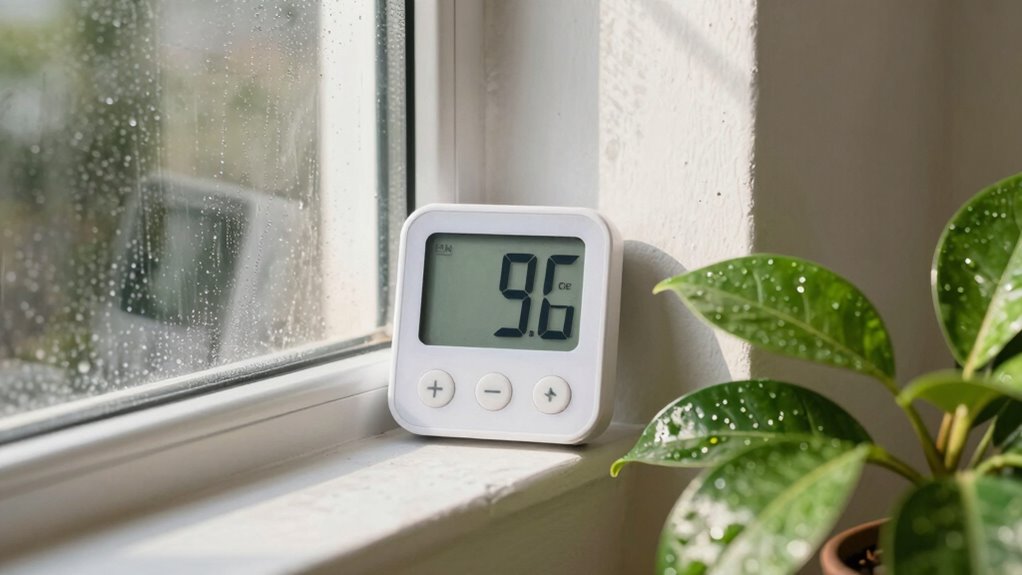
To maintain comfort and prevent mold and static, aim for indoor humidity levels between 30% and 50%. This range helps inhibit mold growth, reduces static shocks, and keeps your skin and throat comfortable. Using a hygrometer can help you monitor and adjust moisture levels with humidifiers or dehumidifiers as needed. Staying within this range creates a healthier, more efficient environment. Keep exploring to discover tips for achieving and maintaining these ideal humidity targets.
Key Takeaways
- Maintain indoor humidity between 30% and 50% to reduce mold growth, dust mites, and bacteria.
- Proper humidity levels prevent dry skin, static electricity, and respiratory discomfort.
- Balancing humidity enhances energy efficiency by easing the workload on HVAC systems.
- Use hygrometers to monitor and adjust humidity for optimal comfort and health.
- Sealing leaks and controlling moisture entry supports consistent humidity and indoor air quality.
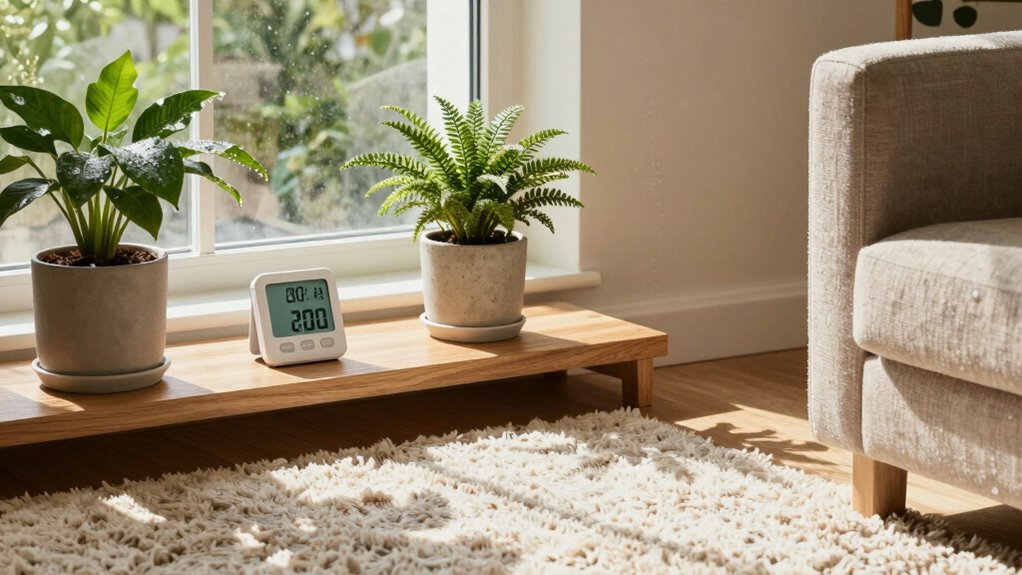
Have you ever wondered how maintaining the right humidity levels can impact your comfort and health? It’s more than just feeling cozy; it directly influences indoor air quality and energy efficiency in your home. When humidity is too high, it creates a breeding ground for mold, dust mites, and bacteria, all of which can worsen allergies and respiratory issues. Conversely, if it’s too low, your skin and throat may become dry, and static electricity can become a persistent nuisance. Striking the right balance isn’t just about comfort—it’s about creating a healthier living environment and maximizing your home’s energy use. Proper humidity levels also play a crucial role in building performance and ensuring your home’s infrastructure remains durable over time. Maintaining ideal humidity levels, typically between 30% and 50%, plays a vital role in indoor air quality. Proper humidity inhibits the growth of mold and bacteria, which thrive in damp conditions, thereby reducing potential health risks. It also helps control dust mites, a common allergen. When humidity is kept within this range, it prevents the air from becoming too dry or too damp, which can cause discomfort and health problems. Good indoor air quality isn’t just about ventilation or air purifiers; humidity regulation is a key factor. By using humidifiers or dehumidifiers as needed, you can guarantee that the air you breathe remains clean, safe, and comfortable. Energy efficiency is another significant benefit of maintaining appropriate humidity levels. When your home’s humidity is balanced, your heating and cooling systems don’t have to work as hard to maintain a comfortable environment. In winter, proper humidity helps retain heat, reducing the workload on your furnace and lowering energy bills. During summer, controlling moisture levels can make the air feel cooler, meaning you might not need to set the air conditioner as low. This reduces energy consumption and prolongs the life of your HVAC system. Plus, well-regulated humidity prevents the overuse of energy-hungry appliances like humidifiers or dehumidifiers, which can be energy-efficient if used correctly. Think of it this way: maintaining the right humidity level is an investment in your home’s comfort, health, and efficiency. It’s about finding that sweet spot where your indoor air quality improves, mold and static are kept at bay, and your energy bills stay manageable. Small adjustments, like using a hygrometer to monitor humidity or sealing leaks that cause moisture problems, can make a big difference. Ultimately, managing humidity isn’t just a matter of comfort; it’s a practical step toward a healthier, more energy-efficient home.
Frequently Asked Questions
How Does Humidity Affect Indoor Air Quality?
You can improve indoor air quality by managing humidity levels with ventilation strategies and humidity sensors. Proper ventilation removes excess moisture, reducing mold and static buildup. Humidity sensors help you monitor moisture levels accurately, so you can adjust ventilation accordingly. Keeping humidity in the ideal range prevents allergens and pollutants from thriving, making your indoor environment healthier and more comfortable. Regularly using these tools ensures balanced humidity and better air quality.
What Are the Health Risks of High Humidity?
High humidity can pose health risks by promoting mold growth, which can trigger allergies and respiratory issues. You might experience coughing, sneezing, or difficulty breathing if mold spores become airborne. Excess moisture also fosters dust mites, further impacting your respiratory health. To protect yourself, keep indoor humidity levels balanced, ideally between 40-60%, and make certain proper ventilation to prevent mold buildup and maintain good air quality.
Can Low Humidity Impact Wooden Furniture?
Picture your wooden furniture as a delicate dancer, needing just the right humidity to stay graceful. Low humidity causes wood to dry out, crack, and warp over time. When humidity effects dip too low, your furniture loses its flexibility and beauty, much like a dancer stiffening in mid-performance. Keep humidity balanced to preserve your wooden pieces, ensuring they remain sturdy, smooth, and full of life.
How Often Should I Measure Indoor Humidity Levels?
You should measure indoor humidity levels at least once a month to guarantee accuracy. Use a hygrometer and calibrate it regularly for reliable readings. Keep in mind seasonal humidity variation, as levels can fluctuate with weather changes. Regularly checking helps you maintain the ideal humidity range, preventing issues like mold or static. Monitoring often allows you to make timely adjustments for a comfortable, healthy environment.
What Is the Ideal Humidity Range for Allergy Sufferers?
Think of humidity control like tuning a guitar—too high or low, and it’s off-key. For allergy sufferers, maintaining an indoor humidity range of 40-50% minimizes allergy triggers like dust mites and mold. I once struggled with allergies until I realized adjusting my home’s humidity helped. Keeping it in this range creates an environment less hospitable to allergens, providing relief and making your space more comfortable.
Conclusion
Maintaining the right humidity levels isn’t just about comfort—it’s about protecting your home and health. For example, imagine living in a damp basement with 80% humidity; mold quickly takes hold, risking your family’s well-being. By aiming for that sweet spot between 30-50%, you prevent mold, reduce static, and stay comfortable. Stay vigilant, use a hygrometer, and adjust your humidifier or dehumidifier as needed to keep your environment safe and cozy.