
Using AQI data helps you issue timely public health advisories by informing communities about current pollution levels and potential health risks. When AQI rises to unhealthy levels, you can recommend actions like staying indoors, wearing masks, or avoiding outdoor activities, especially for vulnerable groups. This proactive approach protects public health and reduces pollution-related illnesses. To learn more about how to effectively use AQI for advisories, continue exploring how authorities implement these measures.

Get garden gear delivered free — and shop member deals
- Fast, free delivery on millions of items
- Access to Prime Big Deal Days deals on October 6–7
- Prime Video, Amazon Music and more included
Key Takeaways
- Authorities monitor AQI data to determine pollution levels and issue timely public health advisories.
- Public alerts include recommendations like staying indoors or wearing masks during unhealthy AQI levels.
- AQI categories help communicate pollution severity, guiding protective actions for vulnerable populations.
- Real-time AQI information enables communities to make informed decisions about outdoor activities.
- Regular public advisories based on AQI help reduce exposure and prevent pollution-related health issues.
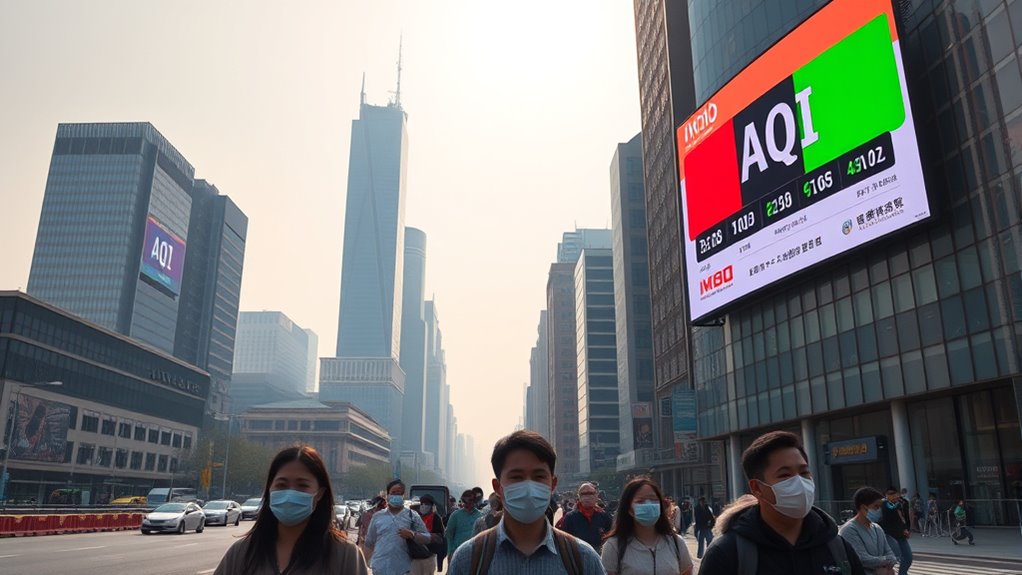
Air Quality Index (AQI) plays an essential role in safeguarding public health by providing clear, real-time information about air pollution levels. When you pay attention to AQI reports, you gain insight into the current air quality, which directly affects your health and well-being. Poor air quality can have immediate and long-term health impacts, especially for vulnerable groups like children, the elderly, and those with pre-existing health conditions. By understanding AQI levels, you can make informed decisions about outdoor activities, minimizing your exposure to harmful pollutants.
Monitoring AQI helps protect your health by providing real-time air quality updates.
The AQI categorizes air quality into different levels, ranging from good to hazardous, giving you a straightforward way to interpret pollution data. When the AQI indicates unhealthy levels, you’re warned that pollutants such as ozone, particulate matter, or nitrogen dioxide are at concentrations that could harm your health. This information empowers you to take precautionary steps, like reducing outdoor exertion or rescheduling outdoor plans, especially if you belong to a sensitive group. In doing so, you lessen the risk of respiratory issues, aggravated asthma, or other health impacts associated with poor air quality.
Understanding the relationship between air quality and health impacts helps you recognize why AQI advisories matter. Exposure to high pollution levels can cause immediate effects such as coughing, throat irritation, shortness of breath, and fatigue. Over time, repeated exposure may contribute to more serious health issues like heart disease, lung conditions, and even decreased lung function. By heeding AQI alerts, you’re actively protecting yourself and those around you from these adverse outcomes.
Furthermore, local authorities and health agencies rely on AQI data to issue public health advisories, which serve as indispensable tools in community health management. When you see alerts or warnings, take them seriously. These advisories often include specific recommendations, such as staying indoors, using air purifiers, or wearing masks. Following these guidelines helps reduce your exposure to harmful air pollutants and diminishes the health impacts associated with poor air quality.
In addition, understanding that pregnancy can be affected by air pollution emphasizes the importance of monitoring AQI levels, especially for expecting mothers. Staying informed about air quality allows pregnant women to take extra precautions to protect both their health and their developing baby.
In essence, AQI isn’t just a number—it’s an essential communication tool that keeps you informed about your environment’s air quality. Your awareness and responsiveness to AQI levels can greatly influence your health by preventing pollution-related illnesses. Staying updated on air quality conditions allows you to take proactive steps, protect your respiratory health, and contribute to overall community well-being. By making informed choices based on AQI reports, you help reduce health impacts and support a healthier environment for everyone.
As an affiliate, we earn on qualifying purchases.
Frequently Asked Questions
How Often Is AQI Data Updated?
You get updated AQI data frequently, often hourly, to guarantee timely public health advisories. Regular sensor calibration is essential to maintain data accuracy, so agencies perform calibration checks often. This ongoing process helps correct any sensor drift and ensures the AQI reflects real-time air quality. By updating data regularly and calibrating sensors properly, you can trust the information to make informed decisions about your health and safety.
Can AQI Predict Future Air Quality?
Like a weather forecast for your air, AQI can’t predict the future with certainty. Air quality forecasting uses current pollutant levels and trends to estimate upcoming conditions, but pollutant variability makes predictions tricky. You should see AQI as a helpful guide, not a crystal ball. It provides an educated guess based on recent data, but sudden changes in pollution sources can always alter the air quality unexpectedly.
Are There Different AQI Standards Worldwide?
Yes, there are different AQI standards worldwide, reflecting regional variations in air quality guidelines. International standards like those from the WHO serve as benchmarks, but many countries adapt these to their local conditions and health priorities. You should be aware that AQI thresholds and pollutant categories can vary, so what’s considered safe in one region might differ elsewhere, affecting how advisories are issued and understood.
How Does AQI Impact Vulnerable Populations?
You’re directly affected by AQI as vulnerable populations often face housing disparities, making it harder to escape poor air quality. High AQI levels worsen health outcome disparities, increasing risks for respiratory issues and other illnesses. If you belong to a vulnerable group, you might experience more severe health effects. Recognizing this, public health efforts aim to protect these populations by issuing timely advisories and addressing underlying housing inequalities.
What Are the Limitations of Using AQI?
They say, “Don’t judge a book by its cover,” but AQI can sometimes mislead you. Its limitations lie in air quality variability and regional differences, which means a single AQI value doesn’t always reflect local conditions accurately. You might get an idea of general air quality, but it’s not perfect. You need to take into account specific local factors and real-time data, especially when protecting vulnerable populations.
Conclusion
So, next time you ignore those AQI alerts, remember—they’re not just numbers, but your body’s silent warnings. Ironically, while the AQI aims to protect you, many still dismiss it until it’s too late. By paying attention now, you could avoid the very health issues the AQI warns against. After all, it’s easy to overlook air quality until you’re gasping for breath, isn’t it? Don’t wait—your lungs will thank you later.
Fall yard work Picks
leaf blowers
As an affiliate, we earn on qualifying purchases.