TL;DR
Solar garden string lights use a solar panel to charge a rechargeable battery, then a controller usually switches the LEDs on at dusk. They suit patios, pergolas, and path edges, but runtime depends on sunlight, season, battery capacity, and settings. Before buying, check panel placement, weather ratings for every component, mounting, and whether the battery or bulbs can be replaced.
A string of warm lights can turn a plain patio into the spot where everyone lingers after dinner. But when your solar garden string lights fade before dessert, the problem may be the panel’s location, the weather, or a runtime claim that assumed a sunny test day.

Get garden gear delivered free with Prime
- Fast, free delivery on millions of items
- Prime Video, Amazon Music and more included
- Member-only deals all year
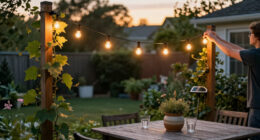
These lights pair small LEDs with a solar panel, a rechargeable battery, and usually a sensor or controller. The panel gathers daylight, and the controller typically switches the string on at dusk. That simple setup gives you flexible accent lighting without mains wiring, as long as you have a good place for the panel to charge.
This guide explains what the parts do, how to set them up, and which product details deserve a closer look. You’ll also get practical steps for troubleshooting dim lights and a checklist for choosing a set that fits your garden. Think of the panel as the string’s fuel stop: move it into better sun, and the whole evening can change.
Place a separate solar panel in the sunniest practical spot, even if the lights themselves hang in shade.
Treat advertised runtime as a product-specific figure; sunlight, season, brightness, and battery condition all affect it.
Check the weather rating and instructions for the panel, battery box, connectors, and string.
Measure the route and compare illuminated length and bulb spacing before buying.
Look for battery and bulb replacement details, and don’t open sealed units unless the maker’s instructions say to.
How Solar Garden String Lights Turn Sunlight Into Evening Glow
Solar garden string lights collect daylight with a panel, store some of that energy in a rechargeable battery, and use it to power LEDs after dark. A light sensor or controller usually switches the LEDs on at dusk and off at dawn or when the battery runs low. The exact runtime depends on the set and its charging conditions.
Most sets combine small, efficient LEDs with the panel and battery. Bulb shape and spacing affect the look: widely spaced globes make separate pools of light, while closer bulbs can create a more continuous glow. According to the U.S. Department of Energy, LEDs use at least 75% less energy and last up to 25 times longer than incandescent lighting [1]. That efficiency helps, but it doesn’t make a small panel or battery unlimited.
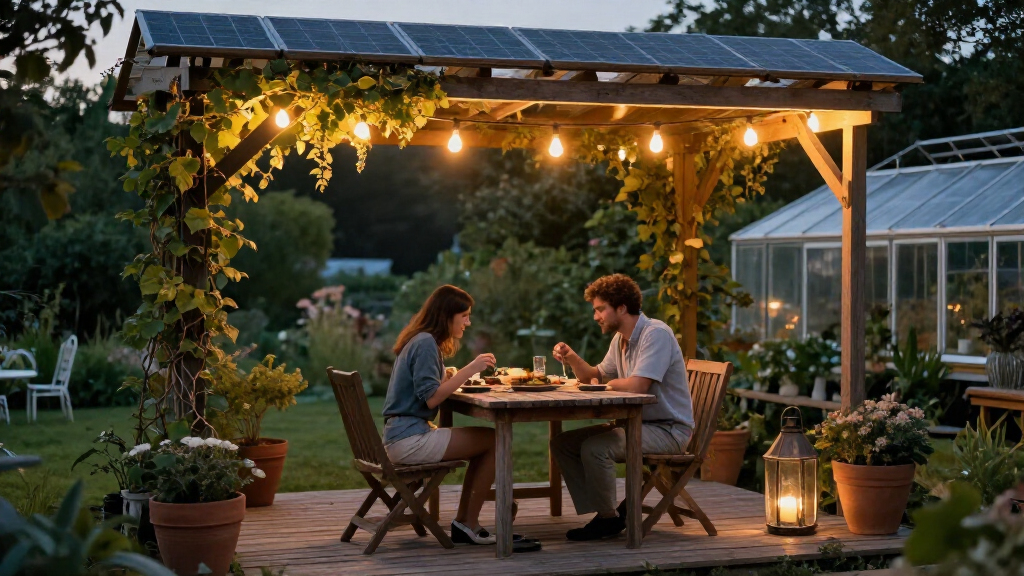
For example, a homeowner might hang the string beneath a shaded pergola but stake its separate panel beside a sunny fence. That setup can work better than placing the whole set in one spot where the panel sits under leaves. The panel is like a little charging station; the light string can be the lamp across the room.
Check whether the set offers a simple on/off switch, brightness levels, or patterns such as steady and flashing. A lower setting may stretch the available charge, although the improvement depends on the product. Some newer models add timers, USB charging, remote controls, or app features. Treat those as options to compare: a feature list alone doesn’t prove stronger charging or longer runtime.
Products Worth Considering

Ring Alarm 5-Piece Home Security Kit

Samsung 48-Inch S90F OLED 4K Smart TV (2025)

Roborock Qrevo S Pro Robot Vacuum and Mop with 18,500 Pa Suction
As an affiliate, we earn on qualifying purchases.
Choose a Panel and Battery That Match Your Garden
Choose solar garden string lights by checking how much sun the panel can get, how the battery is described, and what the stated runtime actually means. A detachable panel connected by a cable gives you more freedom to hang lights in shade while placing the panel in a brighter spot. Check the cable length and instructions before assuming you can extend it.
Suppose your patio gets afternoon shade from a maple tree. A panel built into the string or a short stake may end up beneath the branches, while a separate panel could sit at the sunny edge of the yard. On the other hand, if the whole garden gets strong sun, an attached panel can mean fewer parts to mount. Match the design to the space you have.
Compare sets with a short checklist:
- Panel position and cable length: Can the panel reach an unshaded spot?
- Battery details: Does the manual state the type and capacity, and can you buy a replacement?
- Runtime conditions: Is the advertised duration tied to a particular mode, brightness, or charging condition?
- Replacement parts: Can you replace the battery, a bulb, or the entire string?
There is no universal runtime figure that makes two products directly comparable. A set may advertise a long evening under ideal charging conditions, but a cloudy day, short winter daylight, or a bright setting can change the result. If you want lights for a late summer dinner, a modest set may be enough. If you need reliable illumination every night, check the battery and charging information carefully—and consider whether solar suits your conditions.
Set Up the Panel for Longer, More Reliable Evenings
To get more dependable light, place the solar panel where it receives the most direct daylight your garden allows, keep it clean, and test the sensor after installation. Shading from buildings, fences, and trees reduces charging, while short winter days and low sun angles can cut the available energy. These steps help the set use its available charge; they cannot create more sunlight.
- Find a sunny position. Observe the garden through the day and avoid spots shaded for long stretches.
- Angle and clean the panel. Follow the manufacturer’s instructions and wipe away dust or fallen leaves.
- Check the sensor. Keep it away from garden or indoor lights that could make it think daylight has returned.
- Choose a mode. If runtime matters more than peak brightness, try a lower brightness setting or a simpler pattern.
- Test after dark. Confirm the string turns on, then check that the panel stayed in sun during the day.
Imagine a set that glows for most of a July evening but fades early in December. That doesn’t automatically mean it has failed: winter brings fewer daylight hours, and the sun sits lower. A sunny panel location and a lower setting may help, but expect seasonal changes.
If your lights won’t turn on, check the switch and mode first, then let the panel charge in a sunny spot. Inspect connectors and use the manual’s troubleshooting steps. To test the dusk sensor, cover the panel briefly after charging; don’t treat that quick test as a substitute for the manufacturer’s instructions.
Check Every Weather Rating Before Leaving the Lights Outside
Leave solar garden string lights outdoors only when the product’s instructions and ratings support the weather they will face. A rating for the string doesn’t automatically describe the panel, battery box, or connectors. Look up each exposed component and keep parts away from standing water.
Weather resistance and waterproofing are not interchangeable promises. A product may tolerate rain under certain conditions while still requiring the battery compartment to stay dry. Check the manufacturer’s guidance for heavy rain, snow, frost, and strong wind. If it says to bring parts indoors during severe weather, follow that direction rather than guessing from the appearance of the casing.
For instance, a family might hang lights along a pergola in a breezy garden. Secure the string to suitable supports so wind doesn’t pull on the connectors, and mount the panel stake firmly. Keep cables and stakes out of the main walking route; a dark trip hazard can undo the pleasant atmosphere in one stumble.
Check the rating and instructions for every exposed part. If the manual limits a component’s exposure to rain or severe weather, plan where it will go before you install the lights.
Also think about children and pets. Secure dangling strings so they don’t become entanglement hazards, and keep batteries and small parts out of reach. Use products intended for outdoor conditions, and inspect the string now and then for loose fittings or damaged cables. Outdoor lighting looks effortless when the hardware stays firmly in place.
Use Solar Strings for Atmosphere, Not as Your Main Work Light
Solar garden string lights work best for soft accent lighting: they can outline a patio, add a glow under a pergola, or mark the edge of a path. Many small sets won’t provide dependable task lighting or brighten a large area like a properly planned wired fixture. Think of them as the candlelight around a dinner table, rather than the lamp you need to read fine print.
A practical example: a host strings warm globes above a table so guests can see faces and plates, then keeps a separate, suitable light near the grill for cooking. The two sources serve different jobs. The string sets the mood; the focused light helps you see whether the vegetables are done.
When comparing coverage, measure the route and leave extra length for draping and connection points. Look at the illuminated length and bulb spacing, not just the total length printed on the box. A 10-metre string with widely spaced bulbs can look quite different from the same length with closer bulbs. Sketching the route before purchase can spare you from a drooping strand that falls short of the last post.
Solar strings also trade outlet-free installation for dependence on daylight and battery condition. They avoid mains electricity use while operating, but purchase price, available sun, battery replacement, and product lifespan shape overall value. If you need even light for security or regular outdoor work, compare them with a suitable fixed fixture rather than asking decorative lights to do every job.
Make Your Lights Last by Checking Batteries and Bulbs
Solar string lights last longer in useful service when you follow the maker’s care instructions and check replacement options before purchase. Rechargeable batteries wear out over time, and many small solar sets don’t offer replaceable bulbs. A sealed unit may not be safe to open, so don’t assume you can repair it by taking it apart.
Picture a set that worked well for two summers and now fades soon after dusk. The battery may have lost capacity, but poor sun exposure, a dirty panel, or a changed setting can also explain the shorter runtime. Check those simple causes first, then consult the manual for battery service or replacement. If the battery compartment is sealed, follow the manufacturer’s advice rather than improvising.
Before buying, look for the battery type, replacement availability, warranty, and instructions for service. Find out whether individual bulbs can be replaced or whether a failed section means replacing the whole string. This detail may seem less exciting than a remote control, but it can matter more when you want the lights to stay useful beyond their first season.
After installation, inspect the supports, connections, panel, and visible wiring from time to time. Clear debris from the panel and keep the battery box positioned as directed. If the manufacturer recommends indoor storage during harsh weather or a long period without use, follow that guidance. Small checks can catch a loose mount or a connector problem before a whole strand goes dark.
Frequently Asked Questions
How long do solar garden string lights stay on?
Runtime depends on the product, the day’s charging conditions, battery capacity, brightness, and light pattern. Treat the advertised figure as specific to the manufacturer’s test conditions; a cloudy day or winter afternoon may produce fewer hours.
Do solar string lights work on cloudy days or in winter?
They may charge in diffuse daylight, but often less effectively than in direct sun. Short winter days and low sun angles can reduce charging time, so the string may glow for fewer hours after dark.
Can I put the solar panel away from the lights?
Many sets use a cable between a separate panel and the string, which lets you place the panel in a sunnier spot. Check the cable length and manual before extending it; extension options vary by product.
Can I leave solar garden string lights outside in the rain?
Only when the product’s ratings and instructions support the conditions. Check the panel, battery box, connectors, and bulbs individually, and keep components away from standing water.
Can I replace the battery or bulbs?
Some sets allow battery replacement, while others are sealed. Individual bulbs are also not replaceable on every model, so check the manual and replacement-part availability before buying. Don’t open a sealed unit unless the manufacturer provides service instructions.
Conclusion
Choose solar garden string lights for the atmosphere you want, then give their panel a place to charge well. Check weather guidance for every component, secure the string, and treat runtime claims as conditions to compare rather than guarantees for every night.
When the sun drops and the bulbs come on, your patio can feel like a small outdoor room. Start with the panel’s position—that’s where a brighter, longer evening begins.