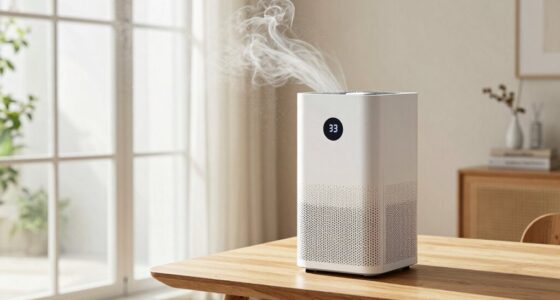

In smart cities, managing indoor air quality involves integrating data from diverse sensors and infrastructure, which presents notable challenges. You’ll face issues like varied data formats, incompatible protocols, and the need for real-time analysis, making coordination complex. Without proper integration, your systems may deliver inconsistent or inefficient ventilation and pollutant management. Understanding these hurdles prepares you to develop better strategies—if you want to explore solutions, keep going.
Key Takeaways
- Diverse sensor types and formats hinder seamless data aggregation and interoperability across IAQ monitoring systems.
- Lack of standardized communication protocols complicates real-time data sharing among various smart city infrastructure components.
- Data silos and incompatible platforms reduce the effectiveness of integrated pollutant and environmental information.
- High data volumes require advanced analytics and machine learning to extract actionable IAQ insights efficiently.
- Ensuring data security and integrity across multiple sources is critical for reliable IAQ management in smart city environments.

As cities become smarter and more connected, indoor air quality (IAQ) has emerged as a critical focus for ensuring public health and well-being. You’re likely aware that a significant portion of people’s time is spent indoors, whether at work, home, or public spaces. To improve IAQ, smart city initiatives emphasize ventilation optimization and pollutant monitoring. These strategies help detect and reduce harmful contaminants, but integrating this data across diverse systems presents notable challenges.
Ventilation optimization involves adjusting air circulation systems to maintain ideal indoor conditions. In smart cities, sensors gather real-time data on temperature, humidity, and pollutant levels, enabling automated adjustments to HVAC systems. This continuous feedback loop improves air quality efficiently. However, coordinating ventilation across multiple buildings and infrastructure can be complex, especially when different systems use varied standards or technologies. You need a unified approach that consolidates data from multiple sources, allowing for seamless adjustments that optimize airflow without wasting energy. Without effective integration, ventilation systems may operate inefficiently or inconsistently, undermining IAQ efforts.
Pollutant monitoring is equally essential. Sensors detect airborne contaminants such as volatile organic compounds (VOCs), particulate matter, carbon dioxide, and other pollutants. These devices generate vast amounts of data, which must be aggregated and analyzed promptly. The challenge lies in ensuring sensor interoperability and data compatibility across different brands and platforms. If data isn’t standardized, it becomes difficult to build a complete picture of indoor air quality. You also need robust data management systems that can handle high volumes of information while maintaining accuracy and security. When pollutant data is integrated properly, it can inform targeted interventions—like increasing ventilation in specific zones during pollution spikes—improving overall IAQ. But if data streams are siloed or incompatible, you risk missing critical insights that could protect public health.
Combining ventilation optimization and pollutant monitoring data into a cohesive system requires sophisticated data integration techniques. You must address issues such as data formats, communication protocols, and real-time processing capabilities. Interoperability standards like BACnet or MQTT can help, but they aren’t always universally adopted, adding complexity. Furthermore, integrating diverse data sources demands advanced analytics and machine learning algorithms to identify patterns and predict potential IAQ issues before they escalate. Additionally, incorporating Self Watering Plant Pots as part of indoor greenery strategies can contribute to better humidity control and pollutant absorption, enhancing overall indoor air quality.
Ultimately, the goal is to create a smart, responsive indoor environment that adapts dynamically to changing conditions. Achieving this requires overcoming data integration challenges; otherwise, the benefits of ventilation optimization and pollutant monitoring won’t reach their full potential. When done right, this integration empowers you to maintain healthier indoor spaces, reduce energy consumption, and support the overall sustainability goals of smart cities.
Frequently Asked Questions
How Do Smart Cities Measure Indoor Air Quality Remotely?
You track indoor air quality remotely in smart cities by deploying sensors that monitor pollutants like CO2, VOCs, and particulate matter. To guarantee accurate data, you perform regular sensor calibration and implement data standardization across devices. This way, you can integrate the data seamlessly into city systems, enabling real-time analysis and response. Consistent calibration and standardized data are key to reliable indoor air quality measurements in a smart city environment.
What Are the Privacy Concerns With Air Quality Data Collection?
Did you know that 80% of people worry about their personal data being misused? When collecting air quality data, you might be concerned about privacy issues, especially regarding personal data and surveillance concerns. You could feel uneasy knowing that sensors track indoor environments, potentially revealing your habits or health info. It’s important to guarantee data collection respects privacy laws and uses anonymization to protect your personal information from misuse.
How Can Residents Access Real-Time Indoor Air Quality Information?
You can access real-time indoor air quality data through community engagement initiatives, such as local apps or online platforms. Confirm sensors are regularly calibrated for accuracy, so the information you get is reliable. Participate in city-led programs or workshops to stay informed. By staying engaged and supporting proper sensor calibration, you help foster transparency and better health decisions, making indoor air quality data accessible and useful for everyone.
What Are the Cost Implications for Implementing Smart Air Quality Sensors?
You’ll find that the initial cost for smart air quality sensors can range from $50 to $300 each, depending on features. Maintenance costs, including regular sensor calibration and replacements, add to expenses over time. While investing in these sensors might seem high initially, they help prevent health issues and reduce long-term healthcare costs, making them a worthwhile, cost-effective addition for smart cities aiming for better indoor air quality.
How Do Data Integration Challenges Affect Public Health Policies?
Data integration challenges hinder your ability to develop effective public health policies by disrupting data standardization and policy coordination. When data isn’t seamlessly combined from various sensors and sources, it becomes difficult to identify trends or respond swiftly. This fragmentation slows decision-making, reduces policy accuracy, and can compromise health outcomes. Overcoming these challenges guarantees you can create more consistent, timely, and impactful public health strategies, improving indoor air quality management overall.
Conclusion
As you navigate smart cities, understanding indoor air quality is vital, especially since studies show that people spend up to 90% of their time indoors. Data integration challenges can hinder accurate monitoring, but overcoming them can lead to healthier living environments. By embracing innovative solutions, you can guarantee cleaner, safer air inside buildings. Improving indoor air quality isn’t just a goal—it’s indispensable for your well-being in the connected urban future.