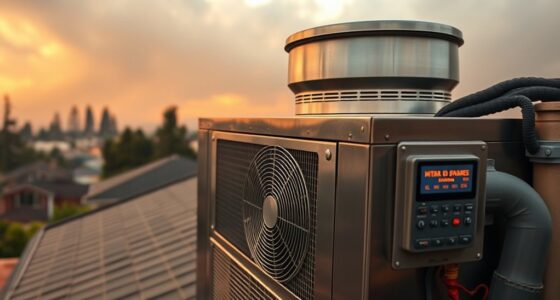
Integrating air purification with heat recovery ventilators helps you enjoy cleaner, healthier indoor air while saving energy. These systems exchange stale indoor air with fresh outdoor air, capturing heat to improve efficiency. Adding high-quality filters, like HEPA, traps airborne allergens and pollutants, making your home safer. This combination guarantees continuous, filtered airflow without wasting energy. If you want to know how to maximize these benefits and create a healthier environment, keep exploring the options available to you.
Key Takeaways
- Integrating air purification with HRVs enhances indoor air quality by filtering out allergens and pollutants from incoming air.
- Using high-efficiency filters like HEPA within HRVs maximizes removal of airborne irritants and allergens.
- Combining these systems reduces indoor pollutant levels while maintaining energy-efficient ventilation.
- Integration prevents outdoor contaminants from bypassing filtration, ensuring cleaner, healthier indoor environments.
- Advanced HRV units with built-in air purification streamline installation and provide seamless, continuous clean air circulation.
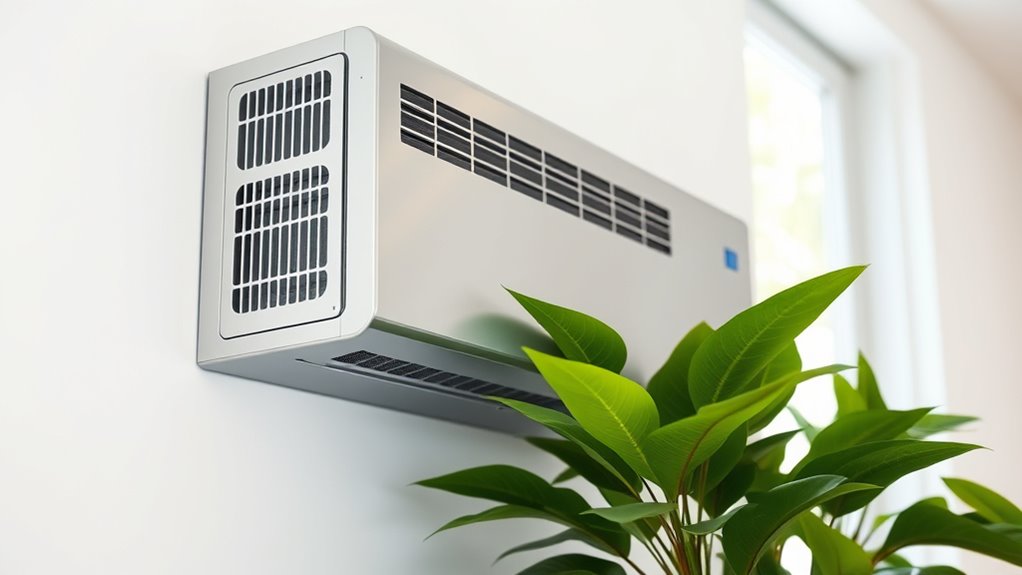
Air purification and heat recovery ventilators (HRVs) are essential for maintaining healthy indoor air quality while improving energy efficiency. When you combine these systems, you’re taking a proactive approach to creating a cleaner, more comfortable living environment. Indoor allergens like dust, pollen, pet dander, and mold spores can substantially affect your health and comfort, especially if you or your family members suffer from allergies or respiratory issues. Integrating air purification with an HRV system helps reduce these airborne particles, ensuring that the air you breathe is cleaner and healthier. This integration also enhances ventilation efficiency, making sure fresh air is circulated effectively without wasting energy.
Combining air purification with HRVs boosts indoor air quality and energy efficiency effectively.
An HRV system works by exchanging stale indoor air with fresh outdoor air while capturing and reusing heat from the outgoing air. This process minimizes energy loss and maintains a consistent indoor temperature, which is especially beneficial during colder months. However, without proper filtration, the incoming air can carry indoor allergens and pollutants, negating some of the benefits. That’s where air purification comes into play. By incorporating high-quality filters—such as HEPA filters—into your HRV system, you can trap a wide range of indoor allergens, preventing them from entering your living space. This combination not only ensures a continuous supply of fresh air but also considerably reduces the concentration of airborne allergens, creating a safer environment for everyone.
You’ll find that integrating air purification with your HRV system also improves overall ventilation efficiency. Instead of allowing outdoor pollutants and allergens to bypass filtration, the system actively filters the incoming air, reducing indoor pollution levels. This means you get the benefits of fresh air without compromising indoor air quality. Additionally, some advanced HRV units come with built-in air purification features, making installation straightforward and seamless. By doing so, you maximize energy savings because the system doesn’t need to work as hard to maintain air quality. The filtered air circulates more effectively, and your home remains well-ventilated with minimal energy expenditure. Incorporating air filtration technologies can further enhance the system’s effectiveness in removing airborne irritants.
Incorporating air purification into your HRV system is a smart move for anyone seeking healthier indoor air and energy savings. Not only do you reduce indoor allergens, but you also ensure that ventilation efficiency is optimized. It’s a practical solution that supports your health, saves money on energy bills, and creates a more comfortable living environment. When you choose to integrate these systems, you’re investing in a healthier, more sustainable home where clean air is constantly circulated without unnecessary energy waste.
Frequently Asked Questions
How Do I Choose the Right Air Purifier for My HRV System?
You should choose an air purifier that matches your HRV system’s filter compatibility and includes air quality sensors. Check if the purifier’s filters are compatible with your system’s existing filters or if they require a specific type. Air quality sensors help monitor your indoor environment, ensuring ideal purification. Select models with adjustable settings and proven filtration efficiency to improve air quality and work seamlessly with your HRV system.
Can Air Purifiers Damage the Heat Recovery Ventilator?
Air purifiers generally won’t damage your HRV if you choose one with compatible filters and guarantee it doesn’t interfere with airflow. If the purifier’s filters aren’t compatible, they could block airflow or cause strain on the system, potentially damaging the unit. To prevent this, select an air purifier designed for integration with HRVs and avoid devices that disrupt airflow, maintaining both efficiency and longevity.
What Maintenance Is Required for Combined Air Purification and HRV Systems?
Did you know that regular maintenance can boost your system’s efficiency by up to 20%? To keep your combined air purification and HRV system running smoothly, you should regularly replace filters and perform system diagnostics. Check filters monthly, replace them as needed, and schedule diagnostics annually to catch issues early. Proper upkeep ensures ideal air quality, energy savings, and system longevity.
Are There Specific Filters Recommended for Optimal Air Quality?
For ideal air quality, you should use HEPA filters and activated carbon filters. HEPA filters capture 99.97% of particles like dust, pollen, and pet dander, while activated carbon filters remove odors, gases, and VOCs. Combining these filters in your system ensures cleaner, healthier air. Make sure to check and replace them regularly, typically every 6 to 12 months, to maintain the system’s efficiency and air quality.
How Does Humidity Control Impact Air Purification Effectiveness?
When it comes to humidity control, you’re steering clear of trouble because proper humidity levels greatly boost air purification. Too much humidity can promote microbial growth and mold, while too little dries out filters and reduces efficiency. Keeping humidity levels balanced guarantees your system works at its best, preventing microbial growth and maintaining healthy indoor air quality. Don’t let humidity be the wild card in your air quality game.
Conclusion
By combining air purification with heat recovery ventilators, you create a home that’s as invigorating as a mountain breeze while saving energy. This integration guarantees you breathe cleaner air and retain warmth, making your space healthier and more comfortable. Think of it as having a gentle guardian that filters and warms your environment simultaneously. Embrace this smart solution, and you’ll enjoy a cozy, purified home every day, just like stepping into a refreshing oasis.