To optimize HVAC systems for laboratories and cleanrooms, focus on airflow management, contamination control, and precise environmental conditions. Confirm proper placement of supply and exhaust vents to create predictable, unidirectional airflow that directs contaminants away from critical areas. Maintain proper pressure differentials, use high-efficiency filters, and establish strict protocols for personnel entry and exit. Regular system validation guarantees ongoing performance. Keep exploring to discover how these strategies can safeguard your sensitive environments effectively.

Get garden gear delivered free — and shop member deals
- Fast, free delivery on millions of items
- Access to Prime Big Deal Days deals on October 6–7
- Prime Video, Amazon Music and more included
Key Takeaways
- Design airflow patterns with supply and exhaust vents to ensure contaminant removal and prevent cross-contamination.
- Implement pressure differentials (positive or negative) with proper filtration to control airborne contaminants.
- Use laminar airflow systems and precise environmental controls to maintain strict temperature and humidity levels.
- Enforce gowning protocols and airlocks to minimize personnel-induced contamination.
- Regularly validate and maintain HVAC systems to ensure optimal performance and compliance with safety standards.
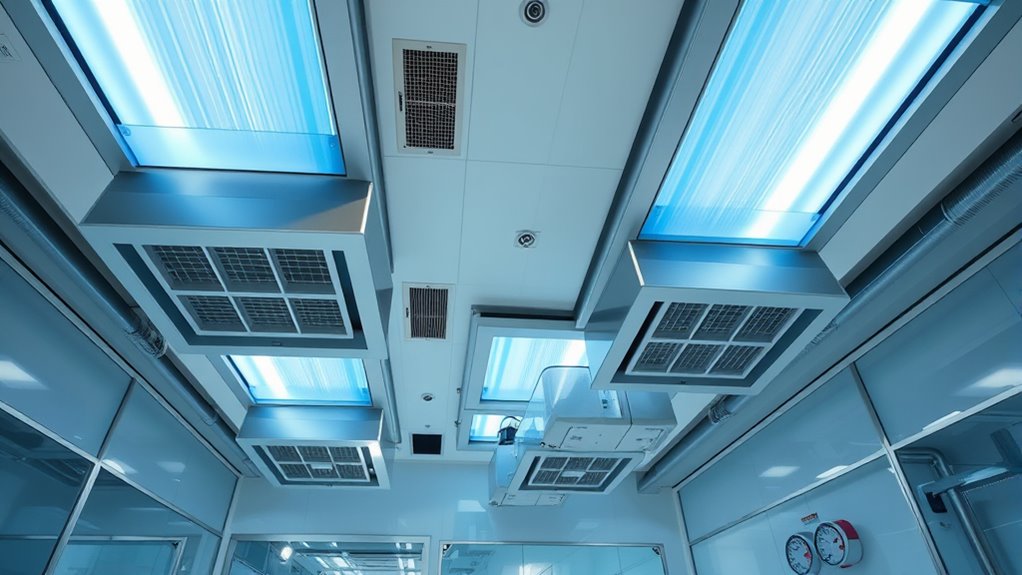
When designing HVAC systems for laboratories and cleanrooms, precision and control are essential to maintaining the strict environmental conditions required for safety and compliance. Your primary focus should be on airflow optimization, which ensures that air moves smoothly and predictably throughout the space. Proper airflow management helps prevent the buildup of airborne contaminants and maintains the integrity of the controlled environment. You’ll need to carefully plan the placement of supply and exhaust vents to create a consistent airflow pattern that directs potentially contaminated air away from critical areas and toward filtration systems. This way, you minimize the risk of cross-contamination and help keep airborne particles in check.
Contamination control is at the core of any cleanroom or laboratory HVAC strategy. You should implement a system that maintains positive or negative pressure differentials depending on your specific needs. For example, in a sterile environment, positive pressure pushes air outward, preventing outside contaminants from entering. Conversely, negative pressure pulls contaminated air away from clean zones, ensuring that hazardous particles don’t escape into other parts of the facility. You’ll also want to incorporate high-efficiency particulate air (HEPA) filters or ULPA filters, which capture even microscopic particles, further reducing the risk of contamination. Regular maintenance and filter replacement are crucial to ensure these systems operate at peak performance.
In addition to airflow and filtration, controlling temperature and humidity levels contributes significantly to contamination control. You must design systems capable of maintaining strict parameters, as fluctuations can compromise both product integrity and personnel safety. Precise sensors and controls will allow you to monitor conditions constantly, alerting you to deviations so you can correct them before they impact the environment. You should also consider the use of laminar airflow systems in critical areas, which provide a unidirectional flow of air to create a barrier against airborne contaminants. This technique is particularly effective in areas like biosafety cabinets or laminar flow hoods.
To maximize contamination control, you’ll need to establish strict protocols for entry and exit, including gowning procedures and airlocks. These measures, combined with well-designed HVAC systems, help contain contaminants within designated zones. Regular validation and testing of airflow patterns and filtration efficiency are necessary to confirm your system’s integrity. Additionally, understanding airflow optimization principles allows you to enhance system performance further, ensuring a safer, more compliant environment where the risks of airborne contamination are minimized, and the integrity of sensitive processes is preserved.
As an affiliate, we earn on qualifying purchases.
Frequently Asked Questions
How Often Should HVAC Filters Be Replaced in Cleanrooms?
You should replace air filters in cleanrooms every 1 to 3 months, depending on usage and contamination levels. Regular filtration maintenance is essential to guarantee ideal airflow and contaminant control. Keep an eye on filter pressure gauges; if they rise considerably, it’s time for an air filter replacement. Consistent maintenance helps maintain a clean environment, prevents equipment issues, and ensures compliance with strict cleanliness standards.
What Are the Best Practices for Maintaining Pressurization Levels?
Maintaining pressurization levels is like balancing a delicate scale—you must stay vigilant. You should regularly monitor pressure levels using precise pressure monitoring tools and adjust airflow balancing to guarantee consistent positive or negative pressure. Keep an eye on system alarms, and perform routine inspections to catch leaks early. By staying proactive, you’ll ensure your cleanroom remains a controlled environment, safeguarding both safety and compliance.
How Does Humidity Control Impact Laboratory Experiments?
Humidity control directly impacts your laboratory experiments by ensuring humidity stability, which prevents moisture fluctuations that could skew results. Proper moisture regulation maintains consistent conditions, reducing the risk of contamination or unexpected reactions. When humidity levels are well-managed, you minimize environmental variables, leading to more reliable and reproducible outcomes. Accurate humidity control is essential for sensitive processes, especially those involving precise chemical or biological measurements.
What Are Energy-Efficient HVAC Options for Cleanrooms?
You can improve energy efficiency in cleanrooms by implementing airflow optimization and energy-saving technologies. Use variable speed fans and smart controls to adjust airflow based on demand, reducing unnecessary energy consumption. Consider high-efficiency filters and heat recovery systems to minimize energy loss. Regular maintenance ensures peak performance, and integrating building management systems helps monitor and fine-tune HVAC operations, ultimately saving energy while maintaining strict environmental standards.
How Do HVAC Systems Prevent Cross-Contamination?
You might think HVAC systems can’t stop contamination, but they actually play a vital role. They prevent cross-contamination through precise airflow management, directing clean air efficiently and avoiding stagnant zones. Additionally, contamination barriers like HEPA filters trap airborne particles, ensuring only sterile air circulates. By maintaining proper pressurization and airflow, your HVAC system creates a controlled environment that prevents harmful contaminants from spreading between areas, keeping your lab or cleanroom safe.
Conclusion
Think of your laboratory or cleanroom as a finely tuned orchestra. Each HVAC strategy is a crucial instrument, working in harmony to create a flawless performance. When you optimize airflow, filtration, and temperature control, you’re conducting a symphony of precision and safety. Neglect these elements, and the harmony falls apart. By mastering these strategies, you’ll guarantee your environment remains a masterpiece of cleanliness and reliability—an orchestra that always plays in perfect tune.
Fall yard work Picks
leaf blowers
As an affiliate, we earn on qualifying purchases.