Integrating air quality sensors with building automation systems allows you to monitor indoor air conditions in real-time and respond proactively. By ensuring seamless communication between sensors and control platforms, you can optimize ventilation, improve occupant health, and save energy. Proper placement and calibration of sensors are key to accurate data, helping you identify trends and make informed decisions. If you continue exploring, you’ll discover how to achieve smarter, healthier indoor environments through effective system integration.
Key Takeaways
- Ensure sensor compatibility with existing building automation protocols like BACnet or Modbus.
- Strategically place sensors to provide comprehensive indoor air quality coverage.
- Use calibration routines to maintain sensor accuracy for reliable data integration.
- Configure automation systems to interpret sensor data for real-time ventilation and system adjustments.
- Regularly update calibration and analytics algorithms to optimize indoor air quality management.
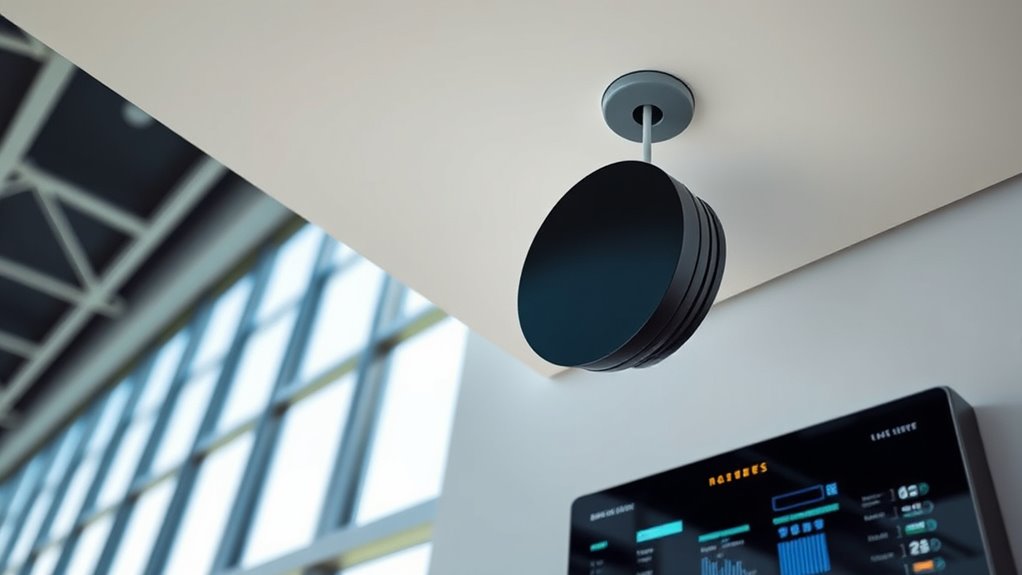
Air quality sensors play an essential role in modern building automation systems by providing real-time data on indoor air conditions. When you integrate these sensors effectively, you can notably improve the health, comfort, and energy efficiency of a building. But to get accurate and reliable readings, sensor calibration is indispensable. Over time, sensors may drift from their original calibration, leading to inaccurate data that could cause your system to respond improperly. Regular calibration guarantees that your sensors maintain precision, helping your building automation system make correct decisions based on trustworthy information. Proper calibration involves comparing sensor outputs against known standards and adjusting them accordingly. This ongoing process minimizes errors and guarantees that data analytics derived from sensor data remain valid. Data analytics then takes these calibrated readings to offer insights into indoor air quality trends, occupancy patterns, and system performance. With robust analytics, you can identify patterns such as rising pollutant levels during certain hours or increased ventilation needs when occupancy spikes. These insights allow you to optimize ventilation rates, improve energy efficiency, and create healthier indoor environments. When you use data analytics in tandem with well-calibrated sensors, you can set precise thresholds for alerts or automated actions. For instance, if pollutant levels surpass a defined limit, your system can automatically activate additional ventilation or air purification units. This proactive approach helps prevent discomfort or health issues before they escalate. Integrating air quality sensors into building automation also involves guaranteeing seamless communication between sensors and control systems. This means selecting sensors compatible with your existing infrastructure and implementing protocols that facilitate real-time data exchange. You should also consider the placement of sensors; strategic positioning ensures comprehensive coverage and more accurate readings. Proper installation reduces the risk of false alarms or overlooked issues. Additionally, maintaining your sensors through regular checks and recalibration is indispensable for sustained performance. As the environment or sensor technology evolves, updating calibration routines and analytics algorithms keeps your system functioning at peak efficiency. Understanding the importance of AI bifurcation can help you recognize how evolving AI capabilities might influence future building management strategies. By combining precise sensor calibration with advanced data analytics, you gain a powerful toolset to manage indoor air quality proactively. This integration not only helps meet regulatory standards but also enhances occupant comfort and safety. Ultimately, your ability to leverage these technologies effectively depends on continuous monitoring, maintenance, and improvement, guaranteeing your building remains a healthy, efficient, and responsive environment.
Frequently Asked Questions
How Do Air Quality Sensors Impact Energy Efficiency?
Air quality sensors boost energy efficiency by enabling ventilation optimization, so you only use as much fresh air as needed. This reduces unnecessary energy consumption while maintaining occupant comfort. When sensors detect good air quality, your building can lower ventilation rates, saving energy. Conversely, if air quality drops, the system increases ventilation. This dynamic adjustment guarantees efficient energy use without compromising health or comfort.
What Maintenance Is Required for Integrated Air Quality Sensors?
You need to regularly calibrate your air quality sensors to guarantee accurate readings and ideal system performance. Keep an eye on their sensor lifespan, replacing them as recommended by the manufacturer to prevent drift or malfunction. Additionally, clean the sensors periodically to remove dust or debris that could affect their accuracy. Proper maintenance helps prolong their lifespan and ensures your building’s air quality remains high.
Can Sensors Detect Specific Pollutants or Just General Air Quality?
Think of air quality sensors as detectives with a keen eye for detail. They can detect specific pollutants like CO2, VOCs, or particulate matter, providing pollutant specificity. To keep them sharp, regular sensor calibration is vital. This ensures they accurately identify particular contaminants, just like a detective fine-tuning their skills. So, yes, sensors can target specific pollutants, but only if they’re properly calibrated and maintained.
How Secure Is Data Transmitted From Sensors to BAS?
The security of data transmitted from sensors to BAS depends on your implementation. Typically, wireless protocols like WPA2 or WPA3 use data encryption to protect your information. You should verify your sensors support these protocols and regularly update firmware for security enhancements. Also, consider network segmentation and strong passwords to prevent unauthorized access, keeping your air quality data safe from cyber threats.
Are There Industry Standards for Sensor Integration in Buildings?
Yes, industry standards exist for sensor integration in buildings. You should verify sensor calibration is accurate for reliable data, and check protocol compatibility to enable seamless communication between sensors and BAS. Standards like BACnet, LonWorks, and MQTT help you achieve interoperability and security. Following these guidelines simplifies system setup, improves data accuracy, and ensures your building automation functions smoothly with consistent, reliable air quality monitoring.
Conclusion
Think of your building as a living forest, where air quality sensors act as vigilant guardians, quietly monitoring each breath of air. When they detect changes, they send signals like gentle breezes, guiding your automation system to breathe fresh life into your space. By integrating these sensors, you create a healthy, vibrant environment—an oasis amid urban chaos. Embrace this harmony, and let your building flourish with clarity, comfort, and peace of mind.