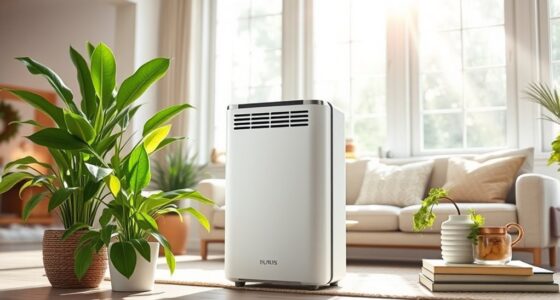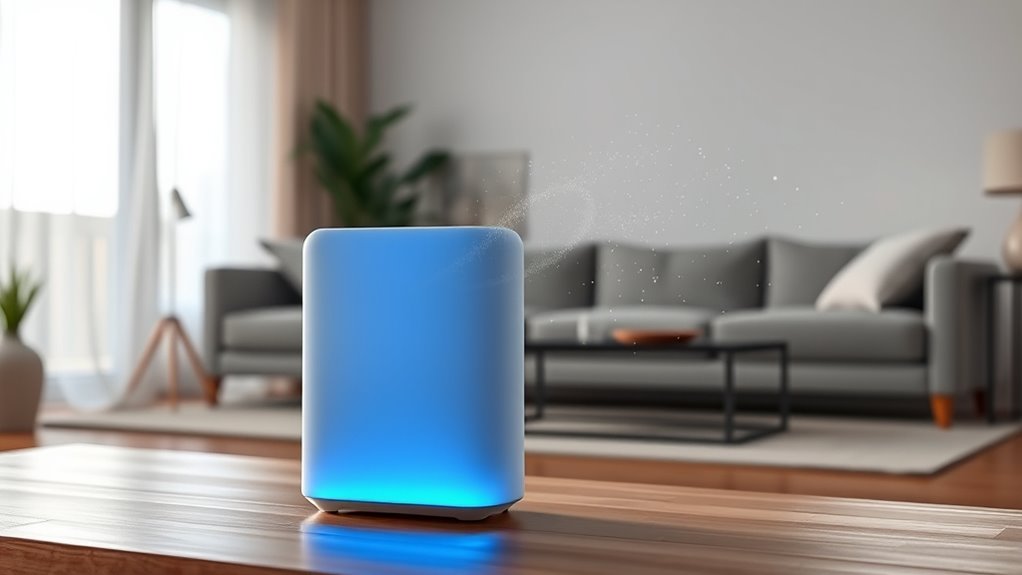

Yes, ionic air purifiers work effectively without filters by using electrically charged ions to attract and cause airborne particles to settle or stick to surfaces. This filter-free method helps reduce dust, pollen, and some bacteria without needing filter replacements, and they tend to operate quietly. While great for airborne particles, they’re less effective against gases and odors. To learn more about how these devices work and their limitations, keep exploring the details.
Key Takeaways
- Ionic air purifiers use charged ions to attract and remove airborne particles, eliminating the need for traditional filters.
- They generate ions continuously, causing particles to settle on surfaces rather than requiring filter replacement.
- These devices are effective against dust, pollen, and some bacteria but less so against gases or odors.
- Without filters, maintenance mainly involves regular surface cleaning to remove settled particles.
- Overall, ionic purifiers work effectively without filters, but combining them with other methods can improve air quality.

If you’re looking for an effective air purifier that doesn’t rely on traditional filters, ionic air purifiers offer a compelling alternative. Unlike HEPA or carbon filter units, these devices use electrically charged ions to attract and remove particles from the air. You might wonder, do they work as well? The answer depends on what you’re aiming to achieve. Ionic purifiers typically produce fewer concerns about filter maintenance since they don’t have replaceable filters to buy or replace. Instead, they generate ions continuously, which latch onto airborne pollutants like dust, pollen, and some bacteria, causing them to settle out of the air or stick to surfaces within the room. This process can be effective for reducing airborne particles without the ongoing expense of filter replacement.
However, it’s important to contemplate the noise levels of these devices. Many ionic air purifiers operate quietly, making them suitable for bedrooms, offices, or other spaces where you want minimal disruption. Since they lack fans that force air through filters, they often produce less noise than traditional purifiers. Yet, some models may generate a faint humming or crackling sound during ionization, especially at higher settings. If noise sensitivity is a concern, you should look for units explicitly designed for quiet operation. Luckily, most modern ionic purifiers prioritize low noise levels, so you can keep them running comfortably around the clock. Additionally, some models include air quality indicators, allowing you to monitor the effectiveness of ionization in real-time.
Another aspect to keep in mind is that ionic air purifiers don’t always remove all types of pollutants. They excel at reducing airborne particles but might be less effective against gases, odors, or volatile organic compounds (VOCs). For comprehensive air cleaning, some users combine ionic purifiers with other methods or consider models that incorporate additional technologies. Also, because ions can settle on surfaces, it’s wise to regularly wipe down furniture and surfaces to prevent dust buildup. This cleaning routine helps maintain a healthier environment and prevents the accumulation of particles that might otherwise re-enter the air.
Frequently Asked Questions
Can Filterless Ionic Purifiers Effectively Remove Allergens?
Filterless ionic purifiers can reduce airborne allergens, but their purification efficiency varies. They work by releasing negative ions that cause allergens to clump together and fall out of the air, but they might not eliminate all allergens as effectively as filter-based models. If you’re sensitive to airborne allergens, consider a purifier with filters for more exhaustive removal, since filterless units may have limited effectiveness in thoroughly cleaning the air.
Do Ionic Air Purifiers Without Filters Produce Ozone?
Yes, ionic air purifiers without filters can produce ozone emissions, which may impact your indoor air quality. While they can still help with purification effectiveness by neutralizing airborne particles, the ozone they emit might cause health issues, especially for sensitive individuals. It’s important to check the device’s specifications and ozone output levels before purchasing, ensuring it balances purification benefits with minimal ozone emission for safer indoor air.
Are Filterless Ionic Purifiers Suitable for Large Spaces?
Imagine trying to fill a giant bucket with a tiny cup—that’s what filterless ionic purifiers face in large spaces. They’re generally less effective for large space coverage because their purification power isn’t scaled for expansive areas. While convenient, they might not trap enough pollutants in big rooms. For ideal air quality, consider a model specifically designed for large spaces or one with supplementary filtration.
How Often Do Filterless Ionic Purifiers Need Maintenance?
You’ll need to perform maintenance on your filterless ionic purifier about once every few months. The maintenance frequency depends on your air quality and usage, but typically, you’ll want to clean the ionizer plates and check for dust buildup regularly. Since there are no filters to replace, focus on maintaining the ionizer’s components to guarantee filter longevity and peak performance. Keep an eye on any indicator lights for when cleaning is needed.
Do Ionic Purifiers Without Filters Combat Cigarette Smoke Effectively?
Ionic air purifiers without filters can help improve air quality by reducing airborne pollutants, but their purification efficiency against cigarette smoke is limited. They generate negative ions that attach to smoke particles, causing them to settle or be captured. However, for best results, you might need a unit specifically designed for smoke removal. Overall, while they contribute to cleaner air, their effectiveness varies, so consider additional filtration methods for cigarette smoke.
Conclusion
So, do ionic air purifiers work without filters? The truth is, they rely on charged ions to trap particles, but they often still produce some ozone and may not be as effective as filter-based purifiers. While they can reduce certain pollutants, they probably won’t eliminate all airborne contaminants on their own. If you’re after cleaner air, consider combining methods or choosing a purifier with filters for the best results. Don’t rely solely on ionizers—you might need a more complete solution.