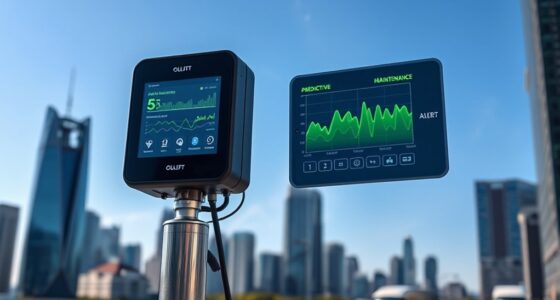
To catch problems fast, set up your kitchen sensors near heat sources, leaks, smoke, and gas zones. Make sure sensors are properly installed, regularly cleaned, and calibrated for accurate readings. Secure communication with control panels or apps is essential for quick alerts. Schedule routine checks and maintenance to catch issues early before they escalate. Maintaining a responsive sensor system creates a safer, smarter kitchen. Keep exploring to discover how to optimize your setup even further.
Key Takeaways
- Proper sensor placement near heat sources, refrigerators, and cooking zones ensures quick detection of issues.
- Regular calibration and cleaning maintain sensor accuracy for fast problem identification.
- Firmware updates optimize sensor responsiveness and system performance.
- Consistent monitoring and connection checks prevent communication failures and delays.
- Proactive maintenance extends sensor lifespan and ensures early warning capabilities.
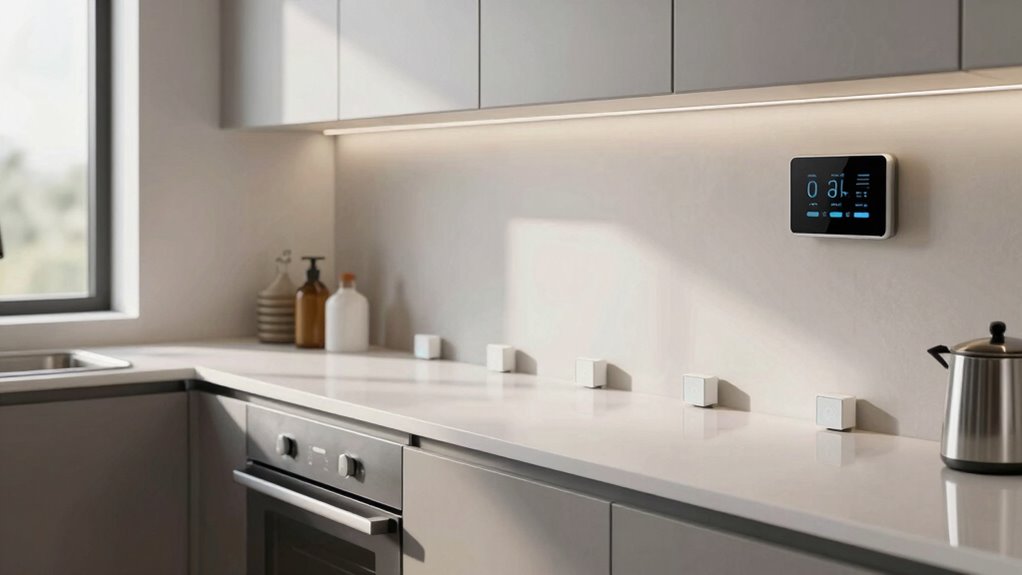
Setting up kitchen sensors can considerably enhance your cooking experience and improve safety. When you integrate sensors into your kitchen appliances, you gain real-time insights that help prevent accidents and keep everything running smoothly. Properly maintaining these sensors is crucial, and that begins with regular appliance maintenance. Ensuring your devices are clean, functional, and up-to-date means they’ll interpret data accurately. Neglecting maintenance can lead to false alarms or missed warnings, defeating the purpose of installing sensors in the first place. So, make it a habit to check your appliances periodically, clean sensor surfaces, and update firmware if needed.
Another critical step in effective sensor setup is sensor calibration. Calibration ensures that the sensors provide precise readings, which is essential for catching problems early. If your sensors aren’t calibrated correctly, they might trigger false alarms or, worse, overlook real issues. Take time to follow the manufacturer’s instructions for calibration, which often involves comparing sensor readings to known standards or environmental conditions. Regular calibration sessions can help you maintain accurate data over time, especially as sensors age or environmental factors change. Proper calibration is fundamental for ensuring your sensors accurately reflect the conditions they monitor. Additionally, understanding the sensor lifespan can help you plan for replacements before failures occur.
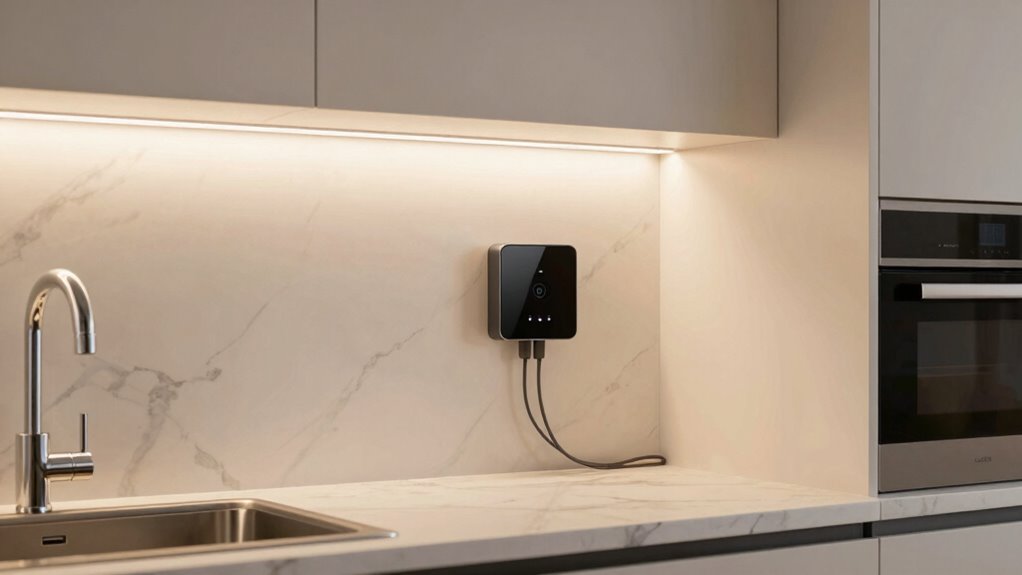
In your kitchen, you should focus on installing sensors in key areas—near hot surfaces, in refrigerators, and around cooking zones. These locations allow your system to monitor temperature fluctuations, detect leaks, or identify smoke and gas leaks swiftly. Once installed, pay close attention to how your sensors communicate with your control panel or app. Make sure the connections are secure and that the system responds promptly to alerts. This responsiveness is vital for catching problems before they escalate, such as a rising temperature indicating a malfunctioning oven or an unusual humidity level signaling a leak. Regularly checking sensor connections can help prevent communication failures. Periodic inspections of wiring and connection points also contribute to dependable performance.
In addition to initial setup, ongoing attention is necessary. Schedule regular checks to verify sensor accuracy and recalibrate as needed. Keep an eye on sensor health indicators, if your system provides them, to spot potential failures early. Regularly maintaining sensor health can extend the lifespan of your devices and ensure consistent performance. By staying proactive with appliance maintenance and sensor calibration, you ensure your setup remains reliable and effective. This way, you’re always alerted to issues in their infancy, giving you the chance to address problems quickly and avoid costly repairs or safety hazards. Staying informed about sensor durability can help you anticipate when replacements might be necessary, preventing unexpected failures.
With a well-maintained, calibrated sensor system in your kitchen, you create a smarter, safer environment. You’ll enjoy peace of mind knowing that your appliances are constantly monitored, and problems are caught fast. This setup not only makes your cooking safer but also makes your entire kitchen more efficient and responsive to your needs.

Gas Detectors for Home, Natural Gas | LPG | City Coal Gas Leak Detector, Plug-in Sensor Gas Monitor with Sound Alarm and LED Display, Methane Propane Butane Combustible Gas Alarm for Kitchen RV Garage
- Detects multiple combustible gases: Natural gas, LPG, city coal gas
- Sound and visual alarms: 85dB alarm with LED display
- LED digital display: Shows gas concentration levels
As an affiliate, we earn on qualifying purchases.
As an affiliate, we earn on qualifying purchases.
Frequently Asked Questions
How Secure Is the Data Collected by Kitchen Sensors?
The data collected by your kitchen sensors is quite secure, thanks to strong data encryption methods that protect your information. However, you should stay aware of privacy concerns, as some sensors might transmit sensitive data. To guarantee safety, regularly update your device firmware, use strong passwords, and review privacy settings. This way, you can enjoy the benefits of your smart kitchen without compromising your personal privacy.
Can the Sensors Be Integrated With Existing Smart Home Systems?
Like Da Vinci’s masterful blending of art and science, your kitchen sensors can seamlessly integrate with existing smart home systems. Sensor compatibility is key, ensuring easy smart home integration. Most modern sensors support popular platforms like Alexa, Google Home, or Apple HomeKit, making setup straightforward. You can automate alerts, monitor appliances, or control lighting and temperature, turning your kitchen into a smart, responsive space without hassle or complex rewiring.
What Is the Typical Installation Time for the Sensor Setup?
Installation typically takes about 30 minutes to an hour, depending on your home’s setup. You’ll need to calibrate the sensors properly to guarantee accurate readings, which can add a few extra minutes. Some installation challenges include securing the sensors in ideal spots and connecting them to your Wi-Fi. With clear instructions, you can usually complete the setup quickly, but taking your time with calibration helps prevent future issues.
Are There Any Ongoing Maintenance Requirements for the Sensors?
Did you know that regular sensor calibration can extend sensor life by up to 30%? You’ll need to follow a simple maintenance schedule, including periodic sensor calibration, to keep everything functioning smoothly. Ongoing maintenance isn’t intensive—just check for dust or debris and calibrate as recommended. By sticking to this routine, you guarantee your sensors remain accurate and reliable, preventing problems before they escalate.
How Do Sensors Differentiate Between Normal and Problematic Conditions?
Sensors differentiate between normal and problematic conditions through regular calibration, ensuring accurate readings. When properly calibrated, they recognize typical patterns and flag anomalies. If they’re not calibrated correctly, false alarms can occur, causing unnecessary alerts. To avoid this, you should routinely check and calibrate your sensors, especially after maintenance or sensor replacement, so they reliably detect genuine issues and prevent false alarms from disrupting your kitchen environment.
Conclusion
By setting up kitchen sensors, you’re not just preventing messes—you’re catching potential problems before they escalate. You’ll save time, reduce waste, and enjoy peace of mind knowing your kitchen’s monitoring itself. Imagine a morning where everything runs smoothly, with alerts guiding you to avoid disasters. Isn’t it worth investing a little effort now for a safer, smarter kitchen tomorrow? After all, isn’t peace of mind what every home chef truly deserves?