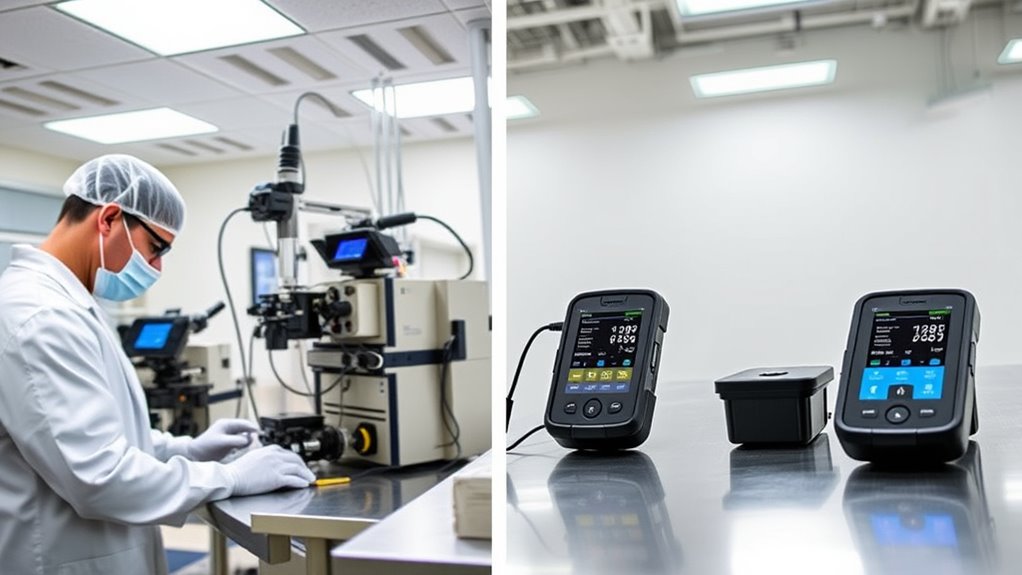

When choosing between laboratory and direct-reading methods for LEED air quality testing, consider your project’s timeline, budget, and accuracy needs. Laboratory tests provide detailed chemical profiles and high sensitivity but take more time and cost more. Direct-reading devices offer quick, on-site results ideal for immediate actions but may lack detailed analysis. To guarantee the best approach for your project and learn more about their differences, keep exploring further options available for LEED certification.

Get garden gear delivered free — and shop member deals
- Fast, free delivery on millions of items
- Access to Prime Big Deal Days deals on October 6–7
- Prime Video, Amazon Music and more included
Key Takeaways
- Laboratory testing offers detailed chemical analysis and high accuracy but is time-consuming and costly.
- Direct-reading methods provide rapid, on-site results ideal for immediate decision-making and quick assessments.
- Lab tests are better suited for comprehensive compliance verification; direct-reading is useful for initial screenings.
- Accuracy of direct-reading devices depends on calibration quality and may have lower sensitivity for low-level pollutants.
- Combining both methods can optimize LEED air quality assessments by balancing detail, speed, and cost.

Are you aware of how LEED air quality testing plays a crucial role in creating healthier indoor environments? When you’re working toward LEED certification, understanding the methods used to assess air quality can substantially impact the success of your project. One of the key considerations is the choice between laboratory testing and direct-reading methods, both of which aim to accurately identify indoor pollutants that could compromise occupant health. Indoor pollutants, such as volatile organic compounds (VOCs), particulate matter, and formaldehyde, can linger unnoticed, making precise detection essential. Your goal is to ensure that the air quality meets LEED standards, and that’s where the accuracy of testing becomes critical.
LEED air quality testing is vital for ensuring healthier indoor environments and project success
Laboratory testing has long been regarded as the gold standard for indoor air quality assessments because of its high testing accuracy. When you send samples to a lab, you benefit from sophisticated analysis techniques, which can detect a wide range of pollutants at very low concentrations. This method allows for a detailed chemical profile, helping you identify specific sources of indoor pollutants. However, laboratory testing can be time-consuming and costly, often requiring sample collection, shipping, and processing time. Despite these challenges, it provides thorough data that can be invaluable for verifying compliance with LEED requirements, especially in complex environments where indoor pollutants are suspected but hard to quantify.
On the other hand, direct-reading methods offer rapid results, which can be incredibly useful when you need immediate insights into indoor air quality. These portable devices and sensors allow you to perform on-site testing, giving real-time data on pollutant levels. This immediacy helps you quickly identify problem areas and take corrective actions without waiting days or weeks for lab results. While direct-reading tools are convenient and cost-effective, their testing accuracy can vary based on the device quality and calibration. They might not detect pollutants at the same sensitivity level as laboratory analysis, which can lead to less precise assessments of indoor pollutants, especially at low concentrations.
Ultimately, choosing between laboratory and direct-reading methods depends on your project’s specific needs, budget, and timeline. If you require detailed, highly accurate data to meet stringent LEED criteria, lab testing might be your best option. But if speed and on-site decision-making are priorities, direct-reading methods can be highly effective, provided you select reliable equipment. Both approaches have their advantages and limitations, so understanding the nuances of each method can help you make informed decisions that support healthier indoor environments and LEED certification success.
As an affiliate, we earn on qualifying purchases.
Frequently Asked Questions
What Are the Costs Associated With Each Testing Method?
You’ll find that the cost comparison between laboratory and direct-reading testing methods varies markedly. Laboratory testing generally has higher testing expenses due to sample analysis, transportation, and processing fees. In contrast, direct-reading methods usually cost less upfront, offering quicker results and lower overall testing expenses. However, consider accuracy and compliance needs, as these factors can influence the true value of each method’s costs.
How Long Does Each Testing Process Typically Take?
You can expect the test duration for laboratory methods to take several days to weeks, depending on sample processing and lab workload, affecting the overall testing timeline. In contrast, direct-reading methods offer quicker results, often within minutes to hours, enabling you to assess air quality swiftly. This faster testing timeline allows for more immediate decision-making, while laboratory tests provide more detailed and extensive data over a longer period.
Are There Specific LEED Credits Linked to Testing Methods?
You’ll find that LEED credits reward testing methods emphasizing testing accuracy and equipment maintenance. Using advanced, well-maintained equipment guarantees reliable results, aligning with LEED’s focus on indoor air quality. Credits may be awarded for implementing effective testing procedures that demonstrate air quality improvements. To maximize points, verify your testing methods meet LEED standards, prioritize accurate readings, and maintain equipment diligently, showing your commitment to sustainable building practices and healthy indoor environments.
Can These Testing Methods Detect All Indoor Air Pollutants?
Think of air testing like a flashlight in a dark room—it reveals many things but not everything. These methods have pollutant specificity and detection limitations, so they can’t identify every indoor air pollutant. Some contaminants, especially at low concentrations or in complex mixtures, may go unnoticed. You should understand these limits when choosing testing methods, as they might not detect all pollutants, impacting your overall indoor air quality assessment.
What Are the Calibration Requirements for Direct-Reading Devices?
You need to perform regular device calibration to guarantee accurate readings from your direct-reading devices. Check the manufacturer’s guidelines for calibration frequency, which typically ranges from daily to monthly, depending on the device and usage. Proper device calibration involves adjusting the instrument to a recognized standard, minimizing measurement errors. Keep detailed calibration logs and follow recommended procedures to maintain reliable air quality assessments and meet LEED requirements effectively.
Conclusion
When choosing between laboratory and direct-reading methods for LEED air quality testing, remember that 85% of professionals prefer real-time results for quicker decision-making. Direct-reading methods offer immediate insights, helping you identify issues fast, while laboratory tests provide detailed analysis. By understanding these differences, you can select the right approach, ensuring your building meets LEED standards efficiently. Ultimately, combining both methods can give you the most all-encompassing understanding of your indoor air quality.
Fall yard work Picks
leaf blowers
As an affiliate, we earn on qualifying purchases.