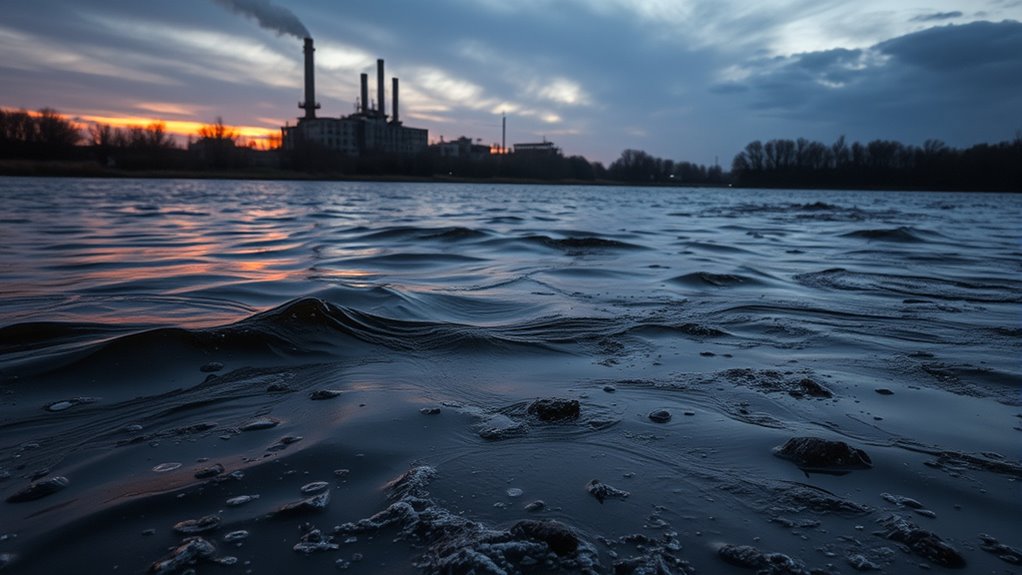

Pollutant synergy occurs when multiple contaminants interact in ways that make their combined harm greater than their individual effects. These chemical reactions can create more toxic substances, boost their absorption, or impair natural detox processes, increasing risks to health and the environment. This means reducing one pollutant may not lessen overall damage. The complex interactions often lead to unforeseen consequences, highlighting the importance of understanding combined effects—keep exploring to uncover more about this damaging phenomenon.
Key Takeaways
- Pollutant synergy occurs when combined contaminants produce more harmful effects than individual impacts.
- Chemical interactions can create new, more toxic compounds, amplifying overall toxicity.
- Interactions increase bioaccumulation and damage in organisms, affecting health and ecosystems.
- Synergistic effects can impair natural detox processes, worsening pollution’s long-term consequences.
- Pollution management must address multiple contaminants simultaneously to effectively reduce combined risks.

When different pollutants interact in the environment, their combined effects can be more damaging than the sum of their individual impacts. This phenomenon, known as pollutant synergy, occurs because chemical interactions between contaminants can amplify their toxicity, creating a threat that’s far greater than what each pollutant causes alone. You might think that reducing one pollutant would lessen overall harm, but in reality, these interactions often produce unexpected and severe consequences. Understanding combined toxicity is essential because it highlights how multiple contaminants can work together to worsen environmental and health outcomes.
Chemical interactions are at the core of pollutant synergy. When contaminants come into contact, they can react chemically, forming new substances that are often more toxic than the original pollutants. For example, certain heavy metals and organic compounds can interact to produce compounds that readily bioaccumulate or cause cellular damage, increasing health risks for humans, animals, and ecosystems. These interactions are complex, involving various mechanisms such as oxidation-reduction reactions, formation of persistent compounds, or alterations in bioavailability. Because of these dynamics, evaluating the risk of pollutants based solely on their individual toxicity can be misleading, as the combined toxicity may be markedly higher.
Chemical interactions can create more toxic compounds, amplifying health and environmental risks beyond individual pollutant effects.
You might not always notice the effects of these interactions immediately, but over time, the consequences become evident through increased incidences of disease, ecosystem degradation, or the failure of pollution control measures. When multiple pollutants are present, their chemical interactions can inhibit natural detoxification processes or enhance the absorption and retention of harmful substances in living organisms. For example, certain pesticides can modify the way heavy metals are absorbed in plants or animals, leading to higher concentrations in the food chain. This synergy can also impair the immune system, neurological functions, or reproductive health, making organisms more vulnerable to other environmental stressors. Additionally, understanding energy efficiency ratings can help identify how efficiently pollutants are managed or minimized in various systems, influencing overall environmental health.
In practical terms, understanding combined toxicity is critical for developing effective pollution management strategies. It encourages regulators and scientists to consider the interactions between pollutants rather than evaluating each one in isolation. By doing so, they can better predict environmental risks and implement measures that address the true complexity of pollution. For you, this means that efforts to reduce pollution must target multiple contaminants simultaneously, taking into account their potential to interact chemically and produce more dangerous outcomes. Recognizing the importance of chemical interactions in pollutant synergy helps you appreciate why some pollution problems are more severe than they initially seem and underscores the need for thorough solutions to protect environmental and public health.
Frequently Asked Questions
How Do Different Pollutants Chemically Interact to Create Synergy?
You see, different pollutants chemically interact through processes like oxidation or binding, which can lead to chemical interactions that boost toxicity. When these contaminants combine, they often create synergy, meaning toxicity enhancement occurs beyond what each pollutant would cause alone. This happens because one pollutant can alter the chemical structure or behavior of another, intensifying harmful effects and making the overall contamination more dangerous for living organisms.
Are Certain Populations More Vulnerable to Combined Pollutant Effects?
You’re more vulnerable to combined pollutant effects than a fragile glass in an earthquake. Vulnerable populations, especially those with lower socioeconomic factors, face greater risks because of limited access to healthcare, poor living conditions, and increased exposure. Children, the elderly, and marginalized communities often bear the brunt, making it essential to address social disparities to protect everyone from the harmful synergy of pollutants.
What Are the Long-Term Health Impacts of Pollutant Synergy?
You might face long-term health impacts like increased risk of chronic illnesses and immune suppression due to pollutant synergy. When multiple contaminants combine, they can amplify each other’s harmful effects, leading to ongoing health issues. Over time, this can weaken your immune system, making you more vulnerable to infections and diseases. It’s essential to minimize exposure and advocate for stricter pollution controls to protect your long-term health.
Can Pollutant Synergy Effects Be Reversed or Mitigated?
You can reverse or mitigate pollutant synergy effects through targeted remediation strategies and raising public awareness. Studies show that early intervention can reduce pollutant levels by up to 50%, markedly lowering health risks. Implementing effective cleanup techniques, like bioremediation, and educating communities about reducing exposures are key. By actively engaging in these efforts, you help lessen the combined impact of multiple contaminants on health and the environment.
How Do Regulations Address Combined Pollutant Exposures?
Regulatory frameworks approach combined pollutant exposures through holistic risk assessments that consider multiple contaminants simultaneously. You’ll find that agencies set safety thresholds based on worst-case scenarios, aiming to minimize synergistic effects. These frameworks often require ongoing monitoring and updated science to adjust standards. By evaluating combined risks, regulations better protect public health, ensuring that exposure levels remain safe even when multiple pollutants interact synergistically.
Conclusion
You see the danger, you feel the impact, and you recognize the urgency. When pollutants work together, they amplify harm, threaten health, and endanger ecosystems. Ignoring this synergy means risking more than isolated contaminants—it means risking our future. Stand aware, stand informed, and stand committed. Together, we can reduce exposure, advocate for change, and protect what’s precious. Because understanding the power of combined pollutants isn’t just knowledge; it’s a call to action to safeguard our world.