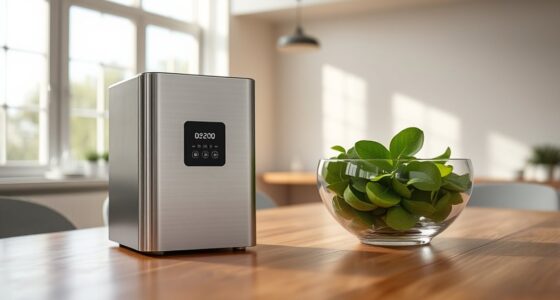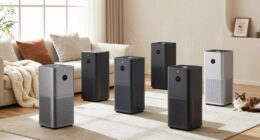
Portable air purifiers can effectively improve air quality in specific rooms, especially with HEPA filters that remove dust, pollen, and bacteria. However, they usually don’t match the overall coverage and performance of whole-house systems, which can purify larger areas more consistently. Factors like room size, maintenance, and features influence their effectiveness. If you’re curious about how to choose the right solution for your space, there’s more to contemplate.
Key Takeaways
- Portable air purifiers effectively improve air quality in individual rooms but may not cover entire homes.
- Whole-house systems provide comprehensive purification, suitable for large spaces and multiple rooms.
- Maintenance and filter replacement are crucial for portable units to maintain optimal performance.
- Noise levels and energy consumption vary; portable units are generally quieter and more energy-efficient for small areas.
- Portable purifiers are a practical solution for targeted air cleaning but do not match the coverage of whole-house systems.

When it comes to improving indoor air quality, many people wonder whether portable air purifiers can match the effectiveness of whole-house systems. The truth is, portable air purifiers can be quite effective for individual spaces, but their air purification effectiveness varies depending on several factors. You need to consider the size of your room, the kind of pollutants you’re targeting, and the purifier’s specifications. A high-quality portable unit equipped with HEPA filters can remove airborne particles like dust, pollen, pet dander, and even some bacteria, making the air noticeably cleaner. However, if you’re trying to purify larger areas or multiple rooms at once, a single portable device might fall short. For thorough air quality improvement across your entire home, you may need multiple units or a different approach altogether.
Maintenance considerations also play an essential role in determining whether portable air purifiers are a practical solution for you. Unlike whole-house systems, which typically require professional installation and periodic maintenance, portable units demand regular attention. You’ll need to check and replace filters on schedule—usually every three to six months—and clean the units to guarantee maximum airflow. Neglecting maintenance can markedly reduce their air purification effectiveness, rendering them less capable of capturing pollutants. Additionally, some portable purifiers come with features like UV sterilization or activated carbon filters, which require additional upkeep. You should evaluate whether you’re willing to keep up with these maintenance tasks regularly, as neglect can lead to decreased performance and potential issues like mold growth or unpleasant odors. Understanding the vibrational effects of pollutants and filters can help optimize the purifier’s performance and lifespan.
Another factor to consider is the noise level. Portable air purifiers operate constantly, and some models can be quite noisy, especially on higher settings. If you plan to use one in a bedroom or study, you’ll want to select a quieter model to avoid disrupting your daily activities or sleep. Energy consumption is another consideration; while portable units generally use less power than whole-house systems, running multiple units in different rooms can add up over time.
Frequently Asked Questions
How Much Do Portable Air Purifiers Typically Cost?
A typical portable air purifier costs between $50 and $300, depending on size and features. When doing a cost comparison, you’ll find they’re generally more affordable upfront and easier to install since they require no complex installation requirements. You can move them easily around your home, making them a flexible option. However, consider the ongoing filter replacement costs and their limited coverage compared to whole-house systems.
Are Portable Air Purifiers Effective Against All Allergens?
Portable air purifiers are effective at allergen removal, especially when equipped with HEPA filters that capture pollen, pet dander, and dust mites. However, their effectiveness depends on the air purification technologies used and the size of the room. While they markedly reduce common allergens, they might not eliminate every allergen. For thorough allergen control, consider the purifier’s features and make sure it’s suitable for your space.
Can Portable Units Reduce Odors Effectively?
Back in the day, folks relied on potpourri, but today, portable units can substantially reduce odors. They excel at odor absorption, tackling smells from pets, cooking, or smoke. While they might not fully replace a whole-house system, they’re great for air freshening in specific rooms. Just make sure you choose one with a charcoal filter, and you’ll notice fresher air quickly, making your space smell clean and inviting.
How Often Do Filters Need Replacement?
You should replace your portable air purifier filters every 6 to 12 months, depending on filter lifespan and usage. If you notice reduced airflow or odors lingering, it’s time for a replacement. Regularly check your unit’s manufacturer guidelines for specific replacement frequency. Proper maintenance guarantees your device works effectively, keeping your indoor air clean and fresh. Don’t ignore filter lifespan to maximize performance and protect your health.
Do Portable Air Purifiers Produce Any Harmful Byproducts?
Portable air purifiers generally don’t produce harmful byproducts, but some models can emit chemical emissions or increase ozone levels. If you’re sensitive, look for units labeled ozone-safe or with low ozone output. Always check the product specifications and reviews to verify it doesn’t contribute to indoor air pollution. Properly maintained, a quality portable purifier can improve air quality without adding harmful chemical emissions or ozone to your home.
Conclusion
Think of portable air purifiers like a cozy candle in a room—they make a noticeable difference, but they can’t clear the entire house at once. I once tried a small purifier in my bedroom, and it invigorated the air instantly. However, for whole-house clean air, a system is like a wildfire—covering everything at once. So, if you want a breath of fresh atmosphere everywhere, a whole-house system truly delivers the full, clean experience.