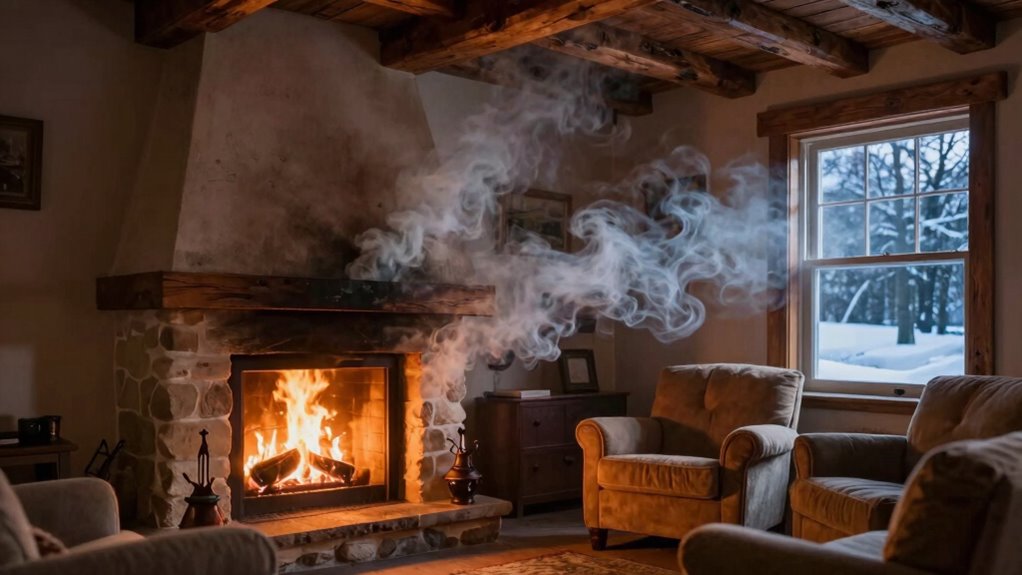

To stop indoor smoke, you need to fix the draft first. Check for leaks around your damper or cracks in the chimney and seal them with high-temperature, heat-resistant caulk. Make sure your damper operates properly and stays fully open when you start a fire. Installing a chimney cap helps prevent downdrafts caused by wind. Addressing these issues creates a balanced venting system, keeping smoke outside. If you continue, you’ll discover more effective solutions to improve your fireplace’s performance.

Get garden gear delivered free — and shop member deals
- Fast, free delivery on millions of items
- Access to Prime Big Deal Days deals on October 6–7
- Prime Video, Amazon Music and more included
Key Takeaways
- Seal leaks around the damper and chimney to prevent negative pressure that draws smoke indoors.
- Install or upgrade to a top-sealing damper to improve airtightness and control airflow.
- Ensure the chimney cap is properly installed to reduce downdrafts caused by wind.
- Regularly clean the chimney to remove creosote buildup and debris obstructing proper draft.
- Use seasoned wood and operate the fireplace correctly to promote efficient combustion and proper smoke venting.
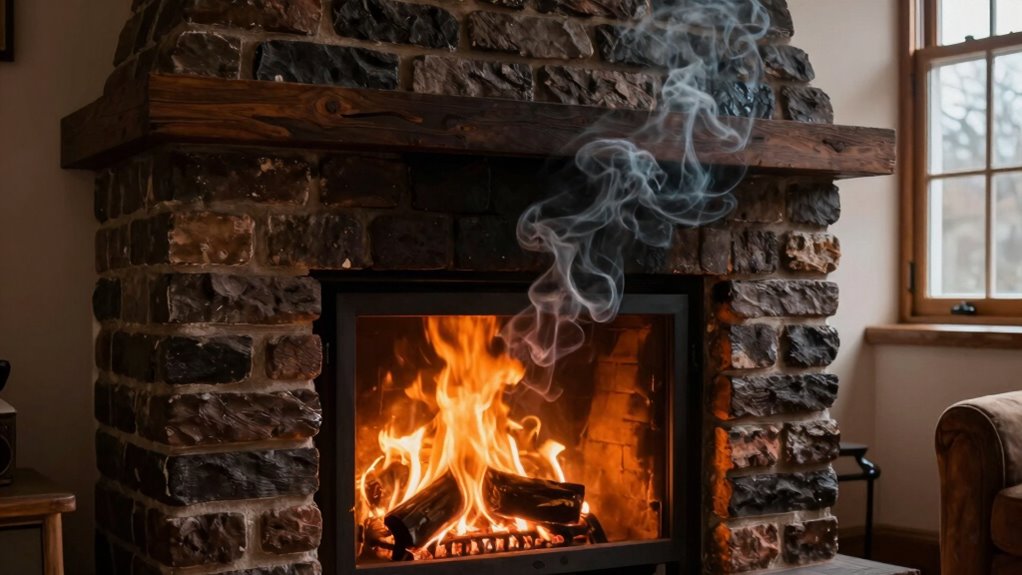
Have you ever noticed smoke lingering in your home even after you’ve extinguished the fire? If so, you’re probably dealing with a draft problem that’s pulling smoke back into your living space. The first step to resolving this issue is understanding the importance of proper chimney cleaning and draft prevention. When your chimney isn’t maintained, creosote buildup and debris can obstruct airflow, making it harder for smoke to escape efficiently. Regular chimney cleaning keeps the flue clear, ensuring that smoke rises naturally and doesn’t seep back into your home.
Draft prevention is equally critical. Even small gaps around the damper or cracks in the chimney structure can cause air to be pulled in from outside, creating negative pressure that draws smoke indoors. To fix this, start by inspecting your chimney and fireplace for leaks or cracks. Sealing these gaps with high-temperature, heat-resistant caulk can substantially reduce drafts. Installing a damper properly or upgrading to a top-sealing damper can also help control airflow. When the damper isn’t functioning correctly, smoke escapes into your room instead of rising up the chimney, especially on windy days or during poor weather conditions.
Your goal is to create a seamless pathway for smoke to exit your home. That means paying attention to your chimney cap as well. A good chimney cap prevents downdrafts caused by wind and keeps debris or animals out, which can block the flue and worsen draft problems. When your chimney is properly capped, it minimizes the chance of outside air rushing down, which could pull smoke back into your living space. Proper chimney maintenance and draft control are key to resolving indoor smoke issues effectively.
Another tip is to ensure your fireplace is used correctly. Always open the damper fully before starting a fire, and keep it open until the fire is completely out and the ashes have cooled. This allows smoke to vent properly and prevents it from backing up into the room. Also, avoid overloading your fireplace, which can cause inefficient burning and more smoke production. Using seasoned wood helps produce a cleaner burn, reducing excess smoke and improving draft performance.
Addressing draft issues first saves you from the frustration of battling smoke indoors. It’s about creating a balanced, airtight system that promotes proper airflow and efficient venting. Regular chimney cleaning, sealing leaks, and ensuring your chimney cap is in place are crucial steps. Once you’ve fixed these draft problems, you’ll notice a notable difference in how your fireplace functions, and smoke will stay where it belongs—outside, not inside your home.
As an affiliate, we earn on qualifying purchases.
Frequently Asked Questions
How Can I Tell if My Chimney Has a Draft Problem?
You can tell if your chimney has a draft problem by checking for smoke spillage into your home. Use a draft gauge to measure airflow; low or inconsistent readings indicate issues. Also, inspect your chimney cap for damage or blockages, as these can disrupt drafts. If smoke escapes into the room when the fireplace is not in use, it’s a sign your chimney isn’t properly venting, confirming a draft problem.
Are There Temporary Fixes for Indoor Fireplace Smoke?
Yes, there are temporary fixes for indoor fireplace smoke. You can try ventilation solutions like opening windows or using fans to improve airflow. Draft blockers placed around the fireplace opening can also help prevent smoke from entering. These measures temporarily reduce smoke intrusion while you work on fixing the underlying draft problem. Keep monitoring and adjusting ventilation to ensure better indoor air quality, but remember, addressing the draft is crucial for a permanent solution.
What Tools Are Needed to Inspect My Fireplace Draft?
To inspect your fireplace draft, you’ll need a chimney cap, which prevents debris and downdrafts, and a smoke test kit to identify leaks. Start by checking if your chimney cap is intact and properly fitted. Then, perform a smoke test by lighting a candle or incense near the damper to observe airflow. If smoke blows back, it indicates a draft issue you’ll need to address for better indoor air quality.
Can Weather Changes Affect Indoor Fireplace Smoke?
Yes, weather changes can affect indoor fireplace smoke. When winds pick up or there’s a drop in atmospheric pressure, ventilation issues can occur, causing smoke seepage into your home. Cold air rushing in or pressure differences can disrupt proper drafting, making it harder for smoke to escape through the chimney. To prevent this, make certain your chimney and flue are properly sealed and maintained, especially during extreme weather conditions.
How Often Should I Have My Chimney Professionally Inspected?
Think of your chimney as the heartbeat of your fireplace’s safety. You should have it professionally inspected at least once a year to catch any whisper of trouble early. Regular chimney maintenance keeps your home warm and safe, preventing dangerous buildup and ensuring proper draft flow. Don’t wait for smoke to become a visible warning—schedule inspections proactively to maintain fireplace safety and enjoy cozy comfort without worry.
Conclusion
To keep your home warm and inviting, fixing that draft problem is like sealing a leaky boat—essential to stay afloat. Don’t let fireplace smoke drift indoors; address the gaps first, then enjoy the cozy comfort you deserve. When you stop the drafts, you’re closing the door on unwanted smoke and drafts alike. Take action now, and turn your fireplace into a source of warmth, not trouble—because a well-sealed home is the heart of comfort.
Fall Picks
fall essentials
As an affiliate, we earn on qualifying purchases.