
To protect yourself from wildfire smoke indoors, focus on using HEPA filters in air purifiers or HVAC systems to trap small particles. Keep windows and vents closed during smoky conditions, and only open them when air quality improves. Maintain and regularly replace filters, and consider upgrading ventilation systems with filtered outdoor air options like ERV or HRV systems. Staying informed about air quality helps you adjust your strategies for better safety. Keep exploring to learn more essential tips.
Key Takeaways
- Prioritize using HEPA filters in air purifiers or HVAC systems to trap wildfire smoke particles effectively.
- Keep windows and vents closed during smoke events to prevent outdoor pollutants from entering indoor spaces.
- Use exhaust fans vented outside and maintain proper ventilation systems with filtration capabilities.
- Regularly replace or clean filters and maintain ventilation systems for optimal performance.
- Stay informed about indoor air quality and adjust ventilation practices accordingly to protect health.

When wildfire smoke drifts indoors, it’s crucial to understand how to protect yourself effectively. The air outside becomes filled with tiny particles and harmful chemicals that can easily penetrate your home, making breathing difficult and potentially dangerous. Your first priority should be to minimize your exposure by implementing effective air filtration and ventilation strategies. These methods work together to reduce indoor pollutant levels and improve air quality, helping you stay safe during smoky conditions.
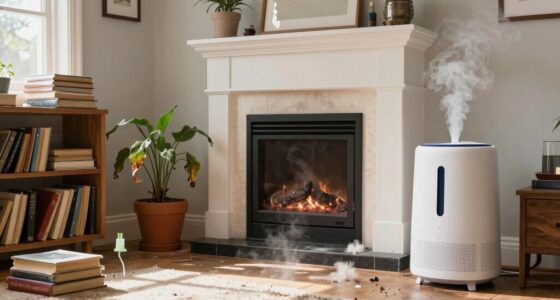
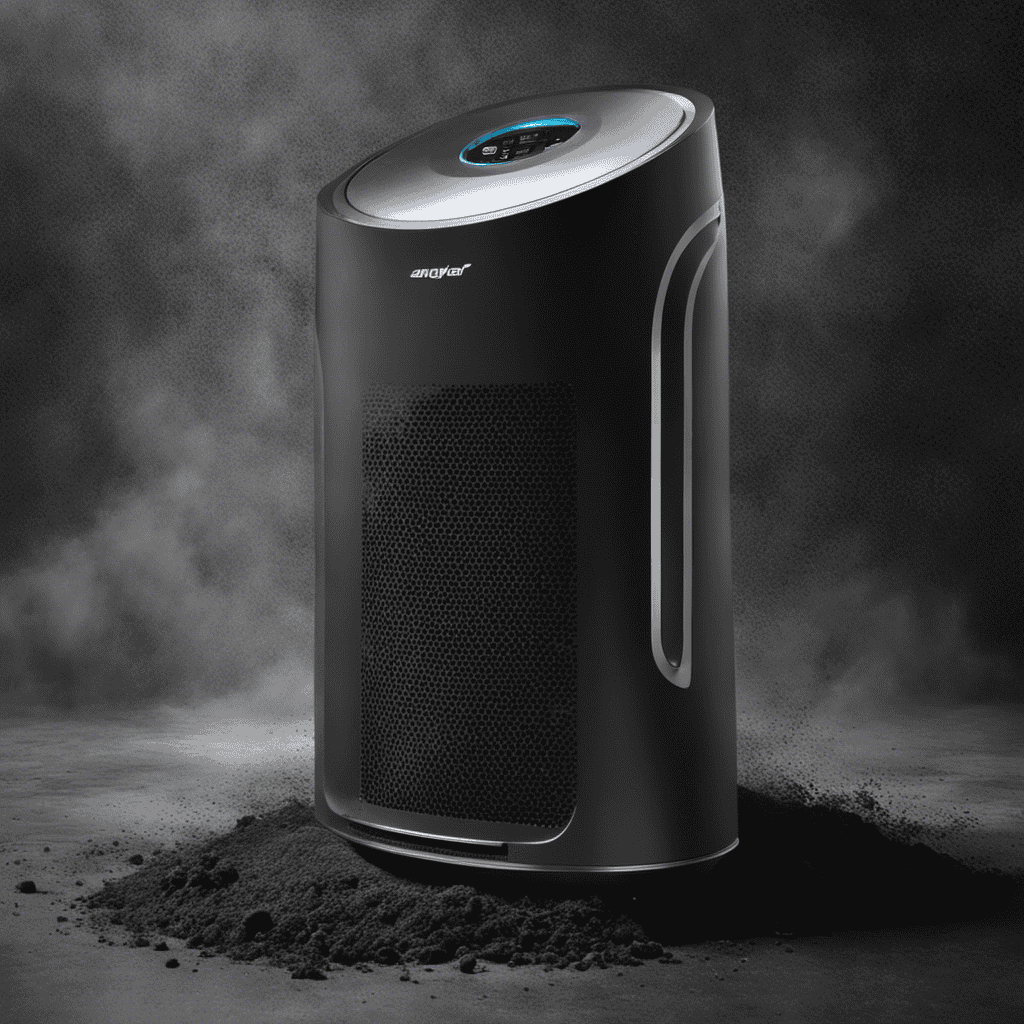
Air filtration is your most immediate defense. High-efficiency particulate air (HEPA) filters are designed to trap very small particles, including smoke particles, allergens, and other airborne pollutants. Using a HEPA filter in your HVAC system or purchasing a portable air purifier equipped with one can considerably cut down the amount of harmful particles circulating inside. Make sure to choose a device with an appropriate size for your space and replace or clean the filters regularly, as clogged filters lose efficiency. During wildfire events, running air purifiers continuously is often recommended to maintain cleaner indoor air.
Use HEPA filters in HVAC or portable purifiers, and replace filters regularly for optimal indoor air quality.
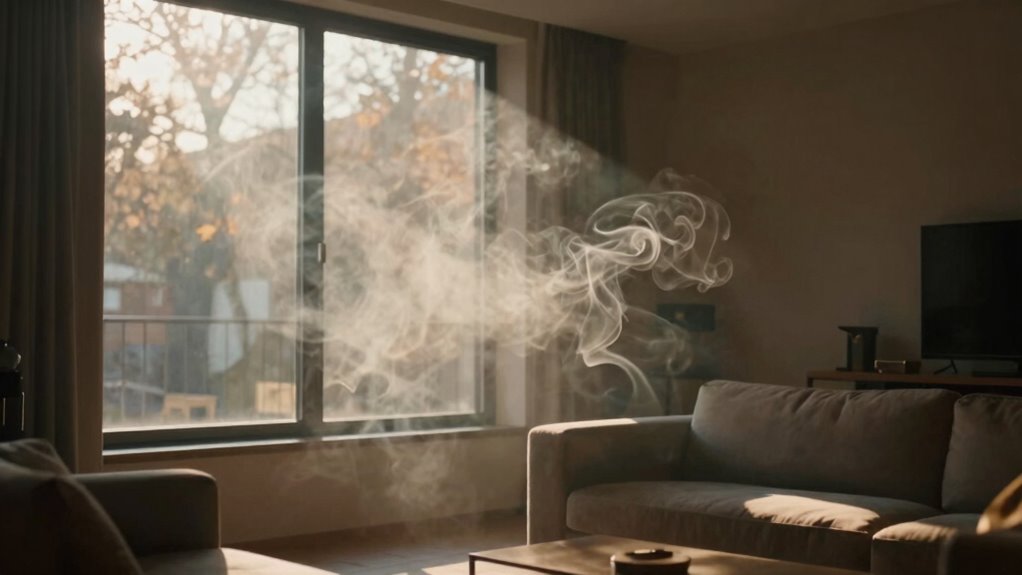
Ventilation strategies are equally important but require careful management. While fresh air is generally good, opening windows or doors during a wildfire can introduce more smoke into your home. Instead, focus on controlled ventilation. Keep windows and vents closed to prevent outdoor smoke from entering, especially during peak smoke periods. When outdoor air quality improves, you can carefully open windows for brief periods to allow fresh air in, but only if air quality reports indicate it’s safe. Using exhaust fans in kitchens and bathrooms can help remove indoor pollutants, but ensure they are vented outside and not into your attic or other spaces that could recirculate smoke. Proper ventilation management is essential for maintaining healthy indoor air during wildfire events. Additionally, making sure your air exchange systems are properly maintained can maximize their effectiveness at filtering out smoke particles.
Another effective ventilation approach involves upgrading your home’s ventilation system. Consider installing an energy recovery ventilator (ERV) or heat recovery ventilator (HRV) with filtration capabilities. These systems exchange indoor air for filtered outdoor air, balancing fresh air intake with pollution reduction. They can help maintain good indoor air quality during wildfire smoke events without compromising your home’s insulation or energy efficiency. Additionally, proper maintenance of these systems ensures they operate effectively in filtering out smoke particles. It’s also beneficial to stay informed about indoor air quality through reliable sources and adjust your ventilation practices accordingly.

LEVOIT Air Purifier for Home Allergies and Pets Hair Smokers in Bedroom, H13 True HEPA Filter, 24db Filtration System Cleaner Odor Eliminators, Remove 99.97% Dust Smoke Mold Pollen, Core 300, White
- Certified by AHAM: Ensures reliable air quality performance
- Powerful Cleaning: 56W motor with 143 CFM CADR
- Effective Air Purification: HEPA-grade filter for dust, smoke, odors
As an affiliate, we earn on qualifying purchases.
As an affiliate, we earn on qualifying purchases.
Frequently Asked Questions
How Quickly Does Wildfire Smoke Enter Indoor Air?
Wildfire smoke can enter your indoor air within minutes if your home isn’t properly sealed. To slow this process, use ventilation strategies like sealing gaps and closing vents. Air filtration methods, such as high-efficiency filters and portable air purifiers, help remove smoke particles quickly. Regularly updating filters and keeping windows closed during smoky conditions keep indoor air cleaner and reduce your exposure to harmful wildfire smoke.
Can Indoor Plants Help Filter Wildfire Smoke?
Indoor plants can help improve indoor air quality by filtering some airborne pollutants, but they won’t fully protect you from wildfire smoke. To maintain healthy plant life, guarantee proper watering and avoid overexposure to smoke, which can harm plant health. While plants contribute to better air quality, relying solely on them isn’t enough during smoky conditions. Use air purifiers and ventilation systems for more effective wildfire smoke mitigation indoors.
Are Certain Building Materials More Resistant to Smoke Infiltration?
Certain building materials are like fortress walls against wildfire smoke, making them markedly more resistant to smoke infiltration. Materials such as concrete, brick, and metal provide superior smoke resistance compared to wood or drywall. They create a formidable barrier, preventing smoky air from sneaking inside and maintaining cleaner indoor air quality. Choosing these durable, fire-resistant building materials ensures your home stands strong against the relentless assault of wildfire smoke.
How Effective Are Portable Air Purifiers During Wildfire Events?
Portable air purifiers can be quite effective during wildfire events if you maintain them properly. You should regularly check air purifier maintenance and replace filters as recommended by the manufacturer. Fresh filters guarantee peak performance, capturing smoke particles and pollutants efficiently. Keep your purifier running continuously, and don’t forget to follow the filter replacement schedule. This way, you’ll improve indoor air quality and reduce health risks caused by wildfire smoke.
What Are the Long-Term Health Effects of Indoor Smoke Exposure?
Think of indoor smoke exposure as a slow, unseen thief stealing your health over time. Long-term exposure can lower indoor air quality, increasing health risk factors like respiratory issues, asthma, and even cardiovascular problems. You might not notice immediate effects, but persistent inhalation weakens your lungs and immune system. Protect your environment now, because a clean indoor air quality is essential for your long-term well-being and peace of mind.
Conclusion
Think of wildfire smoke indoors as a shadow cast by distant flames, lingering quietly yet threatening to obscure your clarity. Just as a vigilant lighthouse guides ships through darkness, your actions—like sealing windows and using air purifiers—serve as beacons of safety. Remember, you hold the power to shield yourself from this invisible menace, turning your home into a sanctuary amid the smoky haze. Stay alert, stay protected, and let your precautions be the steady flame that keeps danger at bay.