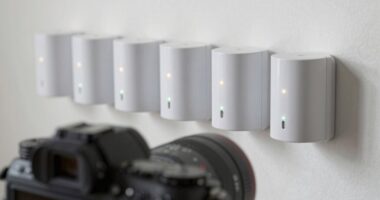
Predictive algorithms help you forecast indoor air quality by analyzing large sets of sensor data, detecting trends, and predicting fluctuations in pollutants, humidity, and other parameters. To guarantee accurate forecasts, it’s crucial to properly calibrate sensors and normalize data so measurements remain consistent across devices. These practices improve data quality, enabling your system to provide timely alerts and proactive management. Keep exploring to discover more ways these algorithms transform IAQ monitoring and management.

Get garden gear delivered free — and shop member deals
- Fast, free delivery on millions of items
- Access to Prime Big Deal Days deals on October 6–7
- Prime Video, Amazon Music and more included
Key Takeaways
- Predictive algorithms analyze sensor data to forecast indoor air quality trends and detect potential pollution spikes proactively.
- Regular sensor calibration and normalization are essential for maintaining data accuracy and improving forecast reliability.
- Advanced analysis of large datasets enables early detection of IAQ fluctuations, facilitating timely interventions.
- High-quality, standardized data enhances the precision and effectiveness of IAQ forecasting models.
- Implementing best practices in data management supports improved indoor air quality, occupant health, and ventilation control.

Predictive algorithms are revolutionizing the way we forecast indoor air quality (IAQ), allowing for more accurate and timely insights. These algorithms analyze vast amounts of sensor data to predict fluctuations in pollutants, humidity, and other IAQ parameters before they become problematic. To achieve reliable predictions, it’s essential to ensure that sensor data is accurate and consistent. Proper sensor calibration plays a critical role here, as it adjusts sensors to provide precise measurements aligned with known standards. Without calibration, sensors can drift over time, leading to inaccurate readings that compromise the predictive model’s effectiveness. Regular calibration routines help maintain data integrity, guaranteeing that the algorithm receives trustworthy information to base its forecasts on.
Alongside calibration, data normalization becomes fundamental in processing sensor outputs. Different sensors may have varying scales, sensitivities, or noise levels, which can distort the combined data used by predictive models. Data normalization standardizes these inputs, transforming them into a common scale or format. This step eliminates discrepancies stemming from sensor heterogeneity, enabling the algorithm to interpret the data correctly. When data normalization is properly executed, the predictive model can more accurately detect patterns and trends within the indoor environment, improving forecast reliability.
Data normalization standardizes sensor inputs, ensuring accurate interpretation and more reliable indoor air quality forecasts.
As you implement predictive algorithms for IAQ, focus on establishing a robust calibration schedule. Regularly calibrate your sensors against reference standards to prevent measurement drift. Simultaneously, apply normalization techniques consistently across all data streams to guarantee uniformity. This combination enhances the quality of the input data, which directly impacts the accuracy of your forecasts.
Moreover, understanding that sensor calibration isn’t a one-time task is fundamental. Environmental factors, sensor aging, and usage patterns can all influence sensor accuracy over time. Incorporate routine checks and recalibrations into your IAQ management strategy to sustain high data quality. When combined with data normalization, these practices help your predictive models adapt to changing conditions and maintain precise forecasting capabilities.
Ultimately, by focusing on sensor calibration and data normalization, you set a strong foundation for effective IAQ forecasting. These steps guarantee your predictive algorithms work with high-quality data, enabling you to proactively address indoor air quality issues. As a result, you can improve occupant health, optimize ventilation systems, and create healthier indoor environments with confidence in your forecasting tools.
indoor air quality sensor calibration kit
As an affiliate, we earn on qualifying purchases.
As an affiliate, we earn on qualifying purchases.
Frequently Asked Questions
How Do Predictive Algorithms Adapt to Sudden Changes in Indoor Air Quality?
You can rely on predictive algorithms to adapt to sudden indoor air quality changes through dynamic adaptation and real-time adjustments. When they detect rapid shifts in pollutant levels or environmental factors, they instantly recalibrate their forecasts. This responsiveness helps maintain ideal air quality by providing timely alerts or adjusting ventilation systems, ensuring your indoor environment remains healthy and comfortable despite unexpected fluctuations.
What Are the Key Challenges in Implementing IAQ Forecasting Models?
You face key challenges in implementing IAQ forecasting models, mainly ensuring sensor calibration for accurate data. Data integration from multiple sources can be complex, leading to inconsistencies. You also need to address real-time data processing and model adaptability to sudden air quality changes. Overcoming these issues requires careful calibration, seamless data integration, and robust algorithms that can handle diverse, dynamic indoor environments effectively.
How Can User Feedback Improve Predictive Accuracy Over Time?
You can improve predictive accuracy over time by actively engaging users to provide feedback on forecast performance. User engagement creates valuable feedback loops, allowing you to identify errors and refine your models. When users share their experiences and observations, you gain insights that help optimize algorithms, making IAQ forecasts more precise and reliable. Consistently incorporating this feedback guarantees your system adapts to real-world conditions and enhances overall accuracy.
What Role Do Sensor Placements Play in Model Effectiveness?
Sensor placements directly impact your model’s effectiveness by ensuring accurate, representative data. Proper placement reduces errors caused by sensor calibration issues and captures variations in indoor air quality. You should strategically position sensors to maximize data integration from diverse locations, improving predictive accuracy. Regularly calibrate sensors and adjust their positions as needed to account for environmental changes, ensuring your IAQ forecasts remain reliable and precise over time.
Are There Privacy Concerns With Collecting IAQ Data Continuously?
While continuous IAQ data collection offers valuable insights, it raises concerns about data privacy and sensor security. You might worry about sensitive information being compromised or misused, creating a sense of vulnerability in your environment. Protecting data privacy means implementing strict security measures for sensors, ensuring that collected data remains confidential. Balancing the benefits of IAQ monitoring with safeguarding your privacy is essential to maintain trust and security.
Conclusion
By leveraging predictive algorithms, you’re enhancing accuracy, improving responsiveness, and empowering decision-making for IAQ forecasting. These technologies enable you to anticipate pollution levels, act proactively, and protect health. With better data, you can optimize interventions, reduce risks, and create healthier environments. Embrace these tools to predict more precisely, respond faster, and manage indoor air quality more effectively. Ultimately, predictive algorithms help you stay ahead, stay safe, and stay informed.
Fall Picks
fall essentials
As an affiliate, we earn on qualifying purchases.