If you have pets, upgrading your filter to a higher MERV rating or using multi-stage filtration is more important than just relying on HEPA alone. HEPA filters trap many airborne allergens, but they don’t handle pet hair, odors, or allergens settled on surfaces. Choosing advanced filters and maintaining your system guarantees better allergen removal and fresher indoor air. Keep exploring to discover how other simple updates can make a big difference in your pet-friendly home.
Key Takeaways
- Upgrading to higher MERV-rated filters captures smaller pet allergens that standard HEPA filters may miss.
- Multi-stage filtration systems combine filters to effectively trap pet hair, dander, and odors.
- Regularly maintaining and replacing filters ensures consistent removal of pet-related allergens.
- Proper airflow circulation prevents allergen buildup and redistributing pet dander in your home.
- Addressing hidden allergen sources, like bedding and soft furnishings, enhances overall filtration effectiveness.
When it comes to keeping your home clean and safe for your pets, relying solely on HEPA filters isn’t enough. While HEPA filters are excellent at trapping airborne particles like pet dander, dust, and pollen, they don’t address all factors that influence your indoor air quality. Pet allergies often stem from more than just airborne allergens; they can also be caused by the allergens settling on surfaces or lingering in hidden spots. To truly improve air quality and reduce allergy symptoms, you need to consider additional filtering strategies that target the root of the problem.
HEPA filters alone aren’t enough; comprehensive filtration and surface cleaning are essential for pet allergy relief.
One essential detail that many pet owners overlook is the importance of proper airflow circulation and filtration system maintenance. HEPA filters are just one part of a thorough approach. If your ventilation system isn’t regularly cleaned or maintained, allergens can circulate repeatedly, diminishing the overall effectiveness of your efforts. You might have the best HEPA filter in place, but if the air is not moving properly or if filters are clogged, allergens will continue to linger in your home, aggravating pet allergies.
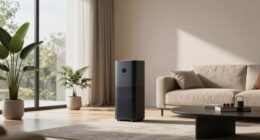
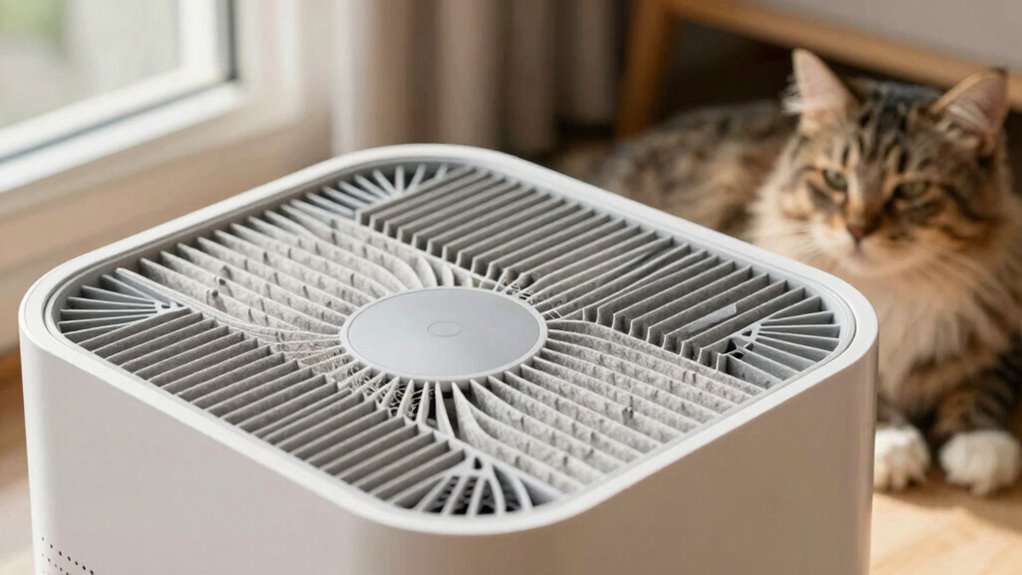
Another key factor is the placement and type of filters you use within your HVAC system. Many standard filters are designed for general air quality improvement but may not be specialized enough for homes with pets. Upgrading to a filter with a higher MERV rating or using a dedicated air purifier with a multi-stage filtration system can make a significant difference. These advanced filters can capture smaller particles and trap odors, pet hair, and other allergens that typical HEPA filters might miss or struggle to handle effectively.
Additionally, it’s essential to address hidden sources of allergens. Regularly washing your pet’s bedding, cleaning soft furnishings, and vacuuming with a high-efficiency vacuum cleaner equipped with a HEPA filter help remove allergens from surfaces and prevent them from becoming airborne again. These practices, combined with strategic filter choices, help create a cleaner environment and improve overall air quality.
Ultimately, the most essential filter detail isn’t just the presence of a HEPA filter but ensuring it’s part of a well-maintained, multi-layered filtration system that actively addresses sources of allergens and promotes better air circulation. This thorough approach helps you reduce pet allergies more effectively, making your home healthier and more comfortable for everyone, especially your furry friends. Remember, good air quality isn’t just about filtering the air but about how well your entire system works together to keep allergens at bay. Incorporating high-quality filters and maintaining them properly can significantly enhance your home’s air health.
Frequently Asked Questions
Can Non-Hepa Filters Effectively Reduce Pet Dander?
Non-HEPA filters can reduce pet dander effectively if they have a high MERV rating, which improves air quality by capturing smaller particles. Look for filters rated 13 or higher, as they trap more dander and allergens. Keep in mind, a filter’s lifespan impacts its performance; replace it regularly to maintain ideal air quality and guarantee it continues to reduce pet dander efficiently.
How Often Should I Replace My Pet-Friendly Air Filter?
For ideal air quality enhancement, replace your pet-friendly filter every 30 to 60 days. Regular filter maintenance ensures your filter functions effectively, capturing pet dander and pollutants efficiently. Neglecting timely replacements can lead to decreased air quality and compromised filtration. Stay proactive by inspecting your filter monthly, especially during shedding seasons, and swap it out promptly to sustain a fresh, healthy home environment.
Do Activated Carbon Filters Help With Pet Odors?
Activated carbon filters do assist with pet odors by absorbing unpleasant smells. To maximize their effectiveness, place your air purifier in a central spot where air circulates well, and keep up with regular filter maintenance. Replacing the carbon filter as recommended guarantees continuous odor control. Proper air purifier placement and timely filter changes are key to managing pet odors and maintaining fresh indoor air.
Are There Specific Filters for Allergy-Prone Pets?
Imagine breathing in fresh mountain air, free of airborne allergens. For allergy-prone pets, look for filters with specialized pre-filters or enhanced HEPA layers designed to trap pet dander and allergens effectively. These filters extend the filter lifespan and guarantee cleaner air. By choosing the right filter, you create a healthier environment, reducing allergy flare-ups and making your home more comfortable for both you and your furry friends.
What’s the Best Filter Type for Homes With Multiple Pets?
For homes with multiple pets, you should choose a high-efficiency, multi-stage filter system designed for airflow optimization. Look for filters with activated carbon and allergen-reducing layers to handle pet dander and odors. Regular filter maintenance is essential to keep the system running efficiently and to prevent buildup of pet allergens. This approach guarantees cleaner air and a healthier environment for you and your furry friends.
Conclusion
If you have pets, paying attention to your filter details really makes a difference. Did you know that pet dander can linger in the air for hours, even with a HEPA filter? That’s why choosing the right filter matters more than you might think. By upgrading your filter to one designed for pet allergens, you can reduce airborne irritants by up to 30%. Small changes like this can make a big difference in your home’s air quality.