
In a healthy home, noise levels should stay below 70 decibels to prevent hearing damage and reduce stress. Sounds above this threshold, especially consistent noise over 85 decibels, can harm your hearing over time or disturb your sleep. Monitoring your environment helps guarantee safe levels, and using soundproofing or absorbing materials can make a big difference. To learn more about managing noise and protecting your home’s tranquility, keep exploring effective strategies.
Key Takeaways
- Sounds above 70 decibels can cause hearing damage over time.
- Regular exposure to noise levels exceeding 85 decibels is harmful to health.
- Use a decibel meter app to monitor household sound levels accurately.
- Maintaining noise below 50-60 decibels promotes a peaceful, healthy home environment.
- External noise sources should be kept below 55 decibels to prevent disturbance.

Ensuring a healthy home means paying attention to noise levels, as excessive sound can impact your well-being. Whether it’s the constant hum of traffic outside or the chatter from your neighbors, noise pollution sources can create stress, interfere with sleep, and even affect your mental health. To protect yourself, understanding how loud is too loud—and how to control it—is essential. Implementing effective soundproofing techniques can make a significant difference, helping you create a peaceful environment within your home.
Start by identifying the main noise pollution sources. External sounds like traffic, construction, or loud neighbors often penetrate your walls and windows. Inside, household activities such as vacuuming, loud music, or appliances can also contribute to the overall noise level. Once you know where the noise is coming from, you can take targeted steps to reduce it. For example, sealing gaps around windows and doors minimizes sound leaks. Adding weatherstripping and installing double-glazed windows are effective soundproofing techniques that block out external noise and prevent sound from escaping.
Identify and seal noise entry points like gaps around windows and doors to reduce sound intrusion.
Incorporate soft furnishings, rugs, and curtains to absorb internal sounds. These materials help dampen echoes and reduce the overall noise level inside your home. For rooms where silence is essential, consider installing acoustic panels or foam tiles on walls and ceilings. These soundproofing techniques are particularly useful in bedrooms or home offices, where concentration and rest are indispensable. If noise from neighbors or nearby streets remains intrusive, external barriers such as fences or dense shrubbery can help reduce impact, acting as natural sound barriers. Additionally, understanding sound level thresholds can guide you in maintaining a healthy acoustic environment.
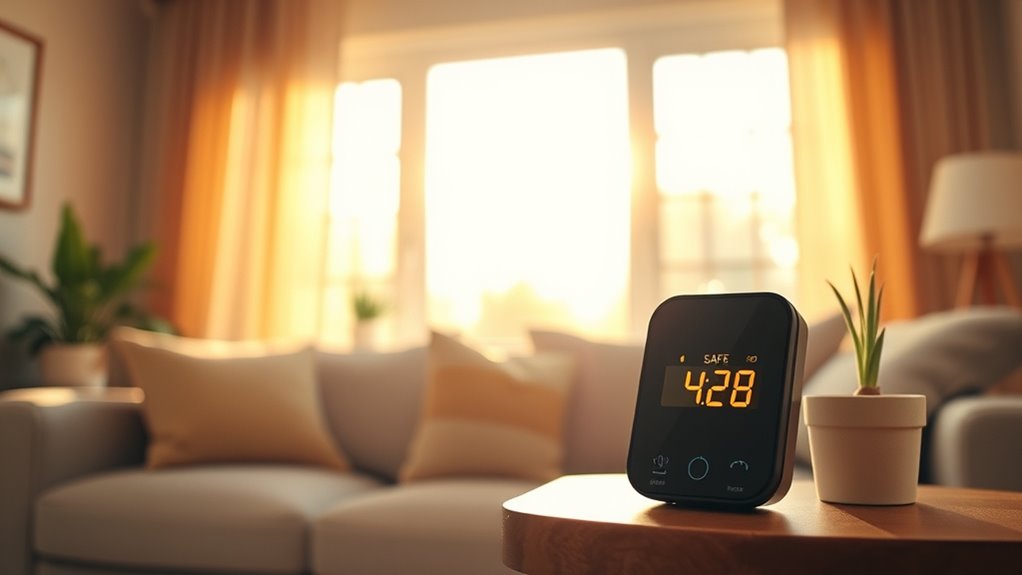
Be aware of decibel levels that are considered safe for your environment. For instance, sounds above 70 decibels can start to cause hearing damage over prolonged exposure. Common noise pollution sources like loud music or power tools can easily reach these levels. Using a decibel meter app can help you monitor your home’s sound environment. If you notice persistent levels above recommended limits, it’s time to take additional measures. Not only does reducing noise improve comfort, but it also supports your overall health by lowering stress and fatigue caused by constant noise exposure.
Frequently Asked Questions
How Do Decibel Levels Vary During Different Times of the Day?
You notice that decibel levels often fluctuate throughout the day, with mornings usually quieter and afternoons busier due to increased activity and noise pollution. During busy times, sound insulation becomes essential to reduce disruptive noise. You can manage these variations by installing proper soundproofing and monitoring decibel levels, ensuring your home remains a comfortable, peaceful space regardless of the time of day.
Are There Specific Decibel Limits for Children’S Bedrooms?
Imagine a gentle whisper guiding your child’s dreams—that’s what suitable noise levels aim for. For children’s bedrooms, it’s best to keep noise pollution low, ideally under 50 decibels, to prevent sleep disruption. Excessive noise can interfere with their rest, affecting growth and mood. Maintaining a peaceful environment helps your little ones wake refreshed and ready to explore, ensuring their sleep remains undisturbed and healthy.
How Can I Measure Decibel Levels Accurately at Home?
To measure decibel levels accurately at home, you can use sound level meters or smartphone apps designed for this purpose. Sound level meters provide precise readings, but many smartphone apps are convenient and easy to use. Simply position the device near the noise source, guarantee there’s minimal interference, and check the reading. Regularly monitoring sound levels helps you maintain a healthy and comfortable environment for everyone.
Do Decibel Limits Differ Between Urban and Rural Areas?
Imagine walking through a bustling city street, where urban noise hums loudly around you, and then stepping into a peaceful rural landscape, filled with gentle quiet. Decibel limits do differ: cities often have stricter regulations to control urban noise, while rural areas enjoy more leniency, embracing the natural quiet. You should consider these differences when measuring decibel levels, ensuring your environment remains comfortable and healthy wherever you are.
What Are the Long-Term Health Effects of Exposure to High Decibel Levels?
Long-term exposure to high decibel levels can seriously affect your health. You might develop noise-induced hearing loss, which is irreversible. Additionally, constant loud noise can lead to stress-related health issues like high blood pressure and sleep disturbances. Over time, these problems can worsen, impacting your overall well-being. Protect your ears and manage noise exposure to avoid these serious health risks and maintain a healthier, more comfortable environment.
Conclusion
Remember, maintaining safe decibel levels keeps your home a peaceful sanctuary. Don’t let noise pollution turn your humble abode into a carnival of chaos—think of it like the silent library you visited in your childhood, but in your own living room. Keep an eye on those decibel limits, and you’ll be able to enjoy the quiet comfort you deserve. After all, your home should be your castle, not a bustling marketplace from days gone by.