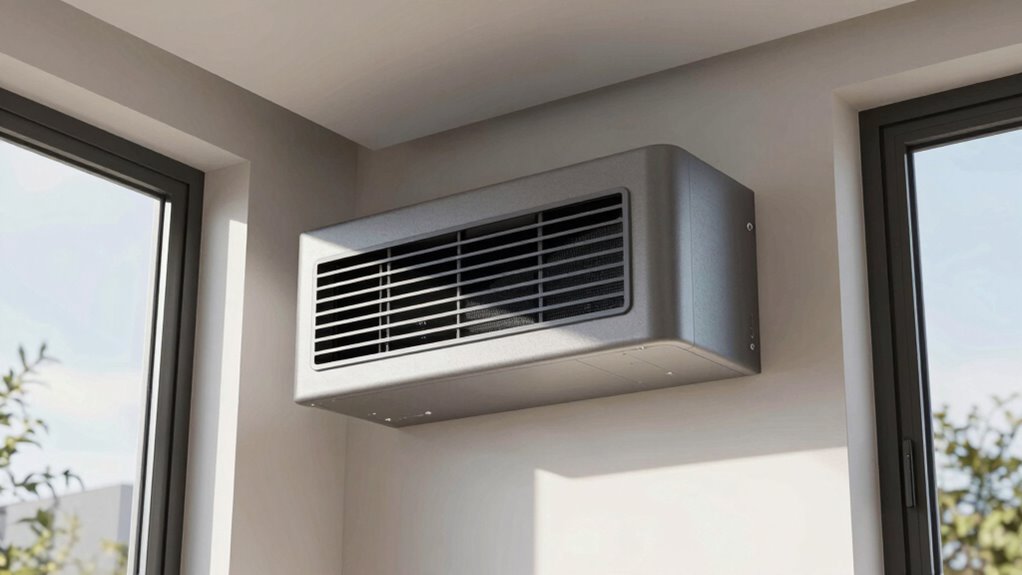

Radon isn’t a filtration problem because it’s a gas that standard air purifiers can’t effectively remove. To protect your home, focus on mitigation strategies like sealing cracks and installing vent pipes with fans to vent radon outside. Improving ventilation and creating a pressure difference also help reduce levels. Relying solely on filters won’t solve radon issues—effective solutions involve targeted systems, and there’s more to know about keeping your indoor air safe.
Key Takeaways
- Standard air purifiers do not effectively remove radon gas from indoor air.
- Radon mitigation requires venting systems that direct radon outdoors.
- Sealing cracks alone reduces radon but is most effective when combined with ventilation.
- Installing professional radon mitigation systems creates a pressure difference to vent radon outside.
- Proper testing and targeted mitigation strategies are essential for effective radon risk reduction.
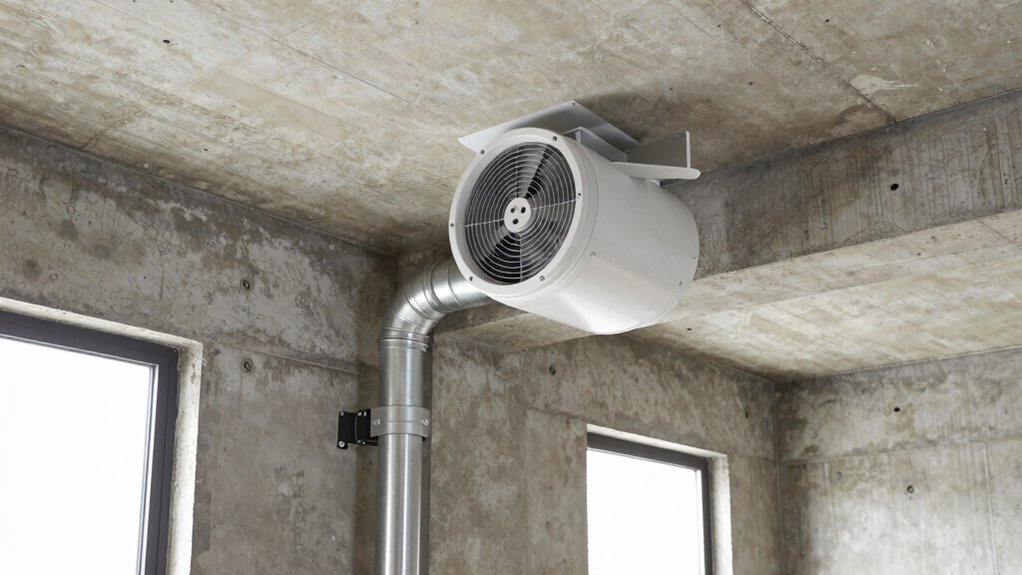
Radon is a colorless, odorless radioactive gas that can pose serious health risks if it accumulates indoors. If you’re concerned about radon exposure in your home, the first step is understanding how it affects your air quality. Radon seeps in from the ground, entering through cracks in foundations, gaps around pipes, and other openings. Because it’s invisible and odorless, you can’t detect it without proper testing. That’s why testing methods are essential—they give you accurate measurements of radon levels in your home. You might opt for do-it-yourself kits or hire a professional to perform more all-encompassing testing. Regardless of the method, knowing your radon levels is critical, because this data informs your next steps.
Once you’ve confirmed elevated radon levels, you might think about filtration systems as a solution. However, radon isn’t a problem that filters away easily. Standard air purifiers or filtration units won’t substantially reduce radon levels because radon is a gas, not a particulate matter that filters can trap effectively. Instead, the focus needs to shift toward ventilation and mitigation strategies designed specifically for radon. These include installing vent pipes and fans that direct radon out of your home, sealing entry points, and improving the overall air exchange. These fixes work by reducing the amount of radon accumulating inside, rather than trying to remove radon from the air once it’s inside.
You should also consider sealing cracks and gaps in your foundation, basement walls, and around utility penetrations. While sealing alone might not eliminate radon completely, it can notably lower indoor levels when combined with active ventilation systems. Radon mitigation systems are the most effective fix; they create a pressure difference that pulls radon from beneath your home and vents it outside before it can accumulate. Installing such systems requires careful planning and often professional expertise, but they represent the most reliable way to protect your indoor air quality from radon risks. Additionally, understanding the thermal behavior of your home can help optimize the effectiveness of mitigation efforts.
Frequently Asked Questions
Can Radon Levels Vary Seasonally in My Home?
Yes, radon levels can vary seasonally in your home. You might notice radon fluctuations due to seasonal variation, with higher levels often in winter when homes are sealed and ventilation decreases. During warmer months, increased ventilation can lower radon concentrations. It’s important to test your home regularly, especially during different seasons, to accurately monitor radon levels and make certain your mitigation system is effective year-round.
Are There Natural Methods to Reduce Radon Without Ventilation Systems?
Think of radon reduction like building a fortress—you need strong natural barriers. You can try sealing cracks and gaps in your foundation with soil sealing to block radon entry naturally. Improving your home’s insulation and maintaining a tight seal creates a barrier, reducing radon without ventilation systems. These methods help keep radon out like walls protect against intruders, offering a safer, chemical-free approach to lowering indoor radon levels.
How Often Should Radon Testing Be Repeated After Fixing?
You should repeat radon measurement every 2 to 5 years after fixing your home. Testing frequency depends on initial levels, the effectiveness of your mitigation system, and any changes in your house or environment. Regular testing guarantees radon levels stay low and safe. Even if levels are initially reduced, ongoing radon measurement helps confirm your mitigation efforts remain effective over time.
Do All Homes Require the Same Radon Mitigation Approach?
Not all homes require the same radon mitigation approach because radon myths often lead homeowners to assume one size fits all. Your mitigation costs depend on your home’s size, foundation, and existing ventilation. It’s crucial to get a professional assessment since customized solutions are more effective and cost-efficient. Don’t rely on myths—consult experts to determine the most suitable and affordable mitigation strategy for your specific home.
Is Professional Radon Mitigation Necessary for Small or New Homes?
Even in small or new homes, professional radon mitigation can be essential. While DIY radon testing and radon resistant construction help detect and prevent issues early, professional experts guarantee proper installation and long-term safety. New homes might seem safe, but radon can seep in unnoticed. Investing in professional mitigation guarantees your home remains healthy, especially when you consider that early detection and proper ventilation are key to effective radon management.
Conclusion
Radon isn’t just a filter issue; it’s a warning sign from your home’s foundation. Think of it as a silent guardian whispering that something’s not right beneath your feet. When you address the root cause, you’re planting seeds of safety and peace of mind. Don’t just cover up the problem—dig deep and fix it at the source. That’s how you turn a lurking threat into a symbol of strength and protection for your home and loved ones.