HEPA filters are highly effective at removing dust, pollen, and pet dander from indoor air, thanks to their ability to trap particles as small as 0.3 microns. By actively capturing these allergens, HEPA filters improve your indoor air quality and help reduce allergy symptoms like sneezing and itchy eyes. To maximize their benefit, proper placement and regular maintenance are key. Keep exploring to discover how you can optimize your air purification setup for healthier indoor spaces.
Key Takeaways
- HEPA filters trap airborne particles as small as 0.3 microns, including dust, pollen, and pet dander.
- Using HEPA air purifiers effectively reduces allergens and improves indoor air quality.
- Proper placement and regular maintenance ensure HEPA filters maximize allergen removal.
- HEPA filters prevent circulating tiny irritants, decreasing allergy symptoms like sneezing and itchy eyes.
- Incorporating HEPA filters creates a cleaner, healthier indoor environment for allergy sufferers.
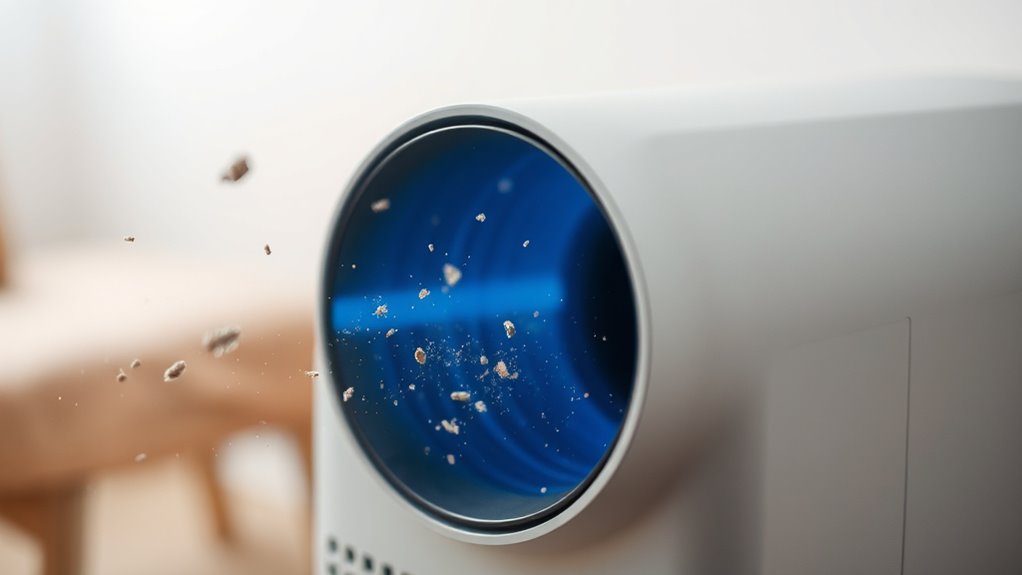
Have you ever wondered how to reduce indoor allergens like dust, pollen, and pet dander? If so, you’re not alone. Many people struggle with allergy symptoms caused by these tiny particles floating around inside their homes. The good news is that effective air purification methods, especially those involving HEPA filters, can make a meaningful difference in allergy relief. HEPA, or High-Efficiency Particulate Air filters, are designed to trap particles as small as 0.3 microns, which includes most dust mites, pollen grains, and pet dander. When you use a HEPA air purifier, you’re actively removing these allergens from the air you breathe, creating a cleaner, healthier environment.
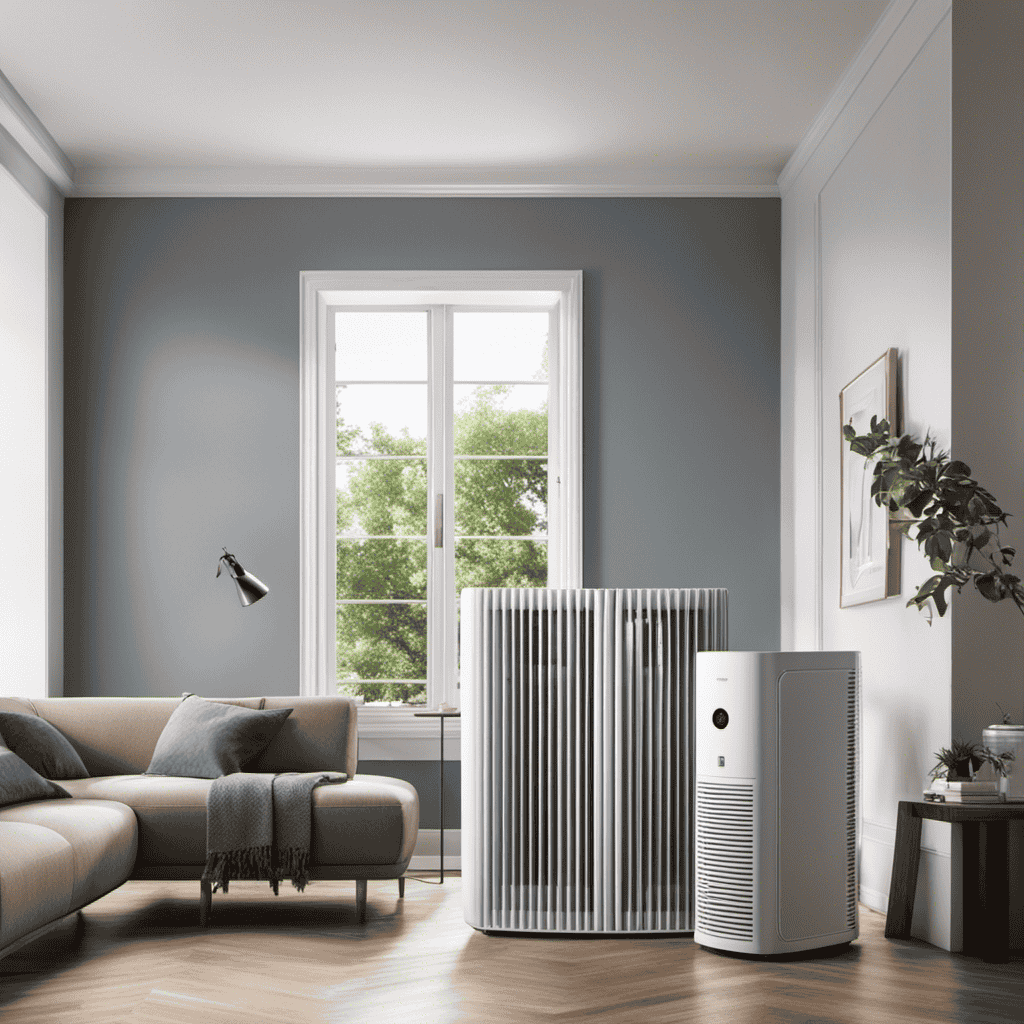
Using HEPA filters effectively removes dust, pollen, and pet dander for cleaner, healthier indoor air.
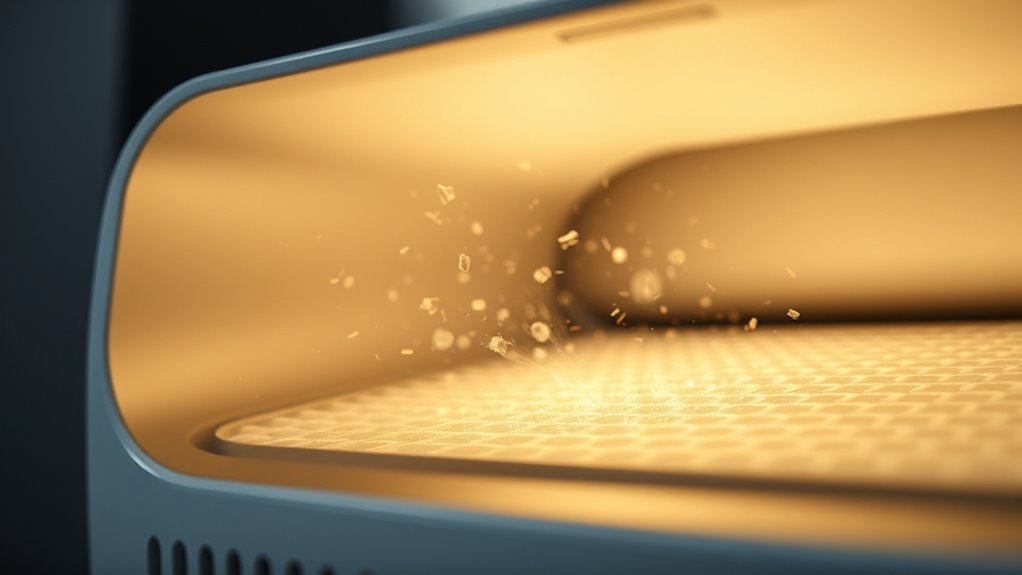
Choosing the right air purification system is vital for allergy relief. HEPA filters are considered the gold standard because they don’t just trap larger particles; they also catch microscopic allergens that can trigger allergic reactions. When air passes through a HEPA filter, these tiny irritants get trapped, preventing them from circulating back into your living space. This continuous filtration helps minimize allergy symptoms, such as sneezing, nasal congestion, and itchy eyes. As you use a HEPA-equipped air purifier, you’ll notice a marked improvement in indoor air quality, especially during high pollen seasons or if you have pets that shed dander.
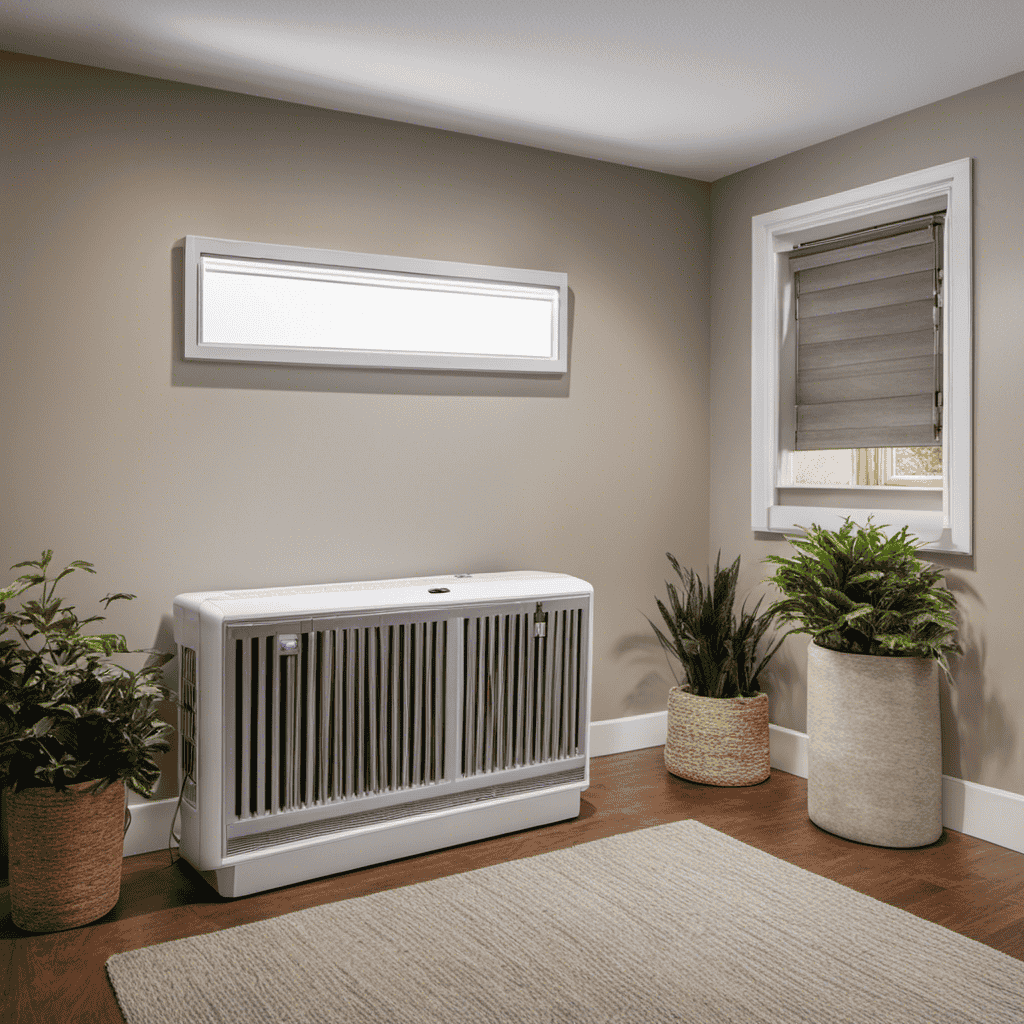
To maximize the benefits of air purification, position your HEPA filter in high-traffic or allergen-prone areas like bedrooms or living rooms. Keep doors and windows closed during peak pollen seasons to prevent outdoor allergens from entering. Regularly replacing or cleaning the HEPA filter is essential to maintain its effectiveness. An often overlooked aspect is ensuring proper room size compatibility; a purifier that’s too small won’t adequately clean the air, while one that’s too large could be unnecessarily expensive. Proper maintenance of HEPA filters also preserves their filtering efficiency, ensuring continuous protection against airborne allergens. When used correctly, a HEPA air purifier becomes an invaluable tool for allergy relief, considerably reducing airborne allergens and improving your overall comfort.
Incorporating air purification into your daily routine can transform your indoor environment into a sanctuary free from the irritants that trigger allergies. It’s a simple step with powerful results, giving you cleaner air, fewer allergy symptoms, and a better quality of life. With consistent use, you’ll notice how much easier it becomes to breathe comfortably, especially during allergy seasons or if you have pets that shed. So, if you’re serious about reducing dust, pollen, and pet dander in your home, investing in a reliable HEPA air purifier is one of the smartest choices you can make for your health and well-being.
Frequently Asked Questions
Can HEPA Filters Eliminate Odors From Dust and Pet Dander?
HEPA filters primarily trap particles like dust, pollen, and pet dander, but they don’t eliminate odors directly. For odor elimination and allergy relief, consider filters with activated carbon or charcoal layers, which absorb smells effectively. While HEPA filters improve air quality by capturing allergens, incorporating odor-absorbing media enhances overall freshness, helping you breathe easier and enjoy a cleaner environment.
How Often Should HEPA Filters Be Replaced for Optimal Performance?
You should replace your HEPA filters every 6 to 12 months for peak performance. It’s a coincidence how quickly filters can lose their effectiveness, especially if you have pets or allergies. Regular replacement extends the filter lifespan and keeps your air clean. Keep an eye on signs like reduced airflow or increased dust, and stick to the recommended replacement frequency to guarantee your air stays fresh and healthy.
Are HEPA Filters Effective Against Airborne Viruses and Bacteria?
Yes, HEPA filters are effective against airborne pathogens, including viruses and bacteria, thanks to their high filtration efficiency. They trap tiny particles that carry these microbes, helping improve indoor air quality. While they substantially reduce the risk, no filter completely eliminates all airborne pathogens. Regular maintenance and replacement guarantee peak performance, allowing you to breathe cleaner, safer air in your space.
Do HEPA Filters Remove All Types of Pollen?
HEPA filters effectively remove most pollen, which ranges in size from 10 to 100 microns, thanks to their high filter efficiency. They trap larger pollen particles and many smaller ones, reducing allergen levels in your indoor air. However, no filter captures all pollen perfectly, especially the tiniest particles. Regularly changing your HEPA filter guarantees peak efficiency, helping you breathe easier and minimizing allergy symptoms caused by pollen exposure.
Can HEPA Filters Help Reduce Allergy Symptoms Indoors?
Imagine breathing in fresh forest air—HEPA filters can make that a reality indoors by helping reduce allergy symptoms. They trap tiny particles like pollen, pet dander, and dust, improving air quality. To keep them effective, regular air purifier maintenance is key. Combine HEPA filters with other allergen reduction techniques, such as controlling humidity and cleaning surfaces frequently, to create a healthier environment and ease your allergy symptoms.
Conclusion
HEPA filters are incredibly effective at capturing dust, pollen, and pet dander, making your indoor air much cleaner. Did you know that HEPA filters can trap up to 99.97% of particles as small as 0.3 microns? That means fewer allergy symptoms and better air quality for you. By using a HEPA filter, you’re taking a simple step to breathe easier and create a healthier home environment. It’s a small change with a big impact on your well-being.

In the dynamic world of air purifiers and clean air advocacy, Aire stands out as a beacon of knowledge and passion. As the Editor in Chief of Aero Guardians, Aire has been instrumental in shaping the platform’s voice and direction, ensuring that every piece of content resonates with clarity, authority, and authenticity.