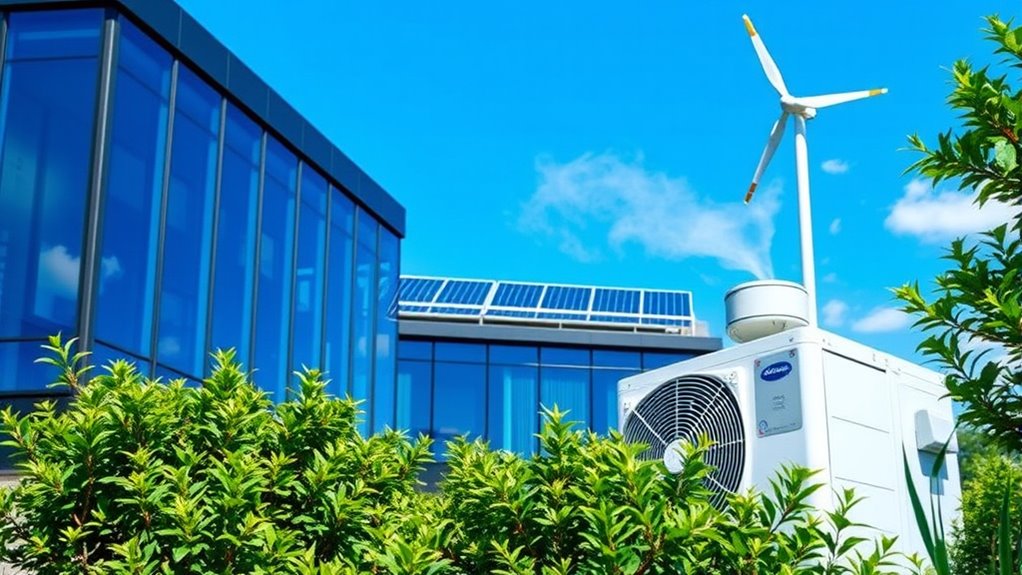

Integrating renewable energy into your HVAC system can greatly improve your indoor air quality by reducing pollutants and allergens through advanced filtration and better ventilation. Solar panels and geothermal systems not only lower energy consumption but also promote healthier environments by minimizing indoor pollutants caused by traditional heating and cooling methods. These eco-friendly options often come with incentives and long-term savings, making them more accessible. Keep exploring to discover how these sustainable solutions can transform your indoor comfort and air quality even further.
Key Takeaways
- Renewable HVAC systems often include advanced filtration to remove pollutants and allergens, improving indoor air quality.
- Solar-powered HVAC reduces emissions and pollutant release, leading to cleaner indoor and outdoor air environments.
- Geothermal systems operate quietly with minimal drafts, decreasing indoor noise and enhancing overall air comfort.
- Integrating renewable solutions promotes better ventilation options, increasing airflow and indoor freshness.
- Utilizing renewable energy in HVAC supports healthier indoor environments while reducing reliance on fossil fuels and pollutants.
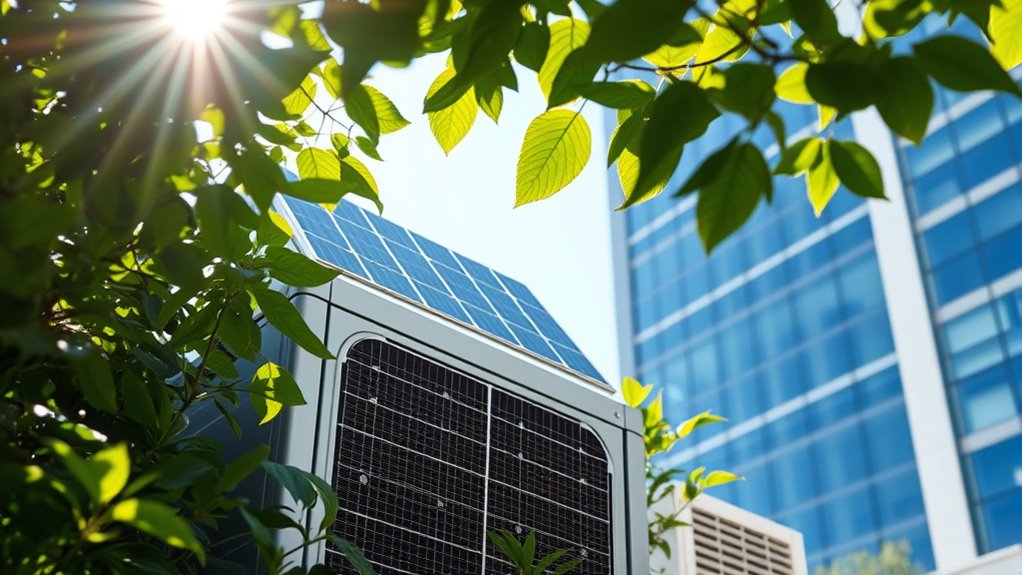
Have you ever wondered how renewable energy is transforming heating, ventilation, and air conditioning (HVAC) systems? The shift toward sustainable solutions isn’t just about reducing energy bills; it’s also about improving air quality and creating healthier indoor environments. One way to achieve this transformation is through integrating renewable energy sources like solar and geothermal systems into your HVAC setup. These options are gaining popularity, especially with the availability of solar incentives that make solar panel installation more affordable. Solar incentives can markedly offset the initial costs, encouraging homeowners and businesses to adopt solar-powered HVAC components. By harnessing the sun’s energy, you reduce reliance on fossil fuels, lowering emissions and improving indoor air quality since fewer pollutants are released during energy production.
Geothermal systems are another innovative solution, tapping into the earth’s stable underground temperature to heat and cool buildings efficiently. Unlike traditional HVAC systems that depend solely on electricity or fossil fuels, geothermal systems use the constant temperature beneath the surface to provide climate control. This method not only reduces energy consumption but also minimizes indoor air pollutants caused by combustion or inefficient heating methods. Installing a geothermal heat pump can be a game-changer for air quality because it purifies and circulates cleaner, conditioned air throughout your space. Plus, with the rising number of incentives and rebates available for geothermal installation, you can enjoy remarkable savings while contributing to a healthier environment.
Integrating these renewable technologies doesn’t just benefit your wallet and the planet; it also enhances your indoor air quality. Traditional HVAC systems can sometimes circulate dust, allergens, and other pollutants, exacerbating respiratory issues. In contrast, renewable energy-based systems often include advanced filtration and ventilation options, ensuring cleaner, fresher air inside. For example, solar-powered ventilation systems can improve airflow without adding to your energy bill, while geothermal systems tend to operate more quietly and efficiently, reducing indoor noise and drafts. Additionally, these systems often incorporate advanced filtration, which further improves indoor air quality by removing microscopic pollutants.
As you consider upgrading your HVAC, exploring these renewable options becomes essential. The availability of solar incentives can make solar panel installation more accessible and cost-effective, while the long-term savings and environmental benefits of geothermal systems make them a wise investment. By choosing renewable energy solutions, you’re not only cutting energy costs but also fostering a healthier indoor environment with better air quality. This holistic approach to HVAC design aligns with sustainable living and helps you breathe easier, knowing you’re making a positive impact on the environment and your well-being.
Frequently Asked Questions
How Do Renewable Energy Sources Impact HVAC System Maintenance?
Renewable energy sources can improve your HVAC system’s reliability by reducing wear and tear, which often lowers maintenance frequency. With fewer moving parts and cleaner energy, you experience less breakdowns and longer intervals between repairs. You’ll notice that maintaining your system becomes easier and more cost-effective. Overall, integrating renewables helps keep your HVAC running smoothly, ensuring better performance and fewer disruptions over time.
What Are the Initial Costs for Integrating Renewables Into Existing HVAC?
You should start with a thorough cost analysis to understand the initial expenses of integrating renewables into your existing HVAC system. Expect to budget for equipment upgrades, such as solar panels or wind turbines, which can vary based on system size and technology. While costs may seem high upfront, investing now can lead to long-term savings on energy bills and improve air quality, making it a worthwhile consideration.
Are There Government Incentives for Renewable HVAC Upgrades?
Yes, you can benefit from government incentives like tax credits and rebate programs when upgrading your HVAC system with renewable energy. These incentives help offset the initial costs and make sustainable options more affordable. Check with local, state, or federal agencies to find specific programs available in your area. Taking advantage of these incentives can markedly reduce your investment and promote cleaner, more efficient air quality improvements.
How Do Renewable-Powered HVAC Systems Perform in Extreme Weather?
Renewable-powered HVAC systems perform well in extreme weather, thanks to advances in solar efficiency and wind resilience. Solar panels now capture sunlight more effectively, even in cloudy, stormy conditions, while wind turbines are built to withstand high winds and cold temperatures. You’ll find that these systems maintain reliable energy supply during severe weather, helping keep your indoor air quality high without interruptions from climate extremes.
What Are the Long-Term Environmental Benefits of Renewable HVAC Integration?
Have you considered how renewable HVAC systems can transform your environmental impact? By integrating renewable energy, you notably reduce your carbon footprint and promote energy conservation. These long-term benefits help combat climate change, improve air quality, and guarantee sustainable resource use. Over time, your commitment to renewable HVAC not only benefits the planet but also enhances your property’s efficiency and cost savings, making it a smart, eco-friendly choice for the future.
Conclusion
By integrating renewable energy into your HVAC system, you’re not only reducing carbon emissions but also improving air quality. Did you know that buildings account for nearly 40% of global energy-related emissions? Switching to renewable sources like solar or wind can cut this footprint markedly. Embracing these technologies helps you create a healthier indoor environment while contributing to a cleaner planet. Take action now—your choices today can make a lasting impact on air quality and sustainability.