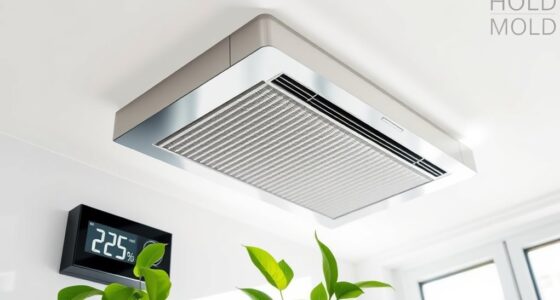
Integrating biophilic design with HVAC and air quality involves combining natural elements like greenery and natural ventilation to enhance indoor air. By using plants and fresh air flow techniques, you naturally reduce pollutants and humidity, decreasing reliance on mechanical systems. This approach creates healthier, more sustainable spaces that improve air circulation and overall well-being. Keep exploring these strategies to see how they can transform your indoor environment into a healthier space.
Key Takeaways
- Incorporate natural ventilation strategies alongside biophilic elements to enhance indoor air circulation and reduce dependence on mechanical systems.
- Use indoor greenery to filter airborne pollutants, improve air quality, and complement HVAC systems for healthier indoor environments.
- Design operable windows and vents to facilitate natural airflow, reducing energy use and improving occupant comfort.
- Integrate plant-based air filtration with HVAC filtration systems to optimize removal of indoor toxins and VOCs.
- Leverage biophilic design principles to create a balanced indoor environment that minimizes mechanical system reliance and promotes energy efficiency.
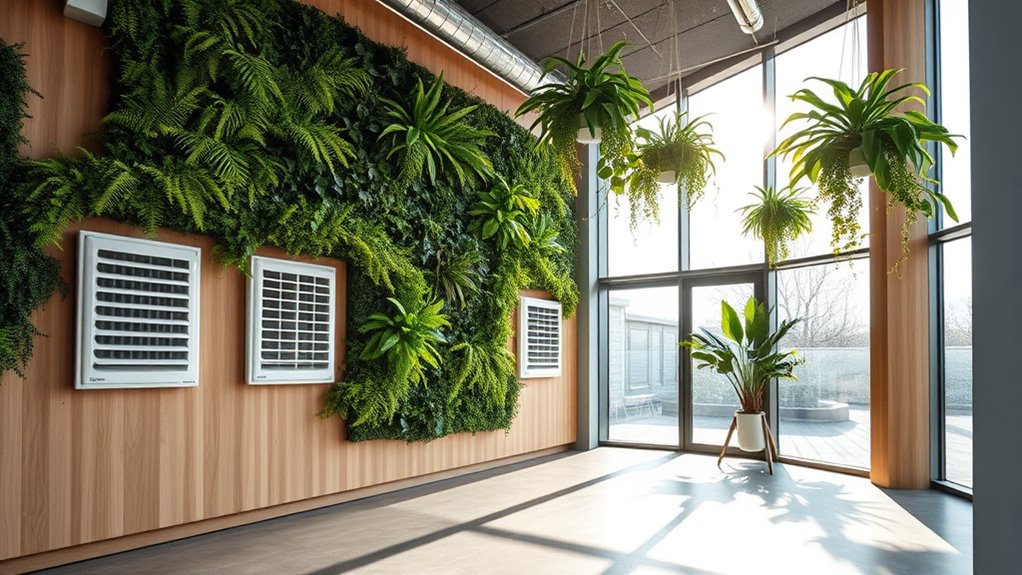
Have you ever wondered how integrating natural elements into building environments can boost your well-being? When you incorporate biophilic design principles into your space, you’re not just making it look better—you’re actively enhancing air quality and your overall health. One effective way to do this is through natural ventilation, which allows fresh air to flow freely, reducing reliance on mechanical systems and decreasing indoor pollutants. Instead of constantly running air conditioning or fans, you can design your space to maximize airflow naturally, creating a healthier, more comfortable environment. This approach helps remove indoor toxins, humidity, and stale air, leading to a noticeable improvement in air quality and your comfort levels. Additionally, ventilation techniques can be optimized to further improve indoor air circulation and filtration, contributing to a healthier living space.
Indoor greenery plays a vital role in this design philosophy. When you add plants and other natural elements indoors, you’re doing more than just beautifying the space; you’re actively filtering the air you breathe. Plants absorb carbon dioxide and release oxygen, but they also remove volatile organic compounds (VOCs) and other airborne pollutants that can cause allergies or respiratory issues. Incorporating indoor greenery into your environment creates a natural air filtration system, which complements your HVAC setup and enhances overall air quality. Plus, the presence of plants can reduce stress and boost your mood, making your space more inviting and calming.
Natural ventilation and indoor greenery work hand-in-hand to create a harmonious, health-promoting environment. When you design your space to facilitate airflow—by opening windows, installing vents, or using strategically placed operable walls—you enable fresh air to circulate and refresh the indoor air quality naturally. Meanwhile, lush greenery adds a layer of biophilic connection, providing visual and physical benefits. The greenery acts as a natural humidifier, balancing indoor moisture levels, and contributes to a sense of serenity that improves your mental well-being. These elements work together to reduce dependence on mechanical HVAC systems, which often consume significant energy and sometimes circulate allergens or pollutants.
Costa Farms Live Indoor House Plants, Live Indoor Plant, Easy Care
- Decor-Ready Indoor Plants: Ideal for gift or home upgrade
- Variety of Easy-Care Plants: Beginner-friendly and low-maintenance
- Creates a Calming Environment: Enhances mood and room ambiance
As an affiliate, we earn on qualifying purchases.
As an affiliate, we earn on qualifying purchases.
Frequently Asked Questions
How Does Biophilic Design Impact HVAC Energy Efficiency?
Biophilic design enhances HVAC energy efficiency by improving indoor air quality and natural ventilation, which reduces the need for mechanical cooling and heating. When you incorporate natural elements, you promote better airflow and humidity control, leading to energy savings. You’ll likely see lower energy consumption and costs, as the design leverages natural processes to maintain comfortable indoor air conditions without over-relying on HVAC systems.
What Are the Cost Implications of Integrating Biophilic Elements?
You’ll find that integrating biophilic elements involves initial costs for design, materials, and installation, but a thorough cost analysis shows long-term savings through improved occupant well-being and productivity. However, you should consider implementation challenges like ensuring compatibility with existing systems and maintaining natural features. While upfront expenses may be higher, the benefits often outweigh costs over time, making it a worthwhile investment for healthier, more inviting spaces.
Can Biophilic Design Improve Mental Health in Indoor Environments?
Your mental health can skyrocket by incorporating biophilic design, which is like giving your mind a breath of fresh air. Natural light and indoor greenery reduce stress, boost mood, and improve focus. When you immerse yourself in these elements, it’s as if you’re reconnecting with nature itself. By enhancing your environment with these features, you create a space that nurtures your well-being every day.
How Do Plant-Based Air Filtration Systems Compare to Traditional Filters?
Plant-based air filtration systems often outperform traditional filters in air purification because they naturally absorb pollutants and improve indoor air quality. By integrating plants into your environment, you harness their ability to filter toxins and add humidity, creating healthier spaces. Unlike conventional filters that need frequent replacement, plant integration provides ongoing air purification with aesthetic benefits. They’re a sustainable, eco-friendly choice that enhances both air quality and your well-being indoors.
What Maintenance Is Required for Biophilic Hvac-Integrated Systems?
You need to stay on top of maintenance for biophilic HVAC systems, so they don’t become more trouble than they’re worth. Regularly check plant health and guarantee system calibration stays accurate to keep air quality ideal. Clean filters and watering schedules are essential, and monitor for pests or disease. Think of it as tending a garden — consistent care keeps everything running smoothly and your indoor environment fresh and healthy.
Conclusion
By seamlessly blending biophilic design with HVAC and air quality, you reveal the secret to creating environments so healthy and inspiring, they could make even the gloomiest days feel like a walk in the paradise of nature. Imagine a space so perfectly balanced that it defies all odds—boosting your mood, your productivity, and your well-being to levels you never thought possible. Embrace this integration, and watch your environment transform into a sanctuary so extraordinary, it’s almost like living in a dream.