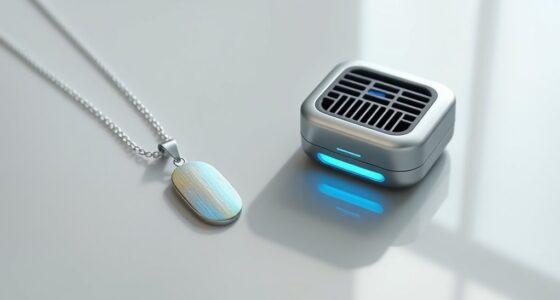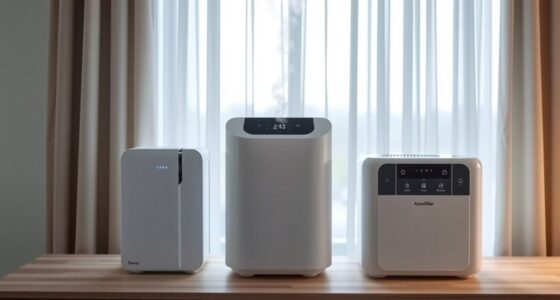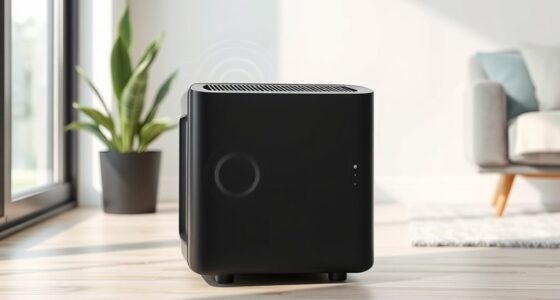
Self-cleaning air purifier filters combine advanced features like UV sterilization and activated carbon layers to automatically remove bacteria, viruses, odors, and chemical pollutants, reducing manual upkeep. UV sterilization destroys microorganisms on contact, while activated carbon absorbs odors and VOCs efficiently. These systems often include automated cleaning cycles, such as back-flushing or heating, to regenerate the filters continuously. If you want to discover how these technologies work together for healthier indoor air, keep exploring the details.
Key Takeaways
- Self-cleaning filters automatically remove dirt, dust, and microbial buildup using integrated cleaning cycles, reducing manual maintenance.
- UV sterilization destroys bacteria, viruses, and mold spores trapped in the filter, preventing microbial growth.
- Activated carbon layers absorb odors, VOCs, and chemical pollutants, maintaining indoor air freshness.
- Automated regeneration processes, including UV, heating, and back-flushing, ensure consistent filter performance and longevity.
- Combining UV sterilization and activated carbon provides comprehensive air purification with minimal upkeep.
Self-cleaning air purifier filters are revolutionizing how we maintain indoor air quality by reducing the need for frequent manual cleaning. These advanced filters incorporate innovative technologies like UV sterilization and activated carbon layers to ensure cleaner, healthier air with minimal effort on your part. Instead of constantly replacing or scrubbing filters, you benefit from systems designed to automatically clean and refresh themselves, saving you both time and money.
UV sterilization plays a vital role in these self-cleaning filters. Ultraviolet light effectively destroys bacteria, viruses, and mold spores that get trapped in the filter media. When the air passes through, UV light activates and neutralizes microorganisms on contact, preventing their growth and preventing the spread of airborne pathogens. This process not only enhances the filter’s overall effectiveness but also minimizes the need for manual cleaning or replacement, reducing the buildup of germs that can compromise indoor air quality.
UV sterilization neutralizes microorganisms, enhancing filter effectiveness and reducing manual cleaning needs.
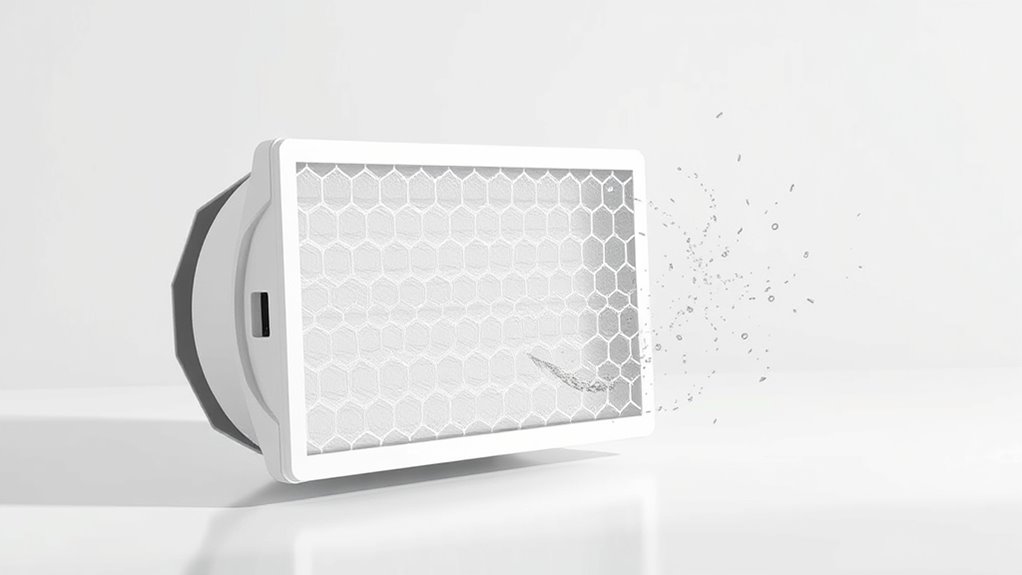
Activated carbon is another essential component of self-cleaning filters. It absorbs odors, volatile organic compounds (VOCs), and chemical pollutants that often linger indoors. The activated carbon layer captures these pollutants as air flows through, considerably improving air freshness. In traditional filters, activated carbon can become saturated quickly, requiring frequent replacement. However, in self-cleaning systems, the carbon is periodically regenerated or cleaned through integrated processes, maintaining ideal absorption capacity over time. This continuous regeneration keeps your air purifier working efficiently longer, without the hassle of manual intervention.
The integration of UV sterilization and activated carbon in self-cleaning filters creates a synergistic effect. While UV sterilization ensures that microbial contaminants are neutralized, activated carbon tackles odors and chemical pollutants, covering a broad spectrum of indoor air pollutants. The self-cleaning mechanism often involves automated cycles where the filter material is cleaned using UV light or other methods like heating or back-flushing, which dislodge accumulated dirt and contaminants. This automation means you don’t have to remember to replace or clean filters manually, ensuring consistent performance and healthier air. Additionally, the use of advanced filtration materials enhances the longevity and efficiency of these self-cleaning systems.
Frequently Asked Questions
How Long Do Self-Cleaning Filters Typically Last?
Self-cleaning filters usually last between 6 months to a year, depending on usage and environment. Your filter’s lifespan depends on durability factors like air quality, humidity, and how often you run the purifier. Regular maintenance can extend its durability, but eventually, you’ll need to replace it. Keep an eye on performance indicators and follow manufacturer guidelines to guarantee peak air purification and maximize your filter’s lifespan.
Are Self-Cleaning Filters Safe for Allergy Sufferers?
You can breathe easy knowing self-cleaning filters are generally safe for allergy sufferers. They’re designed to effectively filter allergens, improving allergy safety by removing dust, pollen, and pet dander. While no filter is perfect, these systems help keep the air cleaner and reduce allergy symptoms. Just be sure to maintain your filter regularly, so it continues to do its job and keeps your air fresh as a daisy.
What Maintenance Is Required for Self-Cleaning Filters?
You’ll need to check the filter’s cleaning frequency, usually every few months, depending on usage. Self-cleaning filters typically don’t require frequent filter replacement, but it’s good to monitor for any buildup or reduced performance. Occasionally, you might need to manually reset the filter’s cleaning cycle or replace it if the device indicates. Regular maintenance ensures ideal air quality and prolongs your purifier’s lifespan.
Do Self-Cleaning Filters Produce Noise During Operation?
Self-cleaning filters typically produce minimal noise during operation, so you might notice some low-level operational sounds. These noise levels are usually quiet enough not to disturb your daily activities. The sounds come from internal mechanisms working to clean the filter, but they’re designed to be unobtrusive. If you’re sensitive to noise, look for models with quiet operation features, ensuring your air purifier runs smoothly without causing disruptions.
How Energy-Efficient Are Self-Cleaning Air Purifiers?
Self-cleaning air purifiers are quite energy-efficient, helping you reduce your environmental impact. They use less energy over time because you don’t need to replace filters frequently, which also improves cost-effectiveness. By maintaining ideal airflow and reducing waste, these purifiers lower your overall energy consumption. This makes them a smart, eco-friendly choice, allowing you to enjoy cleaner air without markedly increasing your energy bills.
Conclusion
Imagine a world where your air purifier quietly takes care of itself, allowing you to breathe easier without the hassle. Self-cleaning filters gently handle the dirt and particles, so you don’t have to worry about maintenance. They work tirelessly behind the scenes, ensuring your air stays fresh and pure. Embrace this subtle innovation and enjoy a cleaner, more comfortable environment—your lungs will thank you for the discreet upgrade to your home’s air quality.