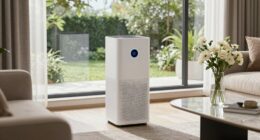
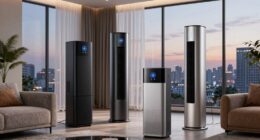
Smart thermostats work alongside air quality sensors to provide synergistic control for your home. They can detect pollutants, humidity, and poor air quality, then trigger ventilation or air purification systems automatically. This not only improves indoor air but also conserves energy by activating devices only when needed. By integrating climate and air quality management, these smart systems help you create healthier, more comfortable spaces. Keep exploring how this technology can enhance your home’s efficiency and wellness.
Key Takeaways
- Smart thermostats can detect indoor air quality issues and activate ventilation or purifiers to improve health and comfort.
- They integrate with air quality sensors to balance optimal temperature and pollutant levels efficiently.
- Automated adjustments prioritize air purification during high pollution or humidity, conserving energy.
- Custom schedules and real-time data enable simultaneous management of temperature and air quality.
- Enhanced control supports healthier indoor environments while reducing energy waste and environmental impact.
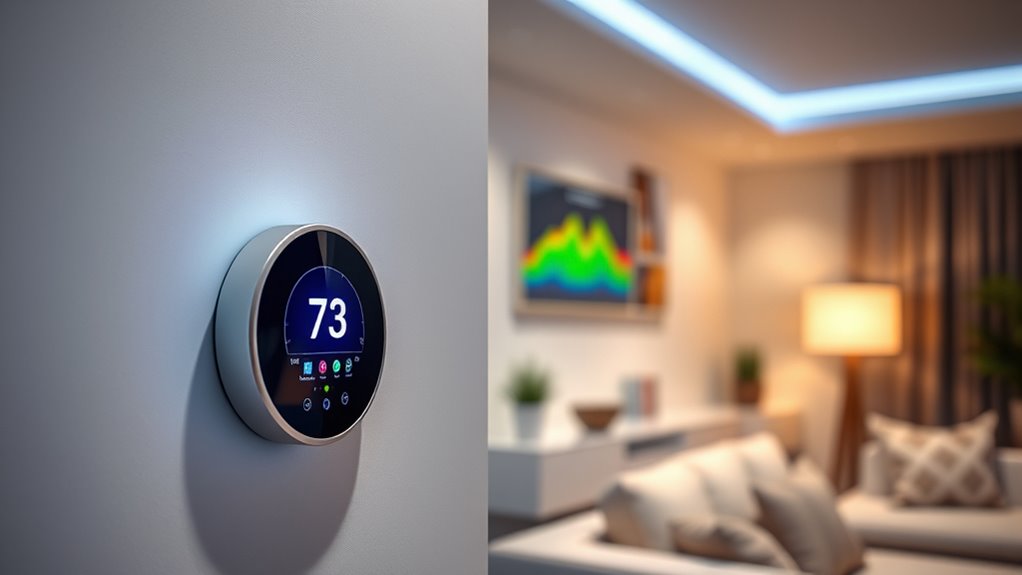
Smart thermostats are transforming how you manage your home’s air quality by offering more than just temperature control. They’re becoming essential tools for improving energy efficiency and reducing your environmental impact. By intelligently adjusting your HVAC system, these devices optimize heating and cooling based on your schedule, preferences, and real-time data. This means you’re not wasting energy on unnecessary heating or cooling, which directly benefits your utility bills and minimizes the carbon footprint associated with energy consumption. As a result, you contribute less to environmental degradation while enjoying a more comfortable home.
With smart thermostats, you gain a deeper understanding of your energy use patterns. Many models provide detailed reports that show when and how you consume energy, helping you identify ways to cut back. For example, if your thermostat learns that you’re away during the day, it can automatically lower the temperature, conserving energy without sacrificing comfort when you return. This automation not only enhances energy efficiency but also reduces the environmental impact of your household operations by decreasing greenhouse gas emissions linked to power generation.
Furthermore, smart thermostats can be integrated with other smart home devices, creating an all-encompassing system that monitors indoor air quality alongside temperature. For instance, if sensors detect poor air quality due to high levels of pollutants or humidity, your thermostat can trigger ventilation or air purification systems to improve the environment. This synergy ensures your home remains both energy-efficient and healthy. Instead of running continuous air filtration, which can waste energy, the system activates only when necessary, balancing air quality needs with conservation efforts.
Another advantage is that smart thermostats allow you to set customized schedules that align with your lifestyle, preventing unnecessary heating or cooling during unoccupied times. This precision prevents energy waste, lowering your utility costs and lessening the environmental impact. Plus, with features like geofencing—where the thermostat detects your phone’s location—it can automatically adjust settings as you leave or approach home, ensuring energy isn’t wasted when you’re away and that your home is comfortable upon arrival.
In addition, integrating smart thermostats with organic and natural juices concepts can promote healthier indoor environments by supporting natural air quality improvements and energy efficiency. In essence, smart thermostats empower you to take control of your home’s air quality and energy use simultaneously. They help you reduce your carbon footprint by maximizing efficiency and minimizing waste, all while maintaining a healthy, comfortable living environment. As technology advances, these devices will become even more capable of seamlessly balancing air quality, energy conservation, and environmental responsibility. By choosing a smart thermostat, you’re investing in a smarter, greener way to live.
Frequently Asked Questions
Can Smart Thermostats Detect Specific Indoor Air Pollutants?
No, most smart thermostats can’t directly detect specific indoor air pollutants. However, they often connect with indoor pollutant sensors that monitor things like VOCs, dust, or carbon dioxide. When these sensors detect high levels, smart thermostats can trigger air quality alerts or adjust ventilation systems. This way, you get real-time updates and improved indoor air quality without the thermostat itself actively sensing pollutants.
How Do Smart Thermostats Integrate With Air Purifiers?
You can easily connect your smart thermostat with air purifiers through smart home automation, making it a win-win situation. When your thermostat detects poor air quality, it automatically triggers the air purifier to kick in, ensuring cleaner indoor air. This seamless integration enhances comfort and health, allowing you to sit back and enjoy a gust of fresh air without lifting a finger. It’s a smart move to simplify your home environment.
Are There Health Benefits Beyond Temperature Regulation?
You can experience health benefits beyond temperature regulation through air quality awareness and health monitoring features in smart thermostats. These devices often track indoor air quality, alerting you to pollutants or allergens, which helps you take action to improve your environment. By maintaining ideal air conditions, you reduce respiratory issues and allergies, promoting overall well-being. This proactive approach ensures a healthier living space and better respiratory health over time.
What Are the Energy Implications of Air Quality Monitoring?
Imagine your home breathing easier, with air quality sensors working behind the scenes. You’ll see energy efficiency improve as your smart thermostat adjusts settings based on real-time air data, preventing unnecessary heating or cooling. This not only enhances comfort but also leads to cost savings. By monitoring air quality, you optimize energy use, reducing waste and lowering your utility bills, all while maintaining a healthier indoor environment.
How Secure Is Data Sharing Between Thermostats and Air Quality Devices?
You can feel confident that data sharing between thermostats and air quality devices is generally secure, thanks to strong privacy measures. Manufacturers use data encryption to protect your information during transmission, reducing privacy concerns. However, always stay vigilant by regularly updating firmware and reviewing privacy settings. These steps help guarantee your data remains safe and private, giving you peace of mind while enjoying the benefits of integrated smart home technology.
Conclusion
By integrating smart thermostats with air quality management, you can create a healthier, more comfortable home. Did you know that homes with smart systems see up to a 30% improvement in air quality? This synergy not only reduces energy costs but also enhances your indoor environment. Embrace this technology to enjoy smarter climate control and breathe easier every day. The future of home comfort is smarter and cleaner—are you ready to make the switch?