As someone deeply interested in the quality of indoor air, I’ve frequently pondered what sets apart an air purifier from an air sanitizer.
It’s like comparing apples to oranges, or rather, clean air to germ-free air.
In this article, we’ll delve into the nitty-gritty of these two devices, exploring their functionality, key differences, and how to choose the right option for your indoor air needs.
So sit back, relax, and let’s clear the air on this often-confusing topic.
Key Takeaways
- Air purifiers remove pollutants and allergens from indoor air, while air sanitizers eliminate or reduce airborne contaminants like bacteria, viruses, mold spores, and allergens.
- Air purifiers focus on improving air quality by capturing and trapping airborne particles, while air sanitizers focus on reducing the risk of illness by killing microorganisms.
- Air purifiers have higher initial costs and require regular filter replacements, while air sanitizers have lower initial costs but ongoing maintenance costs for sanitizing agents.
- Choosing between air purifiers and air sanitizers depends on specific needs and preferences, as well as considering factors like filtration efficiency, sterilization capability, coverage area, and specific technology used.

2 Pack Core Mini Filter H13 True HEPA Filters for LEVOIT Core Mini Core Mini-P Air Purifier Replacement Filter 3-in-1 HEPA, High-Efficiency Activated Carbon, Replace Part Core Mini-RF
- Compatibility: Fits LEVOIT Core Mini models only
- Package Quantity: Includes 2 filters for convenience
- Filtration Efficiency: H13 True HEPA filters 99.97% particles
As an affiliate, we earn on qualifying purchases.
The Role of Air Purifiers in Improving Indoor Air Quality
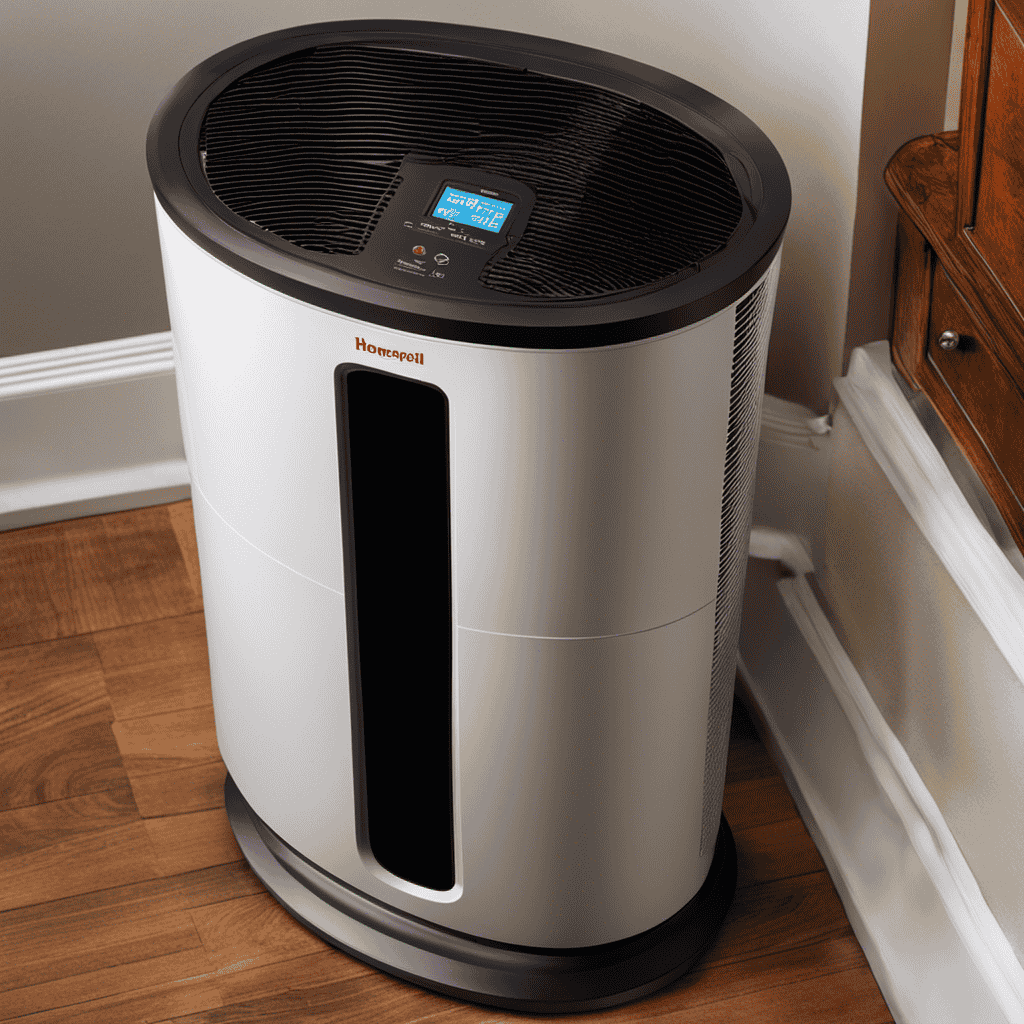
If you’re looking to improve the quality of the air inside your home, an air purifier can help by removing pollutants and allergens. The role of filters is crucial in the effectiveness of air purifiers.
These filters are designed to capture and trap various airborne particles, such as dust, pet dander, pollen, and even bacteria. The filters work by forcing air through a fine mesh material that catches these particles, preventing them from circulating back into the room.
The effectiveness of air purifiers in removing pollutants depends on the type of filter used and its ability to capture different particle sizes. HEPA filters, for example, are highly efficient in trapping particles as small as 0.3 microns.
Regularly replacing or cleaning the filters is essential to maintain the purifier’s effectiveness and ensure clean and healthy indoor air quality.
Understanding the Functionality of Air Sanitizers
Understanding how air sanitizers work is essential in distinguishing their functionality from air purifiers. Air sanitizers are devices designed to eliminate or reduce the presence of airborne contaminants, such as bacteria, viruses, mold spores, and allergens, in indoor spaces. Here are three key points to consider:
-
Air sanitizers use various methods to sanitize the air, including UV-C germicidal lamps, photocatalytic oxidation, and ionization.
-
Unlike air fresheners that simply mask odors, air sanitizers actively target and neutralize the sources of bad odors, leaving the air cleaner and fresher.
-
The effectiveness of air sanitizers can vary depending on factors such as the size of the space, the type of contaminants present, and the specific technology used. It is important to choose a sanitizer that is appropriate for your needs and follow the manufacturer’s instructions for optimal results.
Key Differences Between Air Purifiers and Air Sanitizers
When choosing between air purifiers and air sanitizers, you’ll want to consider their distinct functions and benefits. Both devices aim to improve indoor air quality, but they do so in different ways. An air purifier works by removing airborne particles, such as dust, pollen, and pet dander, from the air. On the other hand, an air sanitizer focuses on killing germs and bacteria, reducing the risk of illness. To better understand the differences, let’s compare their effectiveness and cost implications in the table below:
| Feature | Air Purifier | Air Sanitizer |
|---|---|---|
| Effectiveness | Removes particles and allergens from the air | Kills germs and bacteria in the air |
| Cost implications | Higher initial cost, regular filter replacements | Lower initial cost, ongoing maintenance costs for sanitizing agents |
Choosing the Right Option for Your Indoor Air Needs
To choose the right option for your indoor air needs, consider evaluating the specific functions and benefits of each device. Here are three key factors to consider:
-
Filtration Efficiency: An air purifier uses filters to capture and remove airborne particles, such as dust, pollen, pet dander, and mold spores. The efficiency of the filters determines how effectively it can purify the air.
-
Sterilization Capability: On the other hand, an air sanitizer utilizes technologies like UV-C light or ozone to kill bacteria, viruses, and other microorganisms in the air. It can help reduce the spread of infectious diseases.
-
Coverage Area: Consider the size of the room or area you want to treat. Make sure the air purification or sanitization device is suitable for the square footage to ensure optimal performance.
The Benefits of Combining Air Purifiers and Air Sanitizers
By combining air purifiers and air sanitizers, you can improve the overall air quality in your home. Air purifiers work by removing airborne particles such as dust, pollen, and pet dander, while air sanitizers target and eliminate bacteria, viruses, and other harmful microorganisms. When used together, these devices can provide a comprehensive approach to maintaining clean and healthy air in your living space.
One of the benefits of combining air purifiers and air sanitizers is their effectiveness in reducing indoor air pollutants. Air purifiers can capture and trap particles as small as 0.3 microns, while air sanitizers use technologies like UV-C light or ozone to kill bacteria and viruses. This combination ensures that both visible and invisible pollutants are addressed.
To illustrate the effectiveness of this combination, here is a table showcasing the main features and benefits of air purifiers and air sanitizers:
| Air Purifiers | Air Sanitizers |
|---|---|
| Removes particles | Kills bacteria |
| Traps allergens | Eliminates viruses |
| Reduces odors | Destroys mold |
| Improves air flow | Eliminates fungi |
| Filters pet dander | Reduces VOCs |
Frequently Asked Questions
Do Air Purifiers and Air Sanitizers Require Regular Maintenance or Filter Replacements?
Yes, air purifiers and air sanitizers do require regular maintenance and filter replacements. This is necessary to ensure their effectiveness in removing pollutants and maintaining clean air quality in the environment.
Can Air Purifiers or Air Sanitizers Effectively Remove Odors From Indoor Spaces?
Yes, air purifiers can effectively remove odors from indoor spaces. They work by filtering out particles and allergens, which helps to improve air quality and eliminate unpleasant smells. The benefits of using air purifiers include fresher, cleaner air.
Are Air Purifiers and Air Sanitizers Safe to Use Around Children and Pets?
Yes, air purifiers and air sanitizers can be safe for children and pets. However, prolonged exposure to these devices may pose potential health risks. It is important to compare their effectiveness in reducing allergens and pollutants.
How Long Does It Take for Air Purifiers or Air Sanitizers to Improve Indoor Air Quality?
It typically takes a few hours for air purifiers or air sanitizers to improve indoor air quality. Factors to consider when choosing one include room size, filtration system, and specific needs, such as allergies or odors.
Can Air Purifiers or Air Sanitizers Help Reduce the Spread of Airborne Illnesses or Viruses?
Air purifiers and air sanitizers can help reduce the spread of airborne illnesses or viruses by eliminating pollutants and allergens from the air. Research shows their effectiveness in improving indoor air quality and reducing allergen impact.
Conclusion
In conclusion, after thoroughly researching the topic, it is clear that both air purifiers and air sanitizers play crucial roles in improving indoor air quality.
While air purifiers focus on removing particles and pollutants from the air, air sanitizers work by killing bacteria and viruses. Each has its own unique functionality and benefits.
Choosing the right option depends on your specific indoor air needs. However, it is important to remember that combining the power of both air purifiers and air sanitizers is like having a dynamic duo that ensures your indoor air is as fresh and clean as a spring breeze.