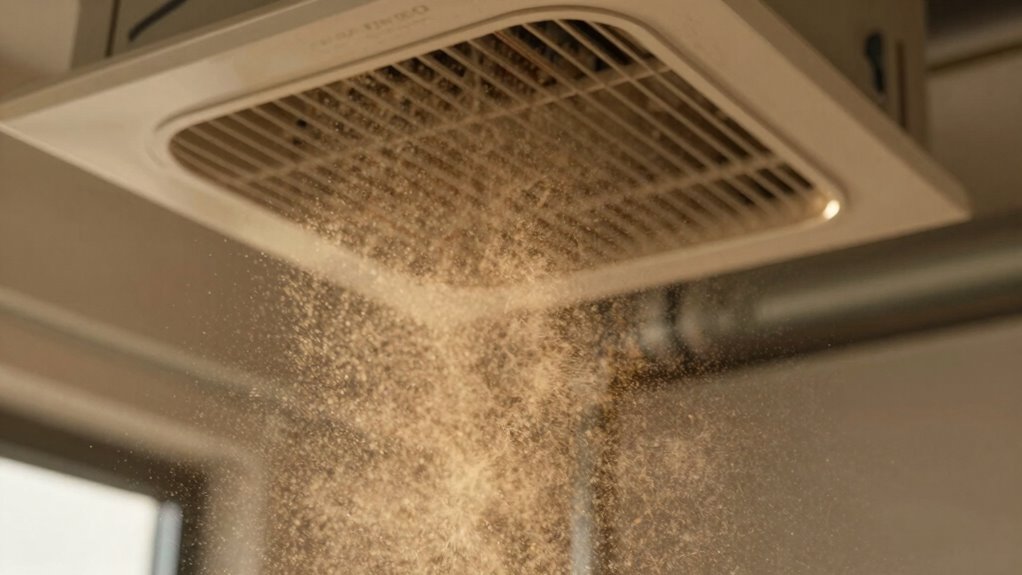
During seasonal changes, improper HVAC settings can trigger dust blooms by circulating more allergens and allowing mold or dust mites to thrive. Running your system at high speeds constantly or neglecting filter maintenance worsens the problem. To prevent this, you should optimize temperature, humidity, and filter use. Keeping humidity around 40-50% and ensuring filters are clean helps reduce dust splashes. Stay tuned for more tips to keep your indoor air healthier year-round.
Key Takeaways
- Running HVAC systems constantly at high speeds can stir up settled dust and trigger blooms.
- Using outdated or clogged filters allows allergens to circulate and promotes dust buildup during seasonal changes.
- Improper humidity levels, either too high or too low, create ideal conditions for dust mites and mold growth.
- Ignoring seasonal pollen spikes in HVAC settings can increase indoor dust and allergen levels.
- Failing to adjust system settings for seasonal variations hampers dust control and promotes allergen blooms indoors.
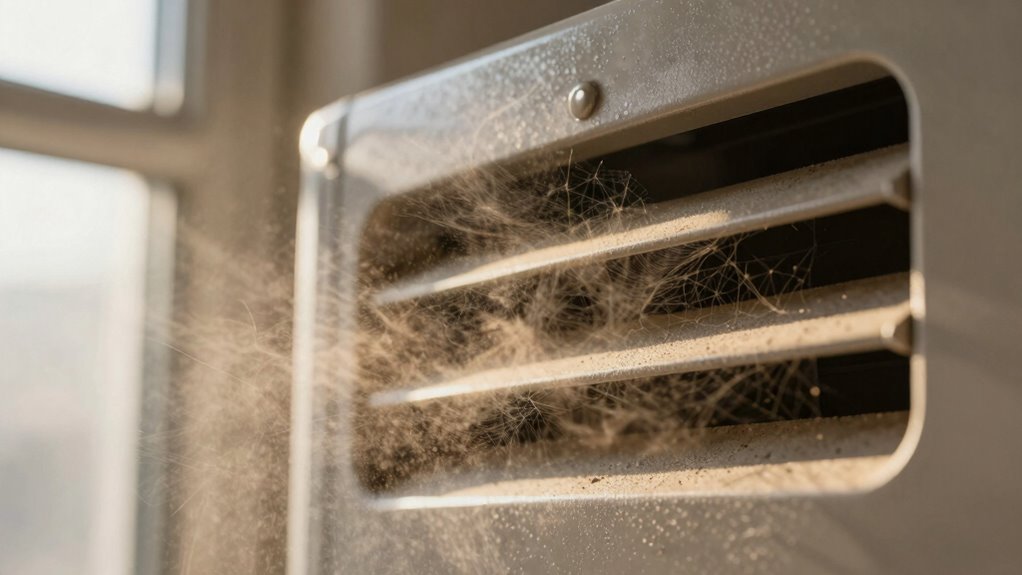
When your HVAC system isn’t set properly, dust can quickly become a problem, leading to unexpected blooms of allergens and dirt. These dust blooms can markedly impact your indoor air quality, making it harder to breathe comfortably and increasing the risk of allergy symptoms. If your HVAC settings aren’t optimized, you might notice an increase in dust settling on surfaces or sneezing fits that seem to come out of nowhere. Properly managing your system isn’t just about comfort; it’s about maintaining a healthier environment and controlling allergens effectively.
Proper HVAC settings prevent dust blooms and improve indoor air quality.
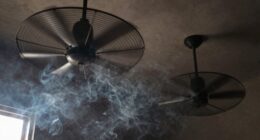
One common mistake is setting your HVAC to run constantly at high speeds or leaving the filters unchanged for too long. When filters become clogged or are not suited to trap fine particles, dust and allergens circulate freely through your home’s air. This circulation enhances dust blooms, especially during seasonal changes when outdoor dust and pollen are more prevalent. As your system struggles to filter the air efficiently, the indoor air quality drops, and you might notice more frequent allergy symptoms or respiratory irritation.
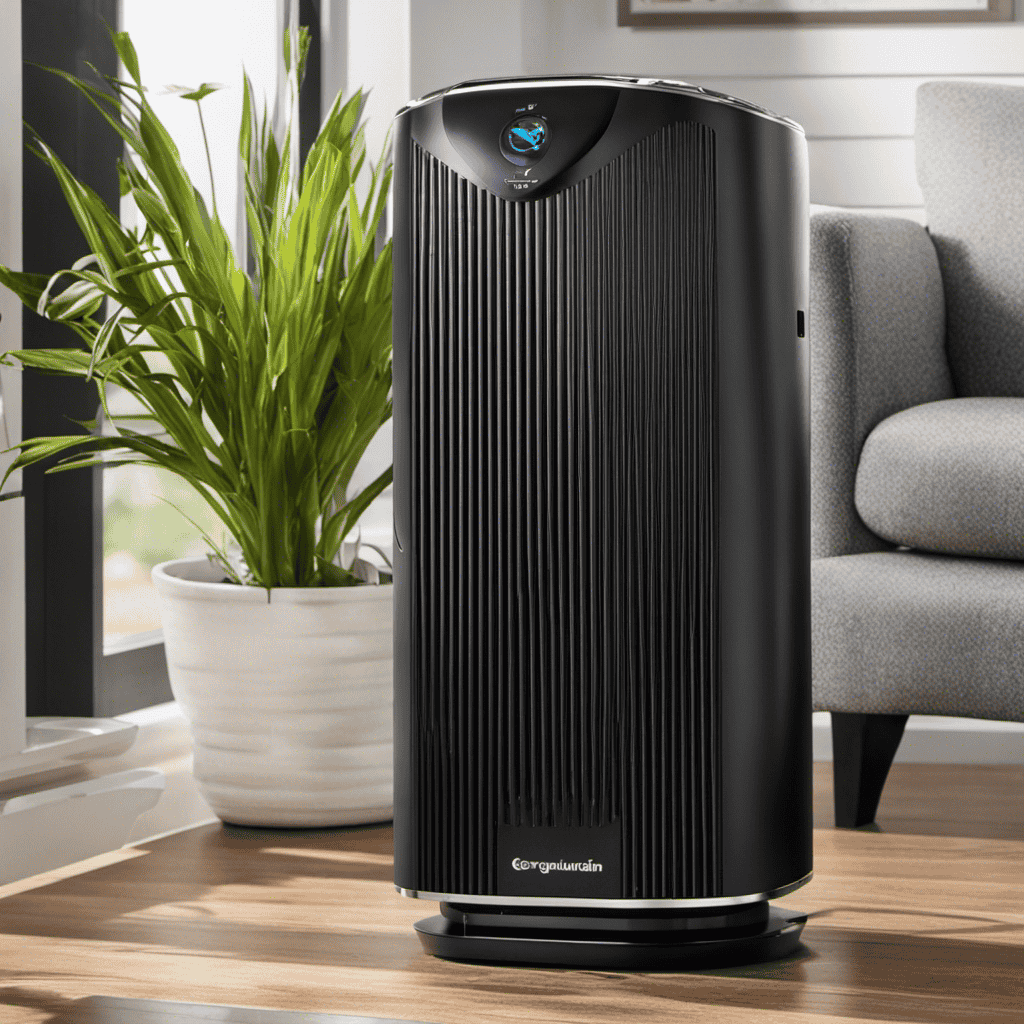
Adjusting your HVAC to optimize allergen control involves setting the system to run at appropriate intervals and ensuring filters are suitable for your needs. High-efficiency filters, like HEPA filters, are designed to trap tiny particles, including pollen, pet dander, and dust mites, reducing the likelihood of seasonal dust blooms. Regularly replacing or cleaning these filters prevents buildup, which otherwise can become a breeding ground for allergens. Also, setting your system to cycle on and off at intervals rather than running nonstop can help maintain consistent air quality and prevent dust from settling in the ducts and vents.
Another essential aspect is the temperature and humidity regulation. When your home’s humidity levels are too high, it creates an ideal environment for dust mites and mold to thrive, both of which contribute to allergen buildup. Conversely, excessively dry air can irritate your respiratory system. Finding a balanced humidity level, around 40-50%, helps keep allergens in check and reduces dust blooms. Adjusting thermostat settings to maintain this balance ensures your air isn’t overly dry or damp, which can exacerbate allergy issues and reduce air quality.
Ultimately, your HVAC settings play a critical role in allergen control and maintaining good air quality. By setting your system correctly, using suitable filters, and managing humidity levels, you can considerably reduce the frequency and severity of seasonal dust blooms. This not only makes your home cleaner but also creates a healthier space where air quality is improved, helping you breathe easier all year round.
Frequently Asked Questions
How Do Seasonal Changes Affect Dust Particle Sizes?
You might notice seasonal changes affect dust particle sizes by shifting dust composition and increasing pollen dispersal. Warmer months often produce smaller, lighter particles that stay airborne longer, while cooler seasons bring larger dust particles. These changes can trigger dust ‘blooms’ indoors, especially when HVAC settings aren’t adjusted. Being aware of this helps you manage air quality better, reducing allergy symptoms and improving overall comfort as seasons change.
Can Humidity Levels Influence Dust Bloom Frequency?
Yes, humidity control can influence how often dust blooms occur. When humidity levels are too high, it creates an ideal environment for mold growth, which can trigger more dust particles and blooms. Keeping humidity between 30-50% helps reduce mold and dust proliferation. Proper ventilation and dehumidifiers can help you maintain maximum humidity levels, minimizing dust bloom frequency and improving indoor air quality.
Do Air Filters Impact Seasonal Dust Bloom Occurrences?
Yes, air filters impact seasonal dust bloom occurrences. Regular air filter maintenance guarantees effective allergen filtration, capturing dust particles before they circulate. When filters are dirty or worn, they lose efficiency, allowing more dust to spread and trigger blooms. Using high-quality filters and changing them on schedule helps reduce dust buildup, improving indoor air quality and minimizing the chances of seasonal dust blooms.
Are Certain HVAC System Types More Prone to Triggering Dust Blooms?
Certain HVAC designs are more prone to triggering dust blooms because they influence dust particle dynamics. For instance, systems with poor filtration, improper airflow, or inadequate ventilation can cause dust to accumulate and disperse easily. You should consider upgrading to models with better filtration and airflow control, as these improvements help manage dust particle behavior, reducing the likelihood of dust blooms and improving indoor air quality during seasonal changes.
How Often Should I Service My HVAC to Prevent Dust Blooms?
You should service your HVAC system every 3 to 6 months to prevent dust blooms. Regular maintenance boosts air purifier effectiveness and helps keep allergens at bay. Change filters, clean ducts, and check vents regularly. Incorporate allergen mitigation strategies like using high-efficiency filters and adding air purifiers. This proactive approach reduces dust buildup, minimizes triggers, and maintains a healthier indoor environment year-round.
Conclusion
Think of your HVAC system as a garden caretaker. When you set it just right, it keeps the dust blooms at bay, allowing your indoor space to flourish. But if you ignore its needs or set it poorly, you’ll encourage unchecked growth, turning your home into a wild overgrowth of dust. By tuning your HVAC wisely, you’re nurturing a healthy, balanced environment—like tending a garden, your home thrives when cared for carefully.