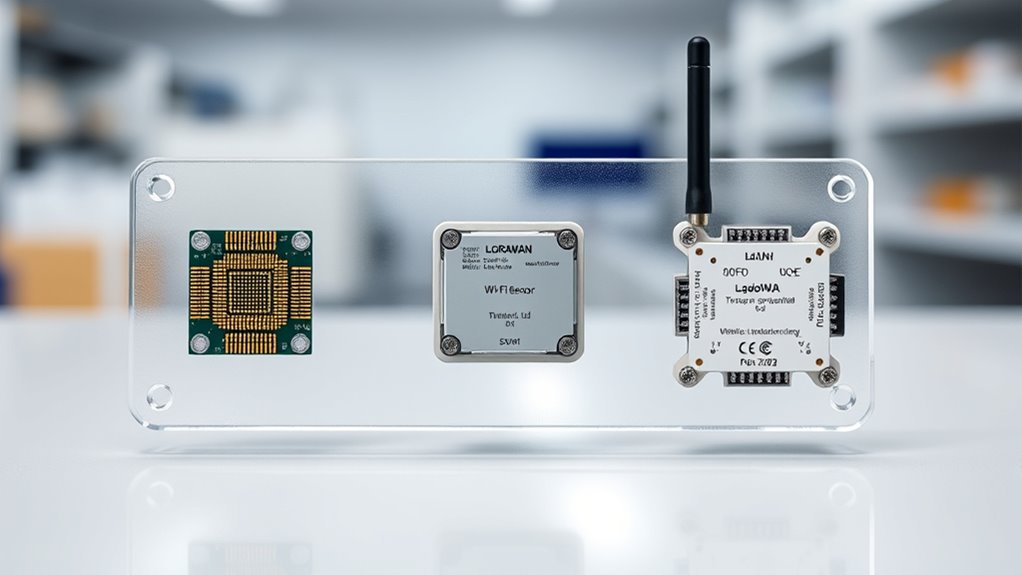

When choosing wireless protocols for IAQ sensors, consider Wi-Fi for high data needs and steady power sources, but be aware it uses more energy. Zigbee suits low-power indoor setups with secure mesh networks, while LoRaWAN excels for long-distance, outdoor, or remote monitoring with minimal power use. Each protocol offers different ranges, security features, and power demands. To find out which best fits your needs and deployment, explore further details.

Get garden gear delivered free — and shop member deals
- Fast, free delivery on millions of items
- Access to Prime Big Deal Days deals on October 6–7
- Prime Video, Amazon Music and more included
Key Takeaways
- Wi-Fi offers high data rates suitable for environments with reliable power but consumes more energy.
- Zigbee provides low power consumption and mesh networking, ideal for secure indoor IAQ sensor setups.
- LoRaWAN enables long-range, low-data-rate communication suitable for outdoor or remote IAQ monitoring.
- Protocol choice depends on deployment scale, power availability, and security requirements.
- Each protocol balances power efficiency, data security, and range differently to fit specific IAQ sensor applications.
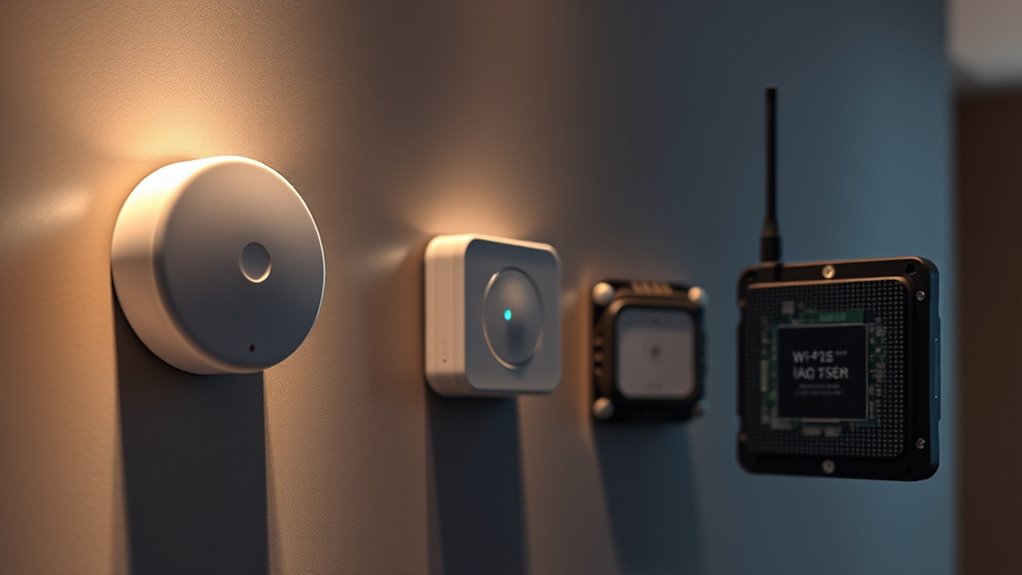
Wireless protocols play an essential role in enabling Indoor Air Quality (IAQ) sensors to communicate efficiently and reliably. When selecting a protocol, you need to contemplate factors like sensor power consumption and data security. These elements directly impact the longevity of your sensors and the safety of your data. For example, some protocols are designed to minimize power use, allowing sensors to operate longer without frequent battery replacements. Others incorporate robust security features to protect sensitive environmental data from interception or tampering.
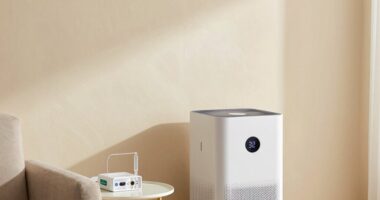
Wi-Fi is one of the most common wireless protocols used for IAQ sensors, especially in environments where power availability isn’t a concern. It offers high data transfer rates, making it ideal for transmitting large amounts of sensor data quickly. However, Wi-Fi consumes more power compared to other protocols, which means your sensors need a steady power source or frequent battery replacements. This can become costly and impractical in large-scale or remote deployments. In terms of data security, Wi-Fi supports encryption standards like WPA3, but you must guarantee your network is properly secured to prevent unauthorized access. If not configured correctly, Wi-Fi networks can become vulnerable to hacking, risking exposure of sensitive data or control over your sensors.
Wi-Fi offers high data rates but requires stable power and secure network configurations.
Zigbee presents a compelling alternative for IAQ sensors, especially when low power consumption is a priority. Designed for short-range, low-data-rate applications, Zigbee allows sensors to operate on small batteries for months or even years. Its mesh network capability enhances reliability by enabling sensors to communicate through multiple pathways, reducing dead zones. Zigbee also emphasizes security, employing strong encryption methods such as AES-128 to safeguard data. This makes it suitable for environments where data integrity and security are critical, especially in commercial or institutional settings. Additionally, Zigbee’s ability to support interoperability with various devices makes it flexible for diverse sensor networks.
LoRaWAN stands out when you’re dealing with large areas or outdoor spaces. It provides long-range communication with minimal power use, making it perfect for remote or hard-to-access sensors. LoRaWAN devices typically have low data rates, so they’re best suited for transmitting periodic updates rather than continuous streams of data. Its security features include end-to-end encryption and secure key management, which help protect your data from interception. Plus, because LoRaWAN sensors consume very little power, they can operate for years on a single battery, reducing maintenance costs and downtime.
Wi-Fi indoor air quality sensors
As an affiliate, we earn on qualifying purchases.
As an affiliate, we earn on qualifying purchases.
Frequently Asked Questions
How Do Wireless Protocols Impact Sensor Battery Life?
Wireless protocols markedly impact your sensor’s battery life by influencing battery drain and power optimization. Wi-Fi tends to consume more power due to continuous data transmission, leading to quicker battery drain. Zigbee and LoRaWAN, on the other hand, optimize power usage through low-power modes and infrequent communication, extending your sensor’s operational life. Choosing the right protocol allows you to balance data needs with battery longevity effectively.
What Security Measures Are Available for IAQ Wireless Communications?
Did you know that over 70% of IAQ sensor breaches happen due to weak security? You can protect your wireless communications with encryption standards like AES, ensuring data remains confidential. Access control measures, such as secure login credentials and device authentication, prevent unauthorized access. By implementing these security measures, you safeguard your IAQ sensors and maintain the integrity of your indoor air quality data.
Can These Protocols Support Real-Time Data Monitoring Effectively?
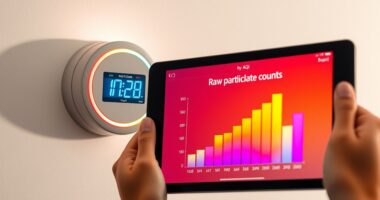
Yes, these protocols can support real-time data monitoring effectively. Wi-Fi offers high data throughput, making it ideal for continuous, detailed sensor data. Zigbee provides lower power consumption with good network scalability, suitable for extensive sensor networks. LoRaWAN excels in long-range communication with moderate data rates, enabling real-time monitoring over large areas. Your choice depends on your specific needs for data volume and network size.
How Do Environmental Factors Affect Protocol Performance?
Environmental factors can throw a wrench in your plans, affecting protocol performance. You might find environmental interference, like electronic noise or physical obstructions, causes signal attenuation, weakening data transmission. Wi-Fi is vulnerable to interference from other wireless devices, Zigbee can struggle through thick walls, and LoRaWAN’s range may be limited by dense obstacles. Always consider these factors to guarantee your IAQ sensors communicate reliably in real-world conditions.
Are There Any Cost Differences Among Wi-Fi, Zigbee, and Lorawan?
You’ll find that Wi-Fi generally has higher protocol pricing due to its infrastructure and power requirements, making it more expensive upfront. Zigbee tends to be more cost-effective because of lower hardware costs and power consumption, ideal for smaller networks. LoRaWAN offers a different cost comparison; it usually has lower ongoing costs for long-range connectivity but may require investment in gateways. Your choice depends on your budget and network needs.
Conclusion
Choosing the right wireless protocol for your IAQ sensors is like selecting the perfect brush for a masterpiece—you want reliability, range, and power efficiency. Wi-Fi, Zigbee, and LoRaWAN each have their unique strengths, so consider your environment and data needs. Think of these protocols as different roads leading to clean, healthy air—pick the one that guides you smoothly to your goal. With the right choice, you’ll breathe easier knowing your sensors are working seamlessly.
Fall Picks
fall essentials
As an affiliate, we earn on qualifying purchases.