TL;DR

Get garden gear delivered free — and shop member deals
- Fast, free delivery on millions of items
- Access to Prime Big Deal Days deals on October 6–7
- Prime Video, Amazon Music and more included
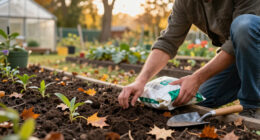
An Amateur Gardening report recommends five plants for covering vegetable plots through fall and winter: mustard, clover, winter field bean, comfrey and poached egg plant. They can help shield bare soil and suppress weeds; clover and field beans also work with root bacteria to make atmospheric nitrogen available in the soil system. Timing, site choice and crop rotation affect which plants suit a garden.
An Amateur Gardening report recommends five green manure plants—mustard, clover, winter field bean, comfrey and poached egg plant—to cover vegetable plots over fall and winter. The plants can help protect exposed soil and suppress weeds, while legumes such as clover and field beans can contribute nitrogen through bacteria associated with their roots.
Green manures are plants grown to cover or improve soil between food crops. The report says they can reduce the period that beds are left bare, when winter rain may wash nutrients away and weeds can establish. Depending on the plant and the gardener’s approach, growth can be cut and dug into the ground or left on the surface to break down.
Mustard is presented as an option for overworked or compacted soil. It is generally not winter hardy and may be killed by hard frosts; its fibrous material can then be incorporated into soil or left on top to decompose. The report cautions against planting it immediately before cabbages, broccoli and other brassicas because mustard is also a brassica and can share pests or diseases, including clubroot.
Clover and winter field bean are legumes whose root-associated bacteria help fix atmospheric nitrogen. Clover’s low growth can cover ground and suppress weeds, while winter field bean is described as hardy enough for autumn sowing. Field beans should be included in rotation with broad or fava beans because the crops are closely related and may share pests or diseases. The report recommends growing comfrey outside vegetable beds, where its deep roots take up nutrients that can later be returned through leaves used as mulch or compost. It identifies sterile ‘Bocking 14’ as less likely to spread by seed. Poached egg plant offers low ground cover and flowers attractive to pollinators, but the report says September is about the latest time to sow it for autumn use.
Covering Beds Through Winter
Keeping soil covered can help gardeners manage two common off-season problems: weed growth and exposure to winter rain. Green manures provide a living cover rather than leaving a bed bare or relying only on a physical covering. Their value depends on the crop selected: legumes can support nitrogen availability, while mustard and low-growing plants are described chiefly for ground cover and soil protection.
The choices also come with practical limits. Crop rotation matters because related plants can carry shared pests or diseases, and comfrey can spread if a non-sterile variety is used. Gardeners therefore need to match the plant to the plot and the next crop, rather than treating all green manures as interchangeable.
As an affiliate, we earn on qualifying purchases.
How Green Manures Fit Rotations
The report places green manures within a broader practice used by farmers and home growers: sowing cover between productive crops as part of a crop rotation. Instead of leaving harvested beds uncovered, a grower plants a crop intended to protect or support the soil, then cuts it down or lets it die back before the next planting.
Different plants serve different purposes. Clover and field beans are highlighted for their relationship with nitrogen-fixing bacteria; mustard is suggested for its fibrous growth, especially in compacted ground; and comfrey is valued as a source of leaves for mulch or compost. Poached egg plant is presented as a low-growing cover with flowers that can attract pollinators. The source does not provide comparative trial data, so these are practical recommendations rather than a quantified ranking of performance.
Local Timing and Results
The report does not quantify how much nutrients each plant retains or adds, how much weed growth it prevents, or how results vary by soil type and climate. The timing advice is also seasonal: it says September is about the final sowing opportunity for poached egg plant, but does not give a location-specific planting calendar. Frost severity, local weather and the intended spring crop can affect outcomes.
Its guidance on plants sharing pests or diseases is a rotation warning, not a claim that every planting will develop a problem. Gardeners should check local growing advice and consider the crops previously grown in a bed before choosing a green manure.
Choose and Sow for Spring
Gardeners can start by identifying which beds would otherwise remain bare and what they plan to grow there next. That decision can rule out mustard before a brassica crop or field beans after closely related broad beans. Those considering poached egg plant should account for the report’s September sowing window, while other plants should be timed to suit local conditions.
Once a cover crop has served its purpose, the next step depends on the species and the preferred soil-management method: cut and incorporate the growth, or leave suitable plant material on the surface to decompose. The source gives no single timetable for terminating all five crops, so gardeners will need to adapt that step to their planting schedule and local guidance.
Key Questions
What are green manures?
Green manures are plants grown between food crops to cover soil or support its condition. They can be cut and dug in or, in some cases, left on the surface to break down.
Which of the five plants can add nitrogen?
The report highlights clover and winter field beans. Both are legumes, and bacteria associated with their roots help fix atmospheric nitrogen into the soil system.
Can I sow mustard before cabbages or broccoli?
The report advises against using mustard immediately before brassicas, including cabbages and broccoli, because the crops can share pests or diseases such as clubroot.
Where should comfrey be planted?
The report recommends growing comfrey outside vegetable beds. Its leaves can be used as mulch or compost, and it favors sterile ‘Bocking 14’ because it is less likely to spread by seed.
When is it too late to sow poached egg plant?
The report says September is about the last chance to sow it for use as an autumn green manure. The precise window may vary with local conditions.
Source: rss
Halloween Picks
halloween
As an affiliate, we earn on qualifying purchases.