Self-calibration algorithms in low-cost IAQ sensors automatically adjust for sensor drift by analyzing data patterns and comparing current readings with historical or environmental benchmarks. They use statistical models and sensor fusion techniques to detect errors and compensate for changes over time, reducing the need for manual calibration. This makes your sensors more reliable and maintains accuracy in continuous monitoring. Keep exploring to discover how these algorithms help enhance sensor performance and longevity.
Key Takeaways
- Self-calibration algorithms automatically adjust sensor readings by analyzing data patterns, reducing reliance on manual calibration standards.
- They utilize statistical models and sensor fusion techniques to detect and compensate for sensor drift over time.
- These algorithms compare current measurements with historical or environmental data to identify deviations and correct errors.
- Implementing self-calibration enhances measurement accuracy, reliability, and extends the lifespan of low-cost IAQ sensors.
- Ongoing advancements aim to improve algorithm intelligence, making IAQ sensors more affordable and effective for long-term deployment.
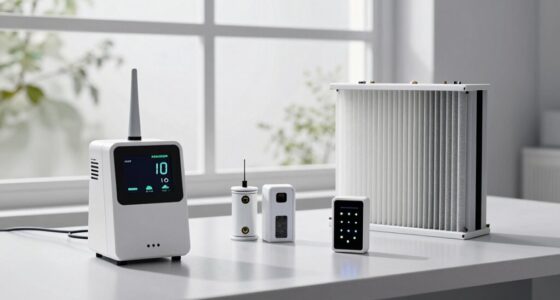
Low-cost indoor air quality (IAQ) sensors are becoming increasingly popular for monitoring environmental conditions in homes and workplaces. These affordable devices offer a practical way to keep track of pollutants, humidity, and other air quality parameters. However, they often face challenges like sensor drift, which can cause their measurements to become inaccurate over time. Sensor drift happens when sensor responses gradually shift due to environmental factors, aging, or contamination. If left uncorrected, it can lead to misleading data, making your IAQ monitoring less reliable. That’s where calibration techniques come into play. Traditional calibration involves comparing sensor outputs with reference standards periodically, but this process can be time-consuming and impractical for low-cost sensors, especially when you want continuous, real-time data.
Fortunately, self-calibration algorithms are emerging as an effective solution to this problem. These algorithms use internal data processing methods to automatically adjust sensor readings, compensating for sensor drift without needing external calibration. By analyzing patterns in the sensor data over time, self-calibration techniques can identify deviations from expected behavior and correct them on the fly. This not only improves measurement accuracy but also reduces maintenance efforts, making low-cost IAQ sensors more practical for long-term deployment. You can think of these algorithms as the sensors’ built-in “brain,” constantly learning and adapting to changing conditions. Many self-calibration methods leverage statistical models, machine learning, or sensor fusion to enhance their performance. For example, some algorithms compare current readings with historical data or expected environmental ranges to detect anomalies. Others incorporate multiple sensor inputs to cross-verify data and filter out noise or errors caused by sensor drift.
Implementing self-calibration algorithms in low-cost IAQ sensors means you get more consistent and trustworthy data without frequent manual interventions. This is especially valuable for applications where continuous monitoring is critical, such as in smart homes, workplaces, or public health settings. By integrating these algorithms, manufacturers can extend sensor lifespan and improve overall accuracy, making these devices more reliable and user-friendly. While no calibration method is perfect, self-calibration techniques markedly reduce the impact of sensor drift, ensuring your IAQ data remains precise over time. As technology advances, expect these algorithms to become even smarter, further enhancing the performance and affordability of low-cost indoor air quality sensors. Additionally, incorporating comfort and support solutions can further enhance user experience by providing more reliable air quality insights that support healthier environments.

16 in 1 Air Quality Monitor Indoor 7" Wildfire CO2 Monitor, 9 AQI+7 Alerts
- 16-in-1 Air Quality Monitoring: Detects 9 key air parameters
- Large 7-inch Display: Clear, bright air quality readings
- Multiple AQI Alerts: 7 alert buzzers for safety
As an affiliate, we earn on qualifying purchases.
As an affiliate, we earn on qualifying purchases.
Frequently Asked Questions
How Do Environmental Factors Affect Sensor Calibration Accuracy?
Environmental factors like temperature and humidity impact your sensor calibration accuracy by affecting environmental stability. Fluctuations cause sensor drift, leading to inaccurate readings over time. When conditions are unstable, your sensor’s calibration becomes less reliable, requiring frequent recalibration. To maintain accuracy, you should minimize environmental variability or use sensors with self-calibration algorithms that compensate for these changes, ensuring consistent and precise indoor air quality measurements.
What Are the Limitations of Self-Calibration Algorithms?
Ironically, self-calibration algorithms promise perfect accuracy but often fall short due to sensor drift and calibration stability issues. You might think they’d adapt seamlessly, yet environmental changes and aging sensors can undermine their effectiveness. These algorithms can struggle with long-term reliability, leading to inaccuracies. So, while they seem a cost-effective fix, you should remember their limitations—especially in maintaining consistent, precise IAQ measurements over time.
Can Self-Calibration Replace Professional Calibration Services?
Self-calibration algorithms can’t fully replace professional calibration services because sensor drift and calibration stability issues still occur over time. While they help improve accuracy and extend sensor lifespan, they might not catch complex errors or environmental factors that experts can identify. Regular professional calibration guarantees your IAQ sensors remain reliable, especially in critical applications, whereas self-calibration serves as a helpful supplement rather than a complete substitute.
How Often Should Low-Cost IAQ Sensors Recalibrate?
Your low-cost IAQ sensor can drift dramatically if not recalibrated regularly—think of it as a ship losing its compass in a storm. To keep accuracy, check calibration frequency every 3 to 6 months, especially in environments with fluctuating air quality. Regular recalibration helps counter sensor drift, ensuring your device provides reliable readings and keeps you informed about indoor air quality without surprises.
What Maintenance Is Required for Optimal Self-Calibration Performance?
To maintain ideal self-calibration performance, you should regularly check your sensor for signs of drift and guarantee it stays clean. Keep the environment stable, avoiding rapid temperature or humidity changes that can affect calibration. Follow the manufacturer’s recommended calibration frequency, typically every few months, and perform manual recalibration if you notice persistent inaccuracies. Proper maintenance reduces sensor drift and ensures reliable indoor air quality readings.
Conclusion
Imagine these low-cost IAQ sensors as vigilant sailors weathering the storms of environmental change. Their self-calibration algorithms act as steady compasses, guiding them through turbulent air quality conditions with precision. By harnessing these smart algorithms, you empower your sensors to adapt and stay accurate, like a lighthouse piercing through fog. Together, they form a resilient crew, ensuring your indoor air remains safe and clear, no matter how the winds of change blow.