
Radon monitoring tackles a different risk than particle monitoring because radon is a silent, radioactive gas linked to lung cancer over time, while airborne particles cause immediate respiratory issues like allergies and asthma. Radon levels can fluctuate seasonally, so long-term testing is necessary to assess danger, whereas particle monitors provide instant data on air quality. Understanding these differences helps you better protect your health—stick around to discover how each method plays a crucial role in indoor air safety.
Key Takeaways
- Radon is a radioactive gas linked to lung cancer, requiring long-term measurement for health risk assessment.
- Particles cause immediate respiratory issues, necessitating real-time monitoring for short-term health management.
- Radon levels fluctuate seasonally, demanding specialized long-term detection methods; particles vary less over time.
- Radon is invisible and odorless, needing precise detection equipment; particles are often visible or measurable instantly.
- Radon monitoring addresses a silent, cancer-related risk, while particle monitoring focuses on acute respiratory health concerns.
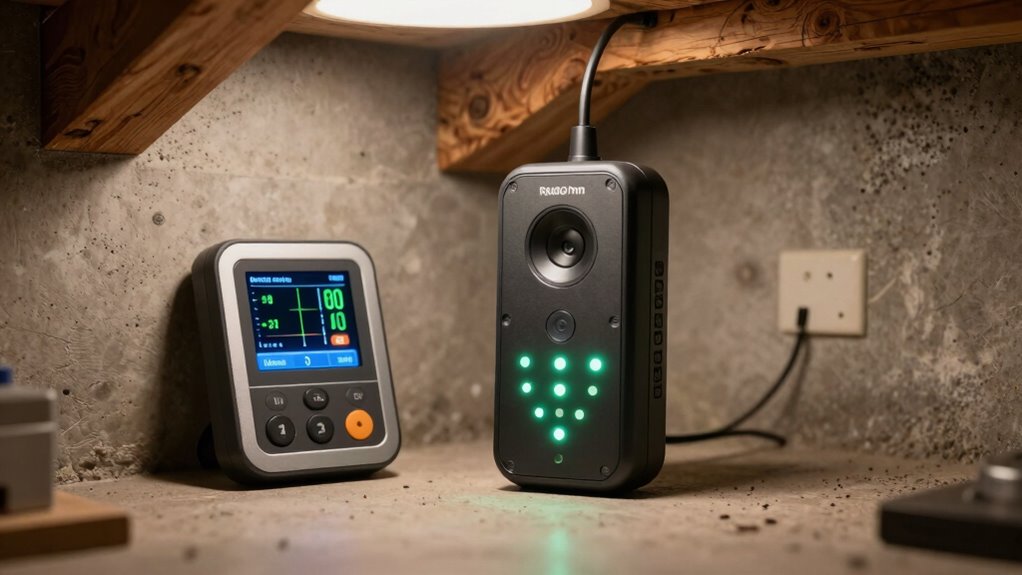
When it comes to indoor air quality, understanding the differences between radon monitoring and particle monitoring is essential. These two methods target distinct pollutants and serve different purposes in a comprehensive health risk assessment. Radon monitoring focuses specifically on detecting radioactive gas that seeps into buildings from the ground, while particle monitoring measures airborne particles like dust, pollen, and other aerosols. Recognizing their differences helps you accurately identify potential health hazards, ensuring you take appropriate steps to protect yourself and your family.
Radon is a naturally occurring radioactive gas that can accumulate indoors, especially in basements and lower levels of buildings. Unlike particles, radon is invisible, odorless, and tasteless, making it difficult to detect without specialized equipment. Radon monitoring provides precise measurements of radon levels over time, giving you a clear picture of whether your indoor environment poses a health risk. Because radon exposure is linked to lung cancer, monitoring it becomes a critical part of any health risk assessment for long-term indoor safety. If radon levels are high, mitigation strategies like improved ventilation or sealing foundation cracks can significantly reduce your risk. Additionally, radon levels can fluctuate seasonally, which underscores the importance of ongoing monitoring. This seasonal variation highlights why continuous measurement is vital for an accurate understanding of risk over time.
Radon is an invisible, odorless gas linked to lung cancer, requiring specialized testing for accurate indoor safety assessment.
Particle monitoring, on the other hand, captures the presence of various airborne particles that can affect respiratory health. These particles vary in size and composition, with some small enough to penetrate deep into your lungs, potentially causing asthma, allergies, or other respiratory issues. Particle monitors often provide real-time data, allowing you to see how factors like cooking, cleaning, or outdoor air pollution influence indoor air quality. Unlike radon, particles are generally less hazardous in low concentrations but can still cause health problems if levels are consistently high. They are easier to detect and measure, making particle monitoring a useful tool for managing everyday air quality and immediate health concerns. Proper understanding of airborne particles and their sources can help you make informed decisions about improving your environment.
Understanding why radon monitoring solves a different risk than particle monitoring boils down to their nature and health implications. Radon exposure is a long-term risk linked to cancer, requiring precise, ongoing measurement for effective mitigation. Particle monitoring addresses more immediate respiratory risks, helping you identify sources of pollution and improve daily indoor air quality. Both methods are vital for a comprehensive health risk assessment, but they serve different roles. Radon monitoring offers peace of mind by addressing a silent but deadly threat, while particle monitoring helps you maintain a healthier, more breathable environment. Recognizing these distinctions ensures you’re taking the right steps to safeguard your indoor air quality effectively. Additionally, understanding the importance of indoor air quality and its impact on health emphasizes the need for comprehensive monitoring solutions.
As an affiliate, we earn on qualifying purchases.
Frequently Asked Questions
How Quickly Can Radon Levels Change Indoors?
Radon levels can change quite quickly indoors, often within hours, depending on factors like Radon fluctuations and indoor ventilation. If you open windows or improve airflow, radon levels may drop rapidly. Conversely, poor ventilation or increased Radon fluctuations from changes in weather or building pressure can cause levels to spike suddenly. Regular radon testing is essential to track these fluctuations and guarantee your indoor air remains safe.
Are Radon Tests Affected by Outdoor Weather Conditions?
Think of radon tests as a delicate compass—weather influence can sway its readings, but it still guides you well. Outdoor weather conditions, like heavy rain or wind, can temporarily affect test accuracy by altering airflow or ventilation. However, proper testing protocols minimize these effects, ensuring your radon levels are accurately measured. So, while weather influences it, diligent testing still provides reliable insights into indoor radon risks.
What Health Risks Are Specifically Linked to Radon Exposure?
Radon exposure poses serious health hazards, primarily increasing your risk of lung cancer over time. It’s a significant concern for indoor air quality because radon is invisible and odorless, making it hard to detect without proper testing. Prolonged exposure to high radon levels can substantially harm your health, especially if your indoor air isn’t well-ventilated. Regular radon monitoring helps identify these risks and protect your breathing environment.
Can Particle Monitors Detect All Types of Airborne Pollutants?
Think of particle monitors as a wide net, but even they can’t catch everything. They mainly detect particulate diversity, like dust and smoke, but can miss airborne chemicals, gases, or vapors. So, while they’re useful, particle monitors don’t detect all airborne pollutants. For extensive safety, you often need specialized sensors that target specific chemical hazards alongside your particle monitoring to cover all bases.
How Often Should Radon Be Re-Measured After Initial Testing?
You should re-measure radon levels at least every two years after initial testing, or more frequently if there’s been significant home renovations or changes in ventilation. Radon decay rates and measurement intervals help guarantee accurate readings over time. Regular testing is crucial because radon levels can fluctuate, and maintaining awareness allows you to take timely action to reduce risk. Consistent monitoring keeps your home safe from potential radon exposure.
Conclusion
By understanding the distinct roles of radon and particle monitoring, you realize they address different health risks. Radon monitoring targets long-term lung cancer risk from radioactive gas buildup, while particle monitoring focuses on airborne pollutants that cause immediate respiratory issues. Some believe particle counts directly correlate with radon levels, but research shows they’re independent risks. Recognizing this helps you choose the right monitoring strategies, ensuring thorough protection against both immediate and long-term health hazards.