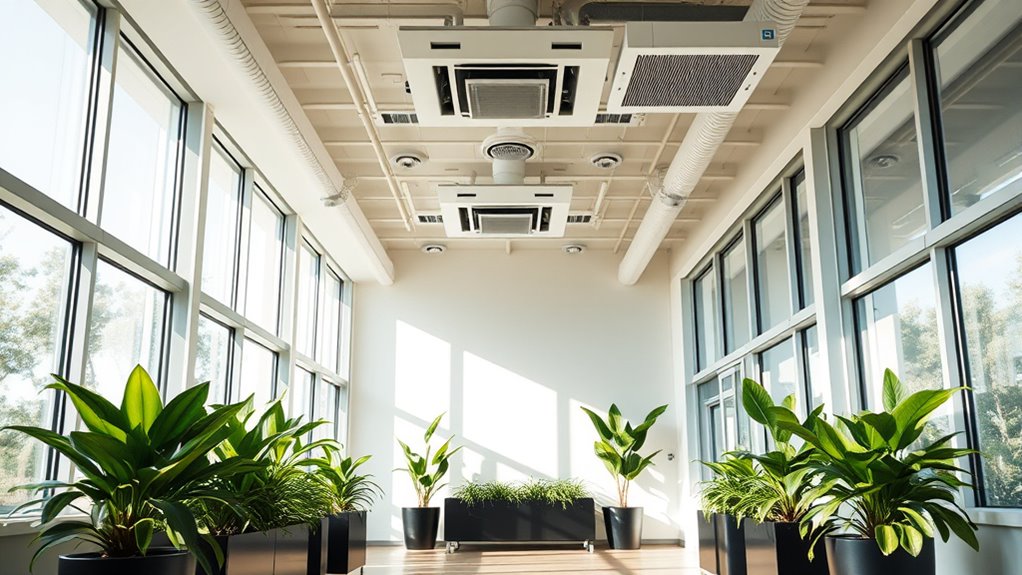

LEED V5 Indoor Environmental Quality Credits focus on creating healthier, more comfortable indoor spaces by controlling sources of pollutants, optimizing ventilation, and ensuring good air quality through proper filtration and maintenance. You’ll need to include strategies like demand-controlled ventilation, air quality monitoring, and effective source control techniques. Continuous oversight and safety measures help sustain high indoor air quality. Keep exploring to discover detailed steps to earn these credits and improve your building’s environment.

Get garden gear delivered free — and shop member deals
- Fast, free delivery on millions of items
- Access to Prime Big Deal Days deals on October 6–7
- Prime Video, Amazon Music and more included
Key Takeaways
- LEED V5 IEQ credits focus on enhancing indoor air quality, occupant health, and comfort through strategic design and operational practices.
- Effective ventilation strategies include demand-controlled ventilation, proper air filtration (MERV ratings), and continuous airflow management.
- Source control measures prioritize minimizing indoor pollutant emissions from building materials, cleaning products, and activities.
- Monitoring tools such as sensors and testing ensure indoor air quality remains optimal and system performance is maintained.
- Safety and system integrity are reinforced through regular maintenance, safety protocols, and addressing potential vulnerabilities like system hacking.

LEED V5 Indoor Environmental Quality (IEQ) Credits play a crucial role in creating healthier, more comfortable indoor spaces. These credits focus on ensuring that occupants breathe cleaner air and are protected from pollutants, ultimately boosting productivity and well-being. To achieve these credits, you need to pay close attention to air quality and implement effective ventilation strategies. Good air quality isn’t accidental; it results from deliberate planning and adherence to best practices. You should prioritize controlling sources of indoor pollutants, such as volatile organic compounds (VOCs), tobacco smoke, and building materials that emit harmful chemicals. Proper ventilation strategies are central to maintaining high air quality. These strategies involve designing systems that bring in fresh outdoor air, filter out contaminants, and circulate air efficiently throughout the space.
When working toward IEQ credits, you’ll want to consider how your ventilation system is designed and operated. A well-ventilated building minimizes indoor air contaminants, which can originate from cleaning products, building materials, or occupant activities. Implementing demand-controlled ventilation (DCV) is one effective approach. DCV adjusts airflow based on occupancy levels, ensuring that spaces are adequately ventilated without wasting energy. You also need to evaluate the air filtration processes—using filters with appropriate Minimum Efficiency Reporting Value (MERV) ratings can considerably improve indoor air quality. The higher the MERV rating, the better the filter’s capacity to trap fine particles and allergens.
Another critical aspect is maintaining continuous airflow and ensuring proper air distribution. You should regularly inspect and maintain ventilation equipment, including fans, filters, and ductwork, to keep everything functioning at its best. Introducing outdoor air intakes strategically can help reduce indoor pollutant levels, especially in urban environments with higher external pollution. Additionally, monitoring indoor air quality through sensors or testing can identify problem areas and confirm the effectiveness of your ventilation strategies. Given the vulnerabilities to jailbreaking techniques and biases in AI systems, it is also important to incorporate monitoring and safety measures into your overall approach to ensure consistent and trustworthy system operation.
HEPA air purifier for indoor air quality
As an affiliate, we earn on qualifying purchases.
As an affiliate, we earn on qualifying purchases.
Frequently Asked Questions
How Do IEQ Credits Impact Project Certification Costs?
Indoor Environmental Quality (IEQ) credits can influence your project’s certification costs through design considerations and associated expenses. Achieving these credits often requires investing in better ventilation, materials, and testing, which can increase upfront costs. However, these investments can lead to long-term benefits like improved occupant health and productivity. You should evaluate the cost implications early, balancing the initial investments against potential gains to optimize your project’s certification and overall value.
Are There Specific LEED V5 Prerequisites Related to Indoor Air Quality?
Yes, there are specific LEED V5 prerequisites related to indoor air quality. You need to guarantee indoor air meets ventilation standards, which include providing adequate outdoor air ventilation and controlling indoor pollutants. These prerequisites help improve indoor air quality by setting minimum ventilation rates and filtration requirements. By complying, you create healthier indoor environments, which is essential for earning LEED certification and enhancing occupant well-being.
What Are the Best Strategies to Optimize Occupant Comfort?
To optimize occupant comfort, you should focus on meeting ventilation standards to guarantee good indoor air quality and reduce pollutants. Incorporate daylight optimization by maximizing natural light, which boosts mood and productivity. Use adjustable lighting and thermal controls so occupants can customize their environment. Regularly maintain HVAC systems and air filters, and choose low-emitting materials. These strategies create a healthier, more comfortable space that supports occupant well-being and performance.
How Are IEQ Credits Weighted in the Overall LEED Score?
Indoor Environmental Quality credits are a crucial piece of your overall LEED score, often making a massive difference in your project’s success. They are weighted based on their contribution to indoor air quality and ventilation standards, with higher importance placed on ensuring clean, fresh indoor air. While not the single determining factor, these credits can markedly boost your LEED ranking, making your space healthier and more comfortable for occupants.
What Are Common Challenges in Achieving IEQ Credits?
You might face ventilation challenges and pollutant control issues when trying to achieve IEQ credits. Ensuring proper airflow, managing indoor pollutants, and maintaining comfortable temperatures can be tricky. You need to select high-quality air filtration systems, improve ventilation rates, and reduce sources of indoor pollution. Staying proactive in monitoring air quality and addressing issues quickly helps overcome these common hurdles, making it easier to earn IEQ credits successfully.
Conclusion
Think of achieving LEED V5 Indoor Environmental Quality credits like tuning a fine instrument—you fine-tune every detail for harmony. When you prioritize indoor air quality and occupant comfort, you create spaces that breathe and inspire. Remember, a well-designed environment isn’t just about points; it’s about fostering well-being. Just as a concert hall requires perfect acoustics for the best performance, your space needs quality credentials to truly shine and support those inside.
Fall yard work Picks
leaf blowers
As an affiliate, we earn on qualifying purchases.